.png)
 2 hours ago
3
2 hours ago
3


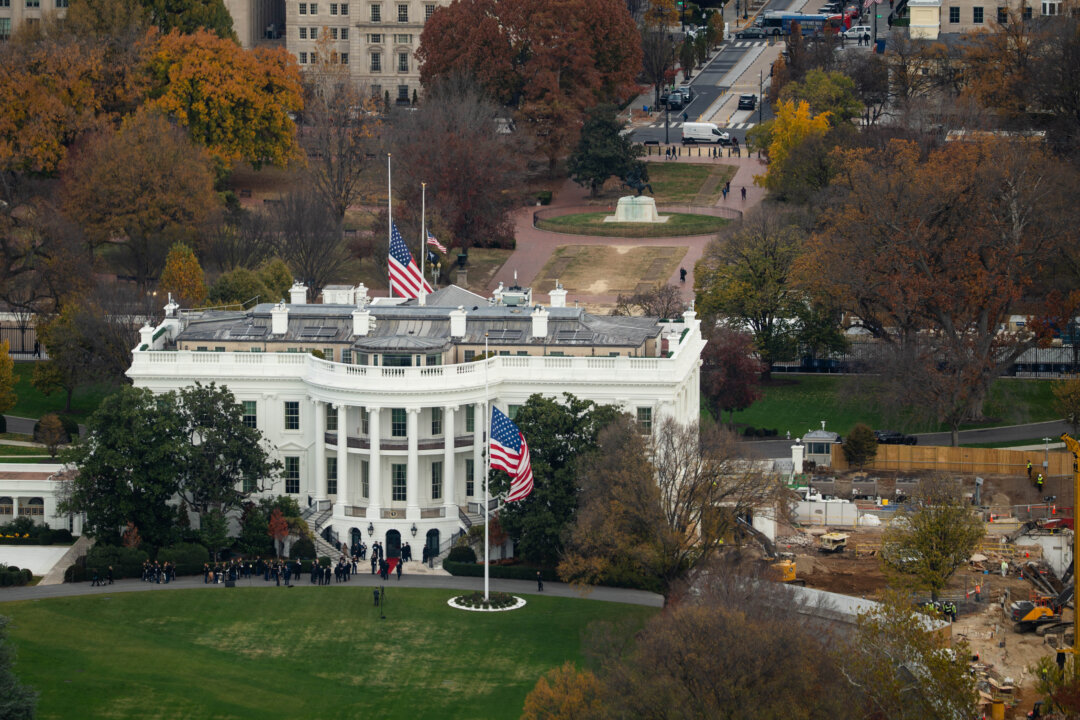
The White House, federal regulators, and Congress are scrambling to develop a national approach to artificial intelligence. Yet almost no one is examining AI from an ethical or civil-society perspective. Policymakers frame it as an economic or national security issue. Those angles matter. But the deeper question — what it means to live in an AI-dominated world inside a constitutional republic — remains almost entirely unaddressed.
AI is already reshaping our political life, our civic discourse, and our education system. One of the clearest windows into this shift is the outsized influence of Wikipedia and Reddit. Large language models like ChatGPT and Google’s Gemini consume a training diet heavy on both sites. AI systems don’t “know” anything in a human sense. They mirror patterns. And the patterns they ingest come from platforms run by anonymous editors, ideological moderators, and unaccountable gatekeepers.
No special-interest group today is fighting for Americans who will soon live in a world saturated with AI slop.
The Oversight Project examined the underbelly of this problem, beginning with Wikipedia. After noticing what looked like coordinated ideological editing campaigns, we sought to understand who was shaping the platform. What we found was a small, powerful cadre of editors with the authority to dictate what information is permitted. These editors operate anonymously — or so they believed.
We identified several of them and, more tellingly, where they were editing from. Some connections were foreign. Others showed activity that aligned with a 9-to-5 workday. It was clearly inorganic. That raised obvious questions: who pays these people, who coordinates them, and whether intelligence services are involved.
The most aggressive coordination appeared on politically sensitive topics, especially anything involving Israel or the Arab world. Automated tools tracked and reverted edits across thousands of pages to enforce a narrative. When Wikipedia realized we were mapping these networks, it panicked. To protect anonymity, the platform changed its internal rules to obstruct outside scrutiny. Then it retaliated by downgrading us to “deprecated” status — a ban in all but name. Anything sourced to us became unacceptable on the site.
We are sounding the alarm because foreign actors and domestic ideologues understand the power of controlling Wikipedia’s information flow. Our own intelligence agencies almost certainly understand it as well. In a recent interview, Wikipedia co-founder Larry Sanger told me that intelligence services would be negligent if they were not influencing the platform.
Sanger also expressed regret about founding Wikipedia with Jimmy Wales, noting that like so many other institutions, it has been conquered by the ideological left and turned into a political instrument, a shift made even more consequential in the age of AI.
RELATED: Almost half of Gen Z wants AI to run the government. You should be terrified.
 Man_Half-tube via iStock/Getty Images
This is where the danger becomes unmistakable. Most people treat Wikipedia and Reddit cautiously when browsing the internet, aware of the bias. AI does not. When you ask an AI system a question, it generates polished, authoritative-sounding answers built from those same sources — stripped of context, caveats, or transparency. What appears neutral is often laundered opinion.
This information-laundering must become part of the national conversation about AI. Some policymakers seem to understand the stakes. The Senate Commerce Committee has sent oversight letters and plans a hearing. The House Oversight Committee has signaled similar interest. Even Ed Martin, former U.S. attorney for the District of Columbia, has demanded information from Wikipedia.
But the truth is blunt. No special-interest group today is fighting for Americans who will soon live in a world saturated with AI slop. There is plenty of lobbying in Washington for everything except preserving an honest information ecosystem. Without intervention, public knowledge will be shaped by opaque networks of foreign actors, ideological activists, and machine-driven amplification on a massive scale.
Policymakers must recognize what is at stake and act before the architecture of public knowledge is fully captured. The future of AI — and the future of democratic self-government — depends on it.









 English (US)