.png)
 7 hours ago
6
7 hours ago
6
This is all you need to know about Washington’s poisonous partisanship: Not a single Senate Democratic senator showed up for a major Senate oversight hearing on the origins of the COVID-19 pandemic and the role of senior officials of the Central Intelligence Agency (CIA) in formulating America’s flawed response to the deadliest global pandemic since the 1918 flu.
Senator Rand Paul, R-Ky., chair of the Senate Committee on Homeland Security and Governmental Affairs, observed, “For years, Americans were told to stop asking questions about COVID’s origins. Today, a whistleblower with firsthand knowledge will testify that intelligence officials may have buried evidence, altered conclusions, and concealed the truth from the public.”
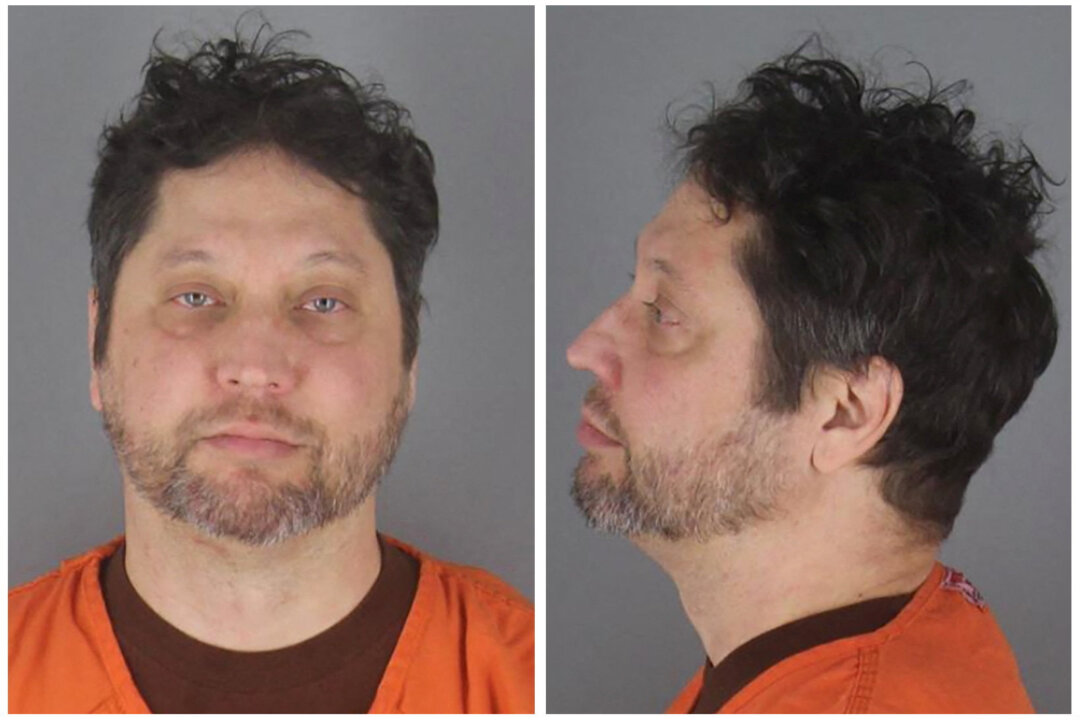
The whistleblower, James Erdman III, a career CIA operative, revealed in sworn Senate testimony how CIA management participated in undercutting the initial career staff assessment on the origins of the COVID-19 pandemic in China. While Erdman appeared voluntarily before the Committee, and previously in executive session, he was also the recipient of a formal subpoena.
It was a blockbuster event. Erdman told the Committee that in August of 2021, CIA team of experts had assessed that the pandemic originated as a lab leak. In 2022, he told the Senate, there were 10 CIA analysts who did the review of the origins issue, and seven of them who had scientific expertise assessed the coronavirus as the product of a lab leak. In 2023, the team did a reassessment, and six of the seven technical experts in the CIA task force still assessed that the pandemic was the product of a laboratory leak. In fact, during the entire period between 2021 and 2023, CIA staff assessed that a Chinese lab leak was the most likely source of the global pandemic.
Biden-era CIA management, however, changed the final report to read that the agency could not “know precisely” whether the deadly coronavirus was the product of a lab leak. That estimate remained in place as the official CIA position until the Trump administration reversed it, and the CIA position became formally aligned with the previous assessments of scientists at the Department of Energy and the analysts of the Federal Bureau of Investigation that the pandemic had a laboratory origin.
Senator Ron Johnson, R-Wis., asked Erdman if there was evidence that any of the CIA analysts had been “bribed”—a rumor that surfaced in the media a couple of years ago—and Erdman definitively stated that there was no such bribery. In fact, Erdman reaffirmed his view that the vast majority of CIA personnel were “barrel-chested freedom fighters,” true patriots dedicated to protecting America.
The Fauci Factor
The Committee also addressed the role of Dr. Anthony Fauci, then Director of the National Institute of Allergy and Infectious Diseases, on the deliberations of CIA personnel. Erdman affirmed that Fauci “significantly” influenced CIA decision-making, including the agency’s non-committal assessment on COVID’s origins. Fauci was publicly committed to the theory that the deadly pandemic had a “natural” origin, and he also introduced CIA officials to the likeminded scientists who had been working with him on the issue.
Erdman also noted that there was a “pervasive undercurrent” of reluctance to embrace the lab leak theory among CIA management.
Specifically, he told the Senate that on scientific issues there was a tendency to embrace “groupthink” and identify with one preferred position—in this case the “natural origins” of the coronavirus—rather than investigate the possibility of a lab leak in China. Dr. Steven Quay, for example, provided powerful evidence to the Senate two years ago supporting the likelihood of a lab leak, but that impressive work was simply ignored.
In hindsight, Erdman observed, Congressional leaders should recognize that the problem is much bigger than the biases of a few CIA officials. Instead, he indicated that they should consider the whole ecosystem of interagency and academic/government agency relationships—a confluence of large amounts of grant funding and vested professional and institutional interests. Following up, Sen. Paul observed that these relationships formed a “circle,” not a group of “independent” and unbiased experts.
Sen. Paul asked Erdman if anyone had even asked whether Fauci—whose agency funded gain-of-function coronavirus research in China—might have had a conflict of interest. Erdman answered “no.”
Cover-up
Senator Josh Hawley, R-Mo., called attention to the fact that Congress enacted a bipartisan bill, which President Joe Biden signed into law, calling for the intelligence community to release “any and all” documents relating to the origin of the COVID-19 pandemic. In response Avril Haines, then the director of the Office of National Intelligence, produced a paltry five-page report, later telling Sen. Hawley that this was all they could release.
In response to Hawley’s question on that point, Erdman said that the agency had, in fact, been reviewing more than 2,000 pages of documents on the topic. At which point, Hawley charged the intelligence agencies of blatantly violating the law with impunity, going so far as to say, “Our government is no longer a democracy.”
Please note: even under the Trump administration, the relevant documents have yet to be delivered to Congress as required by law.
In a similar vein, Sen. Ron Johnson, R-Wis., said that as early as March 21, 2021, Dr. Peter Marks, top vaccine regulator at the Food and Drug Administration, was provided with data that showed “safety signals” (early warnings) for COVID-19 vaccines, including serious cardiovascular conditions. But neither Marks nor Fauci nor President Biden refused to raise any “red flags” on that issue.
Instead, said Johnson, President Biden went ahead with a failed attempt to impose an illegal vaccine mandate on employers and employees in the private sector.
“I cannot explain it all,” said Johnson, “but the mainstream media in this country are simply ignoring the fact that there were safety signals for the vaccines and have thus far refused to report on it.”
Toward the close of the hearing, CIA Public Affairs Director Liz Lyons criticized the Committee for holding the public session, calling it “dishonest political theater masquerading as a congressional hearing.” In an extravagant exercise in the fine art of missing the point, Lyons also said that the CIA, under Trump’s leadership, had “already assessed” that COVID most likely originated from a lab leak and that efforts to challenge that conclusion were disingenuous.”
Lyons obviously missed the fact that for the past five years, most congressional investigators, including Sens. Paul and Johnson, argued that the evidence supported a lab origin of the pandemic. Johnson said he would call on CIA Director John Ratcliffe to apologize to the Committee, while assuring Erdman that the Senators would defend him if he faced retaliation for his public testimony.
Next Steps
During the proceedings, the Senators suggested several remedies.
First, they advocated for the enactment of the bipartisan Risky Research Review Act (S. 854), which would create an independent commission of scientific experts to give final approval to any gain-of-function research. As Sen. Paul argued, Scientists doing such research cannot be the scientists overseeing it.
Second, they called for the creation of a new select committee to oversee the CIA and other intelligence agencies, like the Church Committee of the 1970s, to curtail agency abuses.
Third, they argued that the Trump administration needs to undertake a serious interagency effort to prepare for the next pandemic, including agency reforms and strong research and development of effective anti-viral medications.
Meanwhile, Ms. Lyons might ponder ample public-relations opportunities in the private sector.

 English (US)