.png)
 1 hour ago
1
1 hour ago
1

Watching the swarm of active and former officers on TV and across social media in the wake of the Iran operation, one thing becomes painfully clear: We are not educating the American officer corps for 21st-century war.
In almost every case, these officers — regardless of service — stay locked in the tactical weeds. They can tell you the circular error probable of a Tomahawk missile, the engagement envelope of a JDAM, and the close-quarters choreography of a SEAL platoon. They can talk gear, ranges, platforms, and “capabilities” until your eyes glaze over.
Too many mid-level officers can operate tactically and, at best, think in an operational frame. Few can function in the strategic register.
What they cannot do — with a few exceptions — is think strategically.
Gen. Jack Keane stands out because he can talk operational and strategic moves as a ground commander sees them. But the larger pattern points to a flaw baked into our professional military education system: It produces tacticians who struggle to connect the fight in front of them to the history behind it and the policy goals above it.
That flaw shows up as a shallow understanding of American history, American military history, and the U.S. role in the world since World War II. Even with Iran — a country that has loomed in U.S. policy for decades — many younger officers appear hazy on basic context.
They don’t know, for example, that Iran aligned with the United States during World War II. They don’t know the long arc of American involvement with the Shah (reinstalled in 1948, uninstalled at the fumbling behest of Jimmy Carter in 1979), or the 1979 revolution, or the Reagan-era gamesmanship, or the diplomatic failures and half-measures that followed. They don’t grasp how those chapters shape the threat environment we are dealing with right now — or why “Iran” is never just Iran.
That ignorance produces a second-order problem: a lack of situational awareness about almost any contemporary politico-military challenge.
Too many mid-level officers can operate tactically and, at best, think in an operational frame. Few can function in the strategic register. Fewer still can explain the principles of grand strategy — or, more accurately, war policy: what the nation wants, what it will pay, and what it must prevent.
Without that understanding, senior officers cannot give clear, disciplined advice to a president or a White House staff that may lack military experience. The armed forces become a machine that can execute missions brilliantly while remaining uncertain about the “why.”
There is another cost to this historical and strategic illiteracy: a warped sense of time.
Military operations do not unfold on cable-news timelines. Understanding the implications of a wartime environment takes time. Reshaping an adversary’s behavior takes time. Consolidating a political outcome takes time. If officers making decisions lack a working understanding of the history of that environment, they will miss opportunities that could save lives and treasure — and they will overestimate the speed at which results can be achieved.
I say this as someone who has lectured for decades at military institutions, including the U.S. Air Force Academy, the National Defense University, and the National Intelligence University.
In recent years, I have watched what can only be described as intellectual sludge: more than 20 years of forced social engineering and liberalization within the military academic ecosystem. Diversity, equity, and inclusion became more important than producing officers who are not risk-averse and who understand the hard realities of war — including destruction and death — and the grim imperative to minimize our casualties while maximizing the enemy’s. Brutal, yes. Also true.
RELATED: Memo to Hegseth: Our military’s problem isn’t only fitness. It’s bad education.
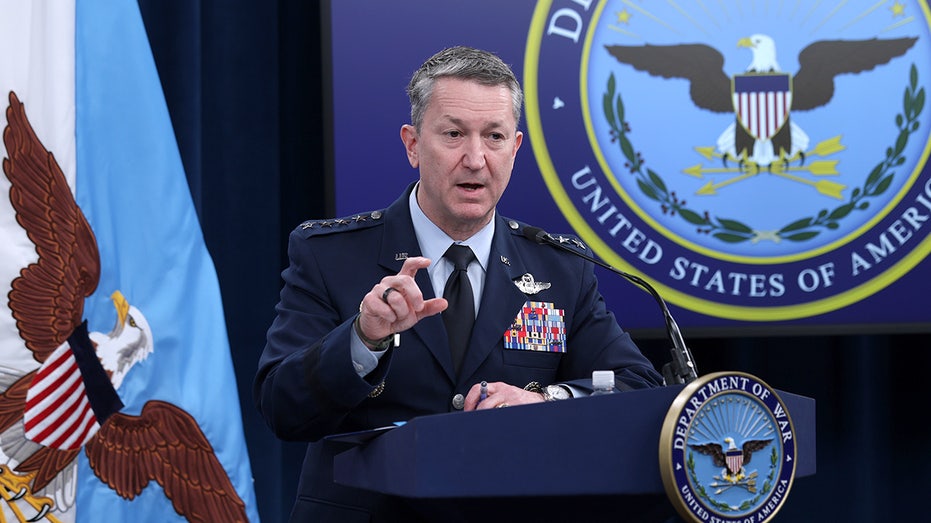
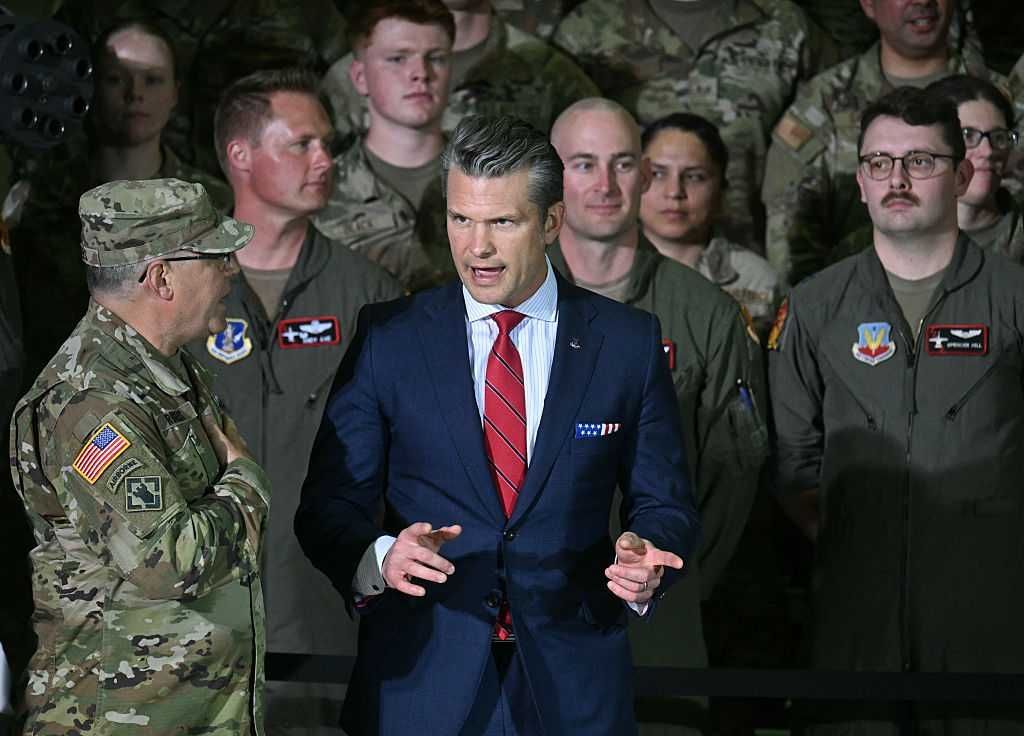 Photo by JIM WATSON/AFP via Getty Images
Gen. Curtis LeMay put it plainly: “I don’t mind being called tough, because in this racket, it’s tough guys who lead the survivors.”
There is hope on the horizon, at least in the Air Force. Through what looks like a deus ex machina, the Air Force Academy has rapidly changed its top leadership — installing a new superintendent, commandant, and dean in a single sweep. The new dean, Col. James Valpiani, has a résumé you could shorthand as “Clark Kent in blue.” USAFA has also begun reversing the overly civilianized faculty model, replacing it with Air Force officers who have the appropriate degrees and the right instincts.
That is a start.
Now comes the core reform: The academy must make U.S. history, U.S. military history, and U.S. Air Force history — from World War II forward — a central, non-negotiable part of the curriculum. Young officers need to understand not only what America can do, but what America is trying to do — and why. They need a strategic rationale, not just a technical one.
That kind of grounding also restores a concept the services once prized: meritocracy. The smartest and most aggressive should lead, and they should lead with a strategic understanding worthy of the responsibility.
Gen. George Patton liked to say, “A good plan, violently executed now, is better than a perfect plan next week.” A good plan depends on something deeper than PowerPoint. It depends on a commander with history embedded in his soul — history understood as lived reality, not as trivia.
I would sure like to help plant it there.




 English (US)