.png)
 1 hour ago
7
1 hour ago
7
Senate Republicans closed ranks Wednesday, handing President Donald Trump a win on his use of force in Iran, despite lingering questions about America’s involvement in the Middle East.
The Senate shot down a resolution from Sen. Tim Kaine, D-Va., aimed at limiting Trump’s military actions in Iran on Wednesday, following days of speculation about whether Republicans would cross the aisle — as they have done before — to reprimand the president.
The administration pushed hard to lobby support for Operation Epic Fury, holding several briefings with Congress to make its case. It appeared to work, at least for now, convincing some Republicans on the fence to back continued military action in Iran.
RUBIO SAYS IN ‘SIMPLE ENGLISH’ IRAN RUN BY ‘LUNATICS,’ DEFENDS TRUMP STRIKE AS ‘RIGHT DECISION’
Only Sen. Rand Paul, R-Ky., voted in favor of the resolution, while Sen. Jon Fetterman, D-Pa., was the lone Democrat to cross the aisle in support.
Democrats argued that Trump’s actions were another instance of him disregarding Congress’ authority to use military force, that they lacked a clear strategy going forward and, further, that they were yet another campaign promise he had broken.
"It's time for the president to keep promises, not break them," Kaine said ahead of the vote. "That's why I'm so glad that we're going to put everybody on the record … Nobody gets to hide and give the president an easy pass or an end run around the Constitution."
Democrats also seized on the administration’s refusal to rule out sending U.S. troops into Iran.
"They refuse to take off the table the insertion of ground troops," said Sen. Chris Murphy, D-Conn., warning the conflict could expand beyond air and naval operations. "This is going to make the operations in Libya look like child’s play."
FALLEN US SOLDIERS IN OPERATION EPIC FURY REMEMBERED AS PATRIOTIC, DEDICATED
Sen. Josh Hawley, R-Mo., who previously supported a resolution to rein in Trump’s war powers in Venezuela, said he would oppose the latest effort.
But like last time, he said a ground operation would require congressional approval.
"I’ve always said that committing ground troops would be something I think would require immediate congressional authorization, but that doesn’t appear to be on the immediate horizon," Hawley said.
Senate Minority Leader Chuck Schumer, D-N.Y., argued that the goalposts kept moving for the administration, which he said was a clear sign that "a strategy is missing."
Republicans countered that the president acted within his constitutional authority as commander in chief. Sen. Lindsey Graham, R-S.C., called the War Powers Act "an unconstitutional shift of authority from the president," arguing Congress retains the ability to restrict funding if it disagrees with military action.
"We don’t need 535 commanders in chief," said Sen. Markwayne Mullin, R-Okla., arguing against the legislation.
There was also fatigue among some in the GOP over Kaine’s repeated efforts to reassert congressional authority in conflicts.
Republicans privately huddled Tuesday to discuss the strikes and the upcoming war powers vote ahead of their briefing with Secretary of State Marco Rubio, CIA Director John Ratcliffe, Joint Chiefs of Staff Chair Gen. Dan "Raizin" Caine and Secretary of War Pete Hegseth.
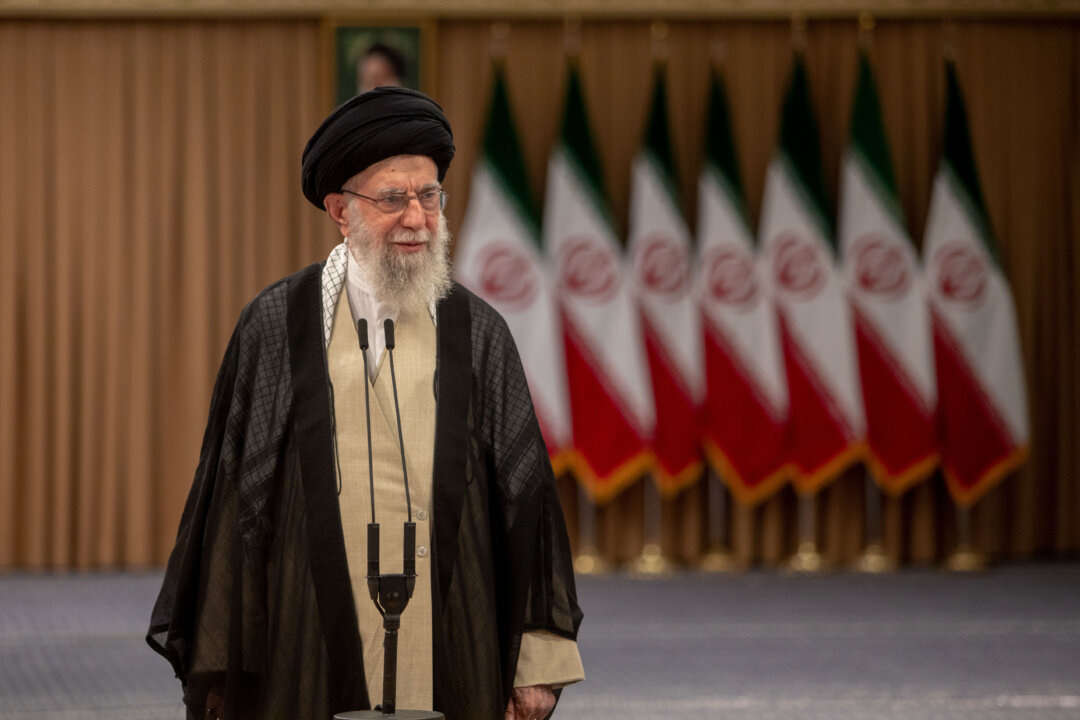
TRUMP SAYS IRAN’S SUCCESSION BENCH WIPED OUT AS ISRAELI STRIKE HITS LEADERSHIP DELIBERATIONS
A source familiar with the closed-door discussion told Fox News Digital that Republicans who may have been swayed were frustrated with Kaine’s repeated use of the Senate floor to push resolutions limiting Trump’s war authorities.
Senate Majority Whip John Barrasso, R-Wyo., noted that it was Kaine’s fifth resolution to rein in Trump’s war powers since he returned to office last year, which accounts for nearly half of all war powers resolutions put forward in U.S. history.
"These resolutions have been used only 11 times in 50 years," Barrasso said. "The senator from Virginia alone accounts for nearly half of them. Yet Senator Kaine introduced zero war powers resolutions when Barack Obama and Joe Biden were president."
Rubio told reporters after a briefing with every senator on Tuesday that the administration had complied with the War Powers Act, though it believes the law is unconstitutional and noted that congressional leaders had been notified ahead of the strikes.
Rubio had previously suggested that the U.S. carried out Operation Epic Fury after it became clear that Israel intended to strike Iran first, a point he later walked back.
"If you tell the President of the United States that if we don't go first, we're going to have more people killed and more people injured, the president is going to go first," Rubio said. "That's what he did. That's what the president will always do."
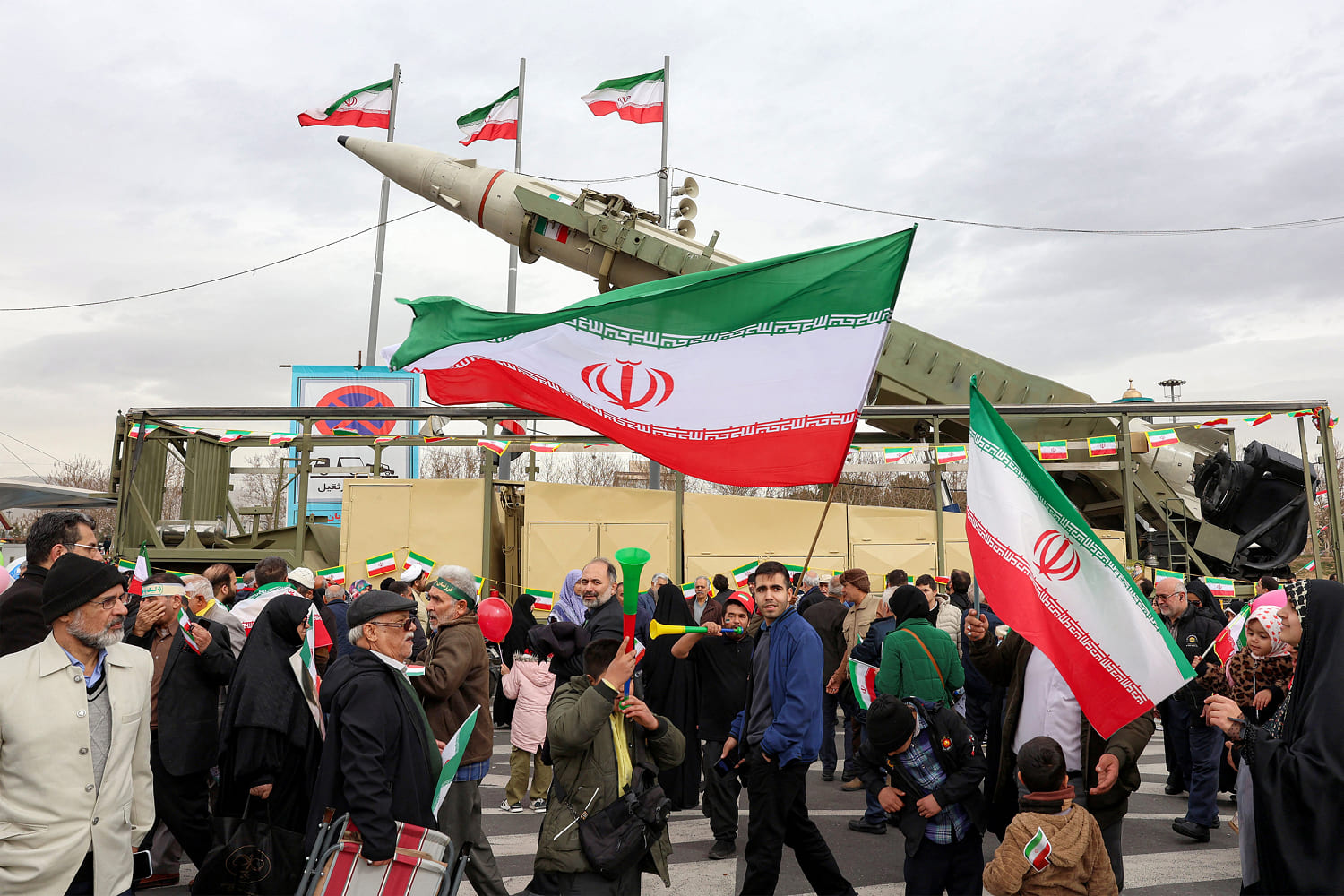
Meanwhile, U.S. forces have now struck more than 2,000 targets in Iran, largely focusing on taking out the regime’s air defenses and missile capacity. Six U.S. service members have been killed in the operation, as have nearly 50 top Iranian leaders.
The Iranian government claims at least 1,045 people have been killed throughout Iran during the operation.








 English (US)