.png)
 2 hours ago
3
2 hours ago
3

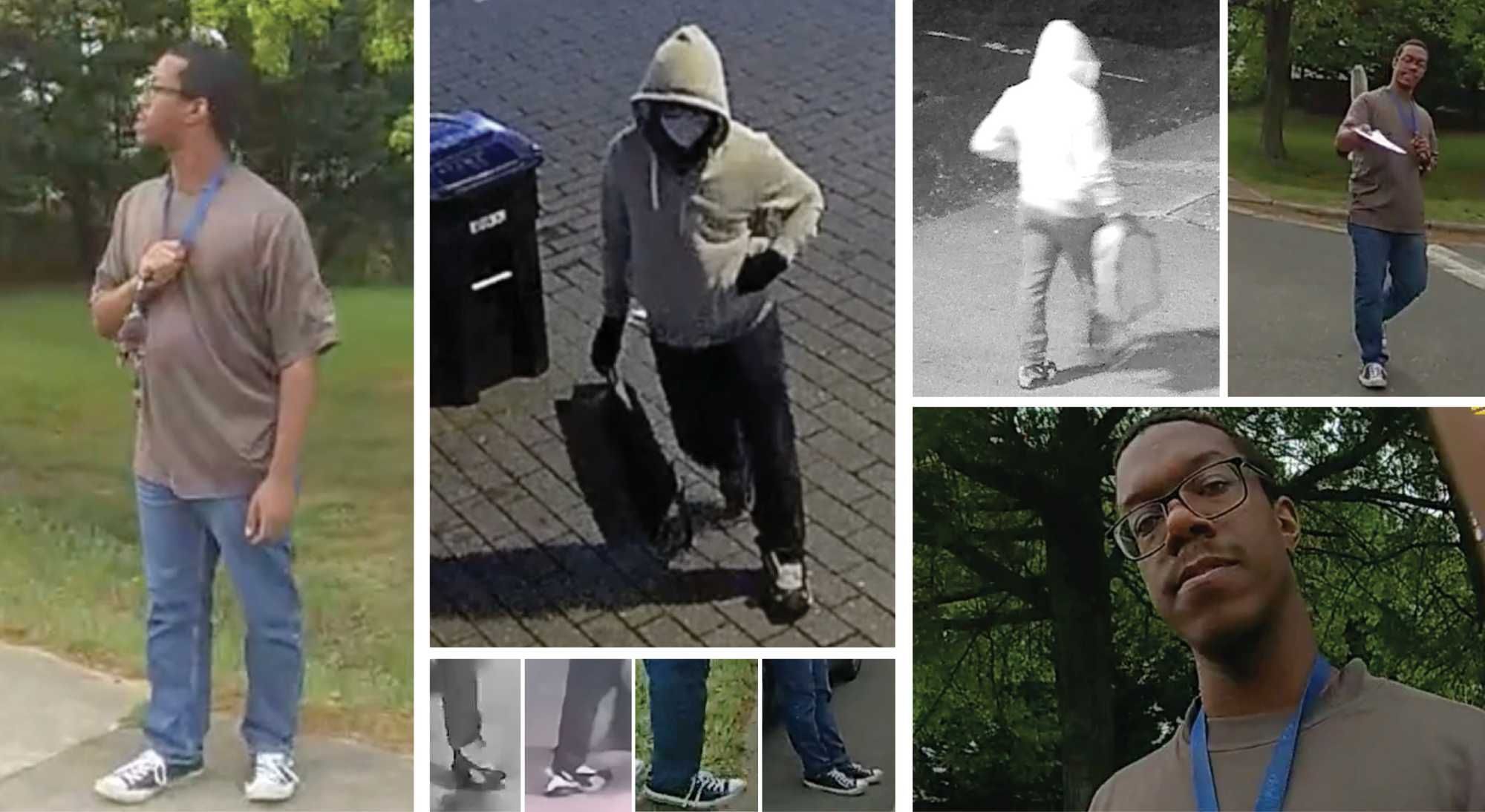
Brian J. Cole Jr. denied placing pipe bombs on Capitol Hill in January 2021 for more than two hours under FBI questioning after his arrest in Virginia on Dec. 4. Cole said he did not recognize the person in a gray hoodie shown on video walking with a backpack on Jan. 5.
After two hours of questioning, Cole, 30, told FBI agents that “everything is just blank” and the interview was “a little too much to process,” according to a U.S. Department of Justice memorandum filed in the criminal case.
‘This could result in the collection of misleading information and false confessions during criminal justice interviews.’
Agents then leaned on him, stating he could face more criminal charges if he lied to them. Then they left him alone in the interrogation room for 20 minutes.
When they returned, agents asked Cole again if he is the suspect shown on surveillance video. “This time, the defendant paused for approximately fifteen seconds, placed his head face-down on the table and answered, ‘Yes,’” the DOJ stated.
The FBI’s tactics in interrogating a man the defense asserts has autism spectrum disorder and obsessive-compulsive disorder will likely become a major bone of contention for defense attorneys. Cole, whose grandmother has said he operates at the level of a 16-year-old, had no lawyer present during four hours of questioning. According to the FBI, Cole signed a waiver of his Miranda rights.
‘Overwhelming evidence’?
In the first real courtroom clash in the pipe-bombs case on Dec. 30, defense attorneys fought back against a DOJ memo claiming there is “overwhelming evidence” that Cole planted “viable” pipe bombs near the Democratic National Committee building and the Capitol Hill Club during a 22-minute span on the night of Jan. 5, 2021.
Defense attorney J. Alex Little argued for Cole’s release from jail pending trial in a 16-page memo. During a hearing before U.S. Magistrate Judge Matthew J. Sharbaugh, Little said Cole is not a danger to anyone. Pretrial detention is an extraordinary measure reserved for the few defendants who are a provable risk to society no matter what restrictions are imposed by the federal court.
Judge Sharbaugh said he received a two-count indictment on Dec. 29 from a District of Columbia Superior Court grand jury charging Cole with the same two counts that are in the federal criminal complaint.
The DOJ posted the indictment on the court docket, dated Jan. 2. It was signed by Jocelyn Ballantine, deputy chief of the National Security Section at the DOJ. Ballantine was previously a top official in the Capitol Siege Section under then-Attorney General Merrick Garland. Her appointment to the pipe-bomb case was greeted with outrage by former Jan. 6 defendants, who questioned why President Donald Trump had not removed her from the DOJ.
 The suspect was across the street from a Capitol Police squad car while walking to the Jan. 5 bomb drop, video shows. Image from Capitol Police CCTV
Judge Sharbaugh did not immediately accept the indictment because there is a legal question whether D.C.’s federal district court can accept a grand jury indictment from the local Superior Court. In D.C., the Superior Court is akin to state, county, and local courts in the 50 states.
A ruling by U.S. District Chief Judge James Boasberg that Superior Court indictments can be accepted in federal district court is on appeal at the U.S. Court of Appeals for the District of Columbia Circuit.
Judge Sharbaugh asked both sides in the Cole case to submit briefs on the matter by close of business Dec. 31. He promised a ruling “in short order”on whether to accept the indictment and whether to release Cole into the custody of his grandmother.
Cole’s attorneys submitted a 20-page memo as directed by Judge Sharbaugh, but the DOJ filing didn’t appear on the official docket until Jan. 2.
Sharbaugh initially sidestepped the indictment issue and the 14-day requirement for a preliminary hearing and on Friday issued a ruling that Cole must remain jailed until trial. The judge said the DOJ convinced him “by clear and convincing evidence that there are no conditions of release that can reasonably assure the safety of the community.”
Judge Sharbaugh said he can make an “independent probable cause determination” even without an indictment or holding a preliminary hearing. He labeled the defense arguments “wrong,” stating that “longstanding caselaw in this district is consistent with that understanding.”
A short time later, Judge Sharbaugh issued an order stating he would accept the Superior Court indictment of Cole because the DOJ “represents that it will promptly seek a superseding indictment from a federal grand jury panel as soon as those panels reconvene.”
The DOJ’s briefing on the legality of the judge accepting the Superior Court indictment didn’t appear on the case docket until Friday, after the judge issued his decision. A portion of the document was redacted that described “extenuating circumstances” faced by the DOJ because federal grand juries were not available from Dec. 22 through year’s end.
Blaze News reached out to Little and the DOJ for comment but did not receive a reply by publication time.
Little sought to have a preliminary hearing Tuesday, because Cole was well beyond the 14 days prosecutors had under the law to secure an indictment or submit to an adversarial preliminary hearing. Cole made an initial court appearance on Dec. 5.
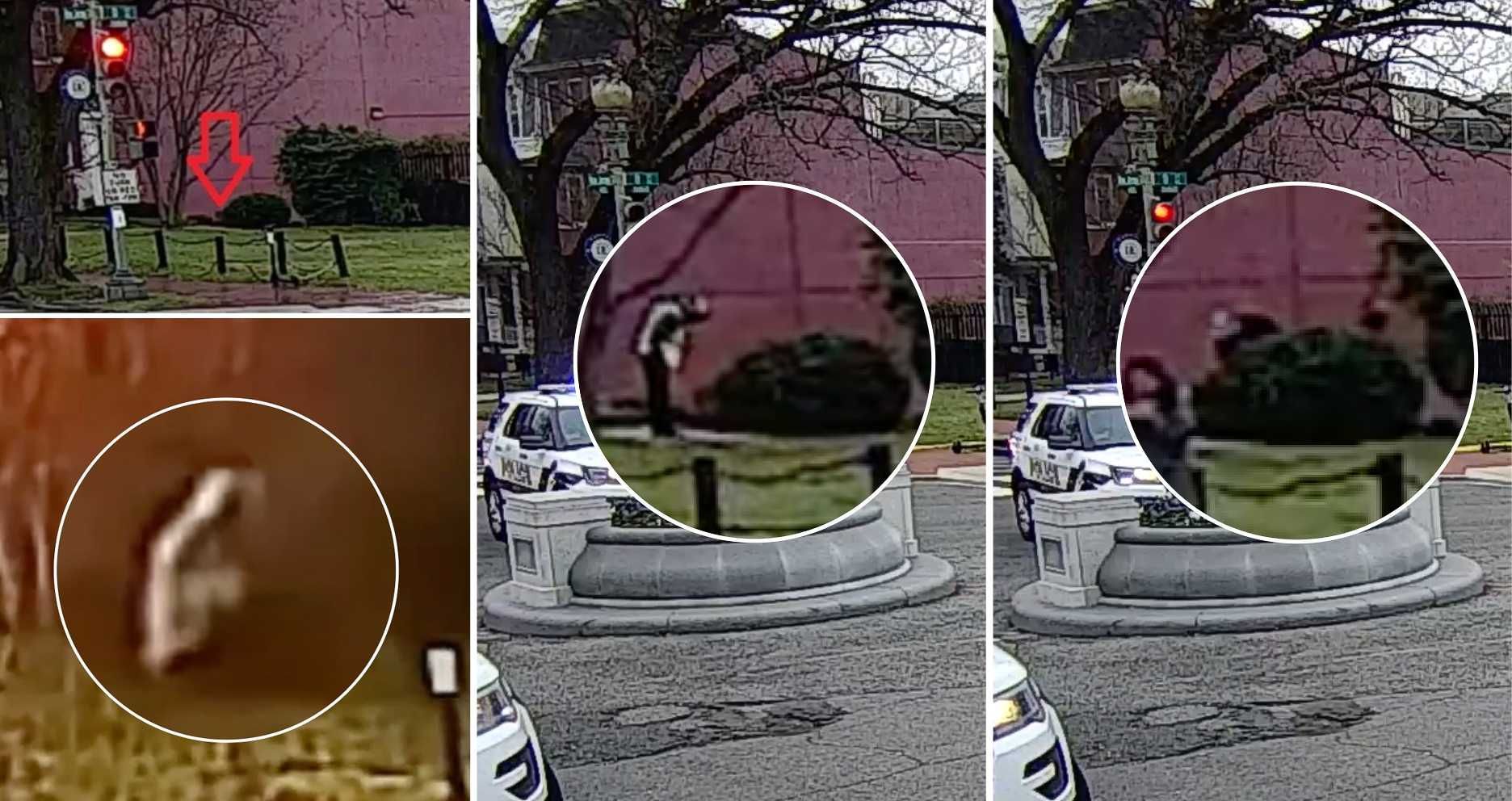 Police walked right past the DNC pipe bomb to first look under a bush where the bomb suspect sat 17 hours earlier. Photos by U.S. Capitol Police
Little said prosecutors told him they never sought an indictment from a federal grand jury. They rushed to seek an indictment from the Superior Court grand jury on Dec. 29 only after the defense made it clear it would demand a probable-cause hearing. A preliminary hearing allows the defense to cross-examine witnesses, unlike a grand jury, which hears only from prosecutors.
“The government wants to avoid a preliminary hearing, where its evidence will be tested in public,” Little wrote on Dec. 31. “Rather than subject its proof to cross-examination, the government sprinted to a different court — supervised by different judges and subject to different rules of evidence, privilege, and juror competency — to secure a last-minute indictment.
“Only after defense counsel insisted on holding the preliminary hearing did the government pursue its current path — seeking a federal indictment from a D.C. Superior Court grand jury,” Little said. “… The government either must present evidence at a preliminary hearing sufficient to establish probable cause, or the Court must release Mr. Cole from custody without conditions.”
Prosecutors contend that Cole gave a full confession to agents on Dec. 4.
“The defendant explained that he made the black powder in the devices using charcoal, Lilly Miller sulfur dust and potassium nitrate that he purchased from Lowe’s,” wrote Assistant U.S. Attorney Charles Jones. “The defendant mixed these ingredients in a Pyrex bowel [sic] and used a spoon or measuring cup to pour the black powder into the devices.
“According to the defendant, he learned to make the black powder from a video game that listed the ingredients and he also viewed various science-related videos on YouTube to assist him in creating the devices.”
The document did not identify the video game or provide specifics on the YouTube videos that allegedly guided Cole on making the bombs.
Little has moved twice to have his client released from the Rappahannock Regional Jail — either under court supervision or without conditions.
Prosecutors insist that Cole is a danger to the public, based primarily on the seriousness of the charges against him. Little told Judge Sharbaugh that Cole has maintained employment in the family bail bonds business since Jan. 6 and has no criminal record or evidence of political activism or online postings advocating violence.
Reset cell phone 943 times
The revelation of Cole’s autism and OCD puts the evidence — from the confession to the claim that he factory-reset his phone 943 times and beyond — and charges in a new light and raises the possibility that the defense will seek to suppress evidence as the case moves toward trial.
According to the Diagnostic and Statistical Manual of Mental Disorders published by the American Psychiatric Association, those with Level 1 autism need support or will exhibit “noticeable impairments.” In contrast, the APA characterizes Level 2 autism as “requiring substantial support” and Level 3 as “requiring very substantial support.”
“Inflexibility of behavior causes significant interference with functioning in one or more contexts,” according to the Autism Speaks website. “Difficulty switching between activities. Problems of organization and planning hamper independence.”
Experts say interrogation of persons with autism requires special handling due to the deficits presented by the disorder, which can easily lead to false confessions.
“Such impairments could manifest themselves in proneness to a host of vulnerabilities that place the individual at a severe disadvantage during the interviewing process,” said Jerrod Brown, Ph.D., an assistant professor at Concordia University in St. Paul, Minn., writing in Police Chief magazine.
‘Gullibility should be carefully considered for its potential role in false confessions.’
“Further, individuals may respond promptly, without careful consideration, in a manner intended to please an interviewer,” wrote Brown, who specializes in forensic behavioral health. “This could result in the collection of misleading information and false confessions during criminal justice interviews.”
Detectives and agents need to be aware that autistic individuals can be gullible and at risk of being manipulated, Brown wrote.
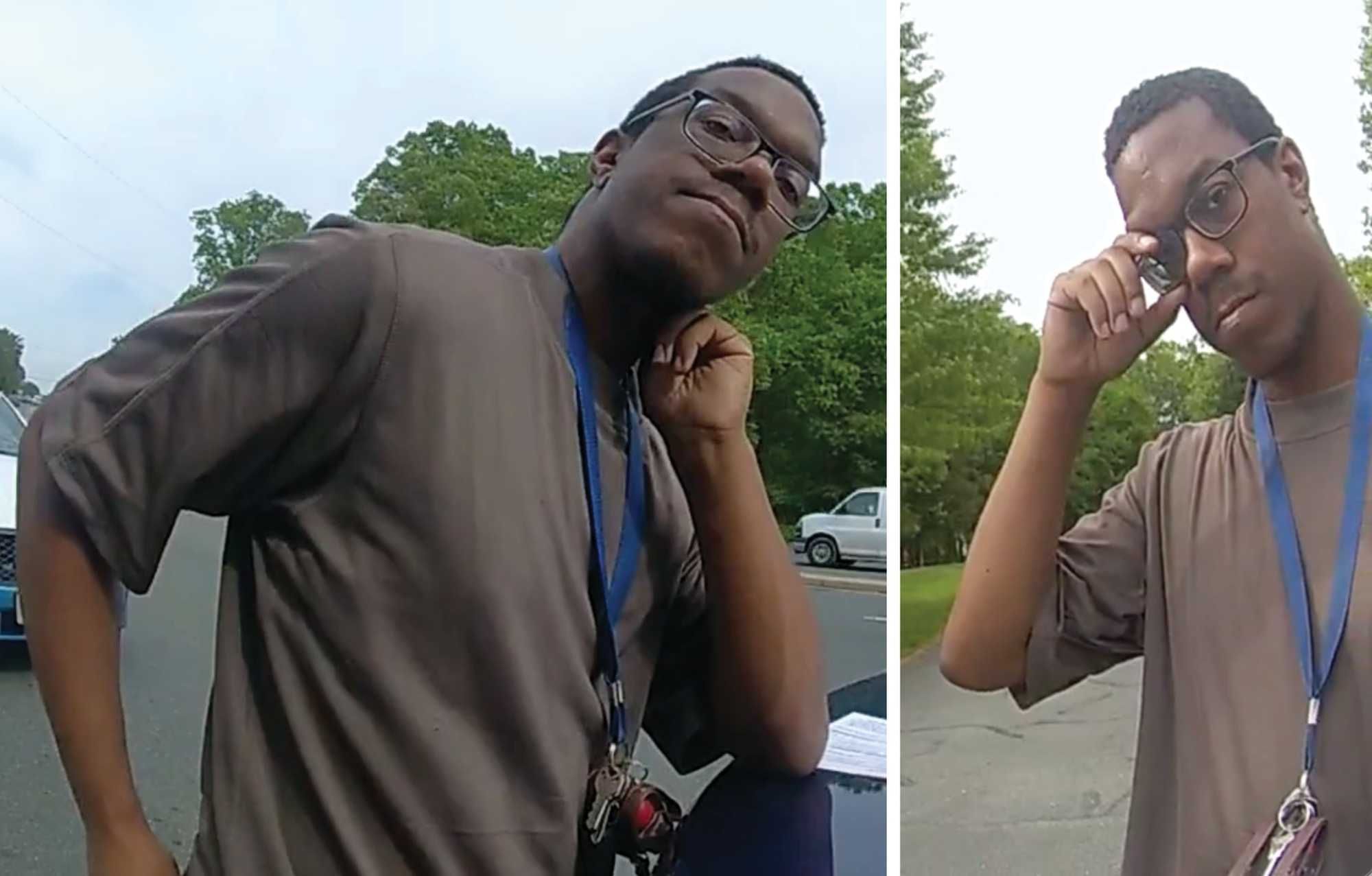 Brian J. Cole Jr. at the scene of a minor traffic accident near his home in Virginia in April 2024.Prince William County images
“In some instances, gullibility should be carefully considered for its potential role in false confessions,” he said. “… This disorder may increase the risk of compliance in demanding and stressful situations. For example, individuals with autism could be vulnerable to doing things (e.g., confessing to a crime that they did not commit) to please others, particularly those in a position of power.”
Questions have been raised as to why the FBI didn’t pursue Cole as a person of interest in 2021, when the bureau developed a list of 186 phones based on tower dumps and a geofence warrant. Since FBI Director Kash Patel and Deputy Director Dan Bongino said Cole’s arrest involved no new evidence, Cole must have been on that list. It is not known if agents made contact with Cole or his family in 2021.
An FBI internal document obtained by the Committee on House Administration Subcommittee on Oversight said the FBI classified 51 of the 186 devices as “not needing further action” because the phones “belong[ed] to law enforcement officers or persons on the exclusion list.”
Thirty-six of the 186 phone numbers were assigned to FBI special agents for interviews, and 98 of the numbers “required additional investigative steps,” according to a January 2025 U.S. House report. It is not clear whether anything came of those investigative steps, the report said.
Like Blaze News? Bypass the censors, sign up for our newsletters, and get stories like this direct to your inbox. Sign up here!








 English (US)