.png)
 10 hours ago
3
10 hours ago
3
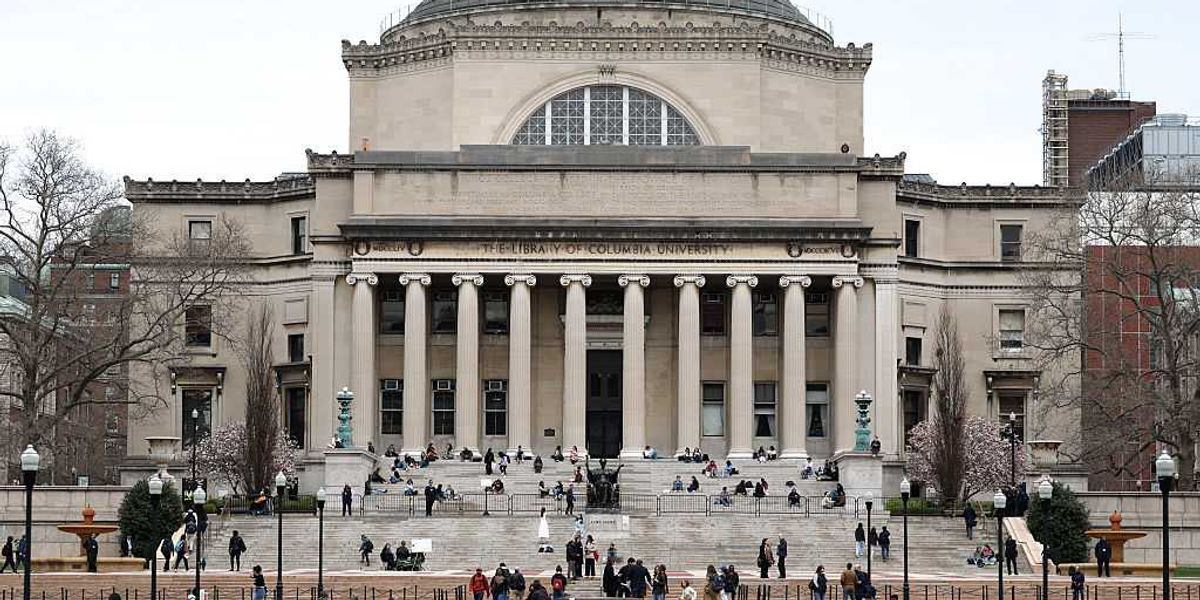
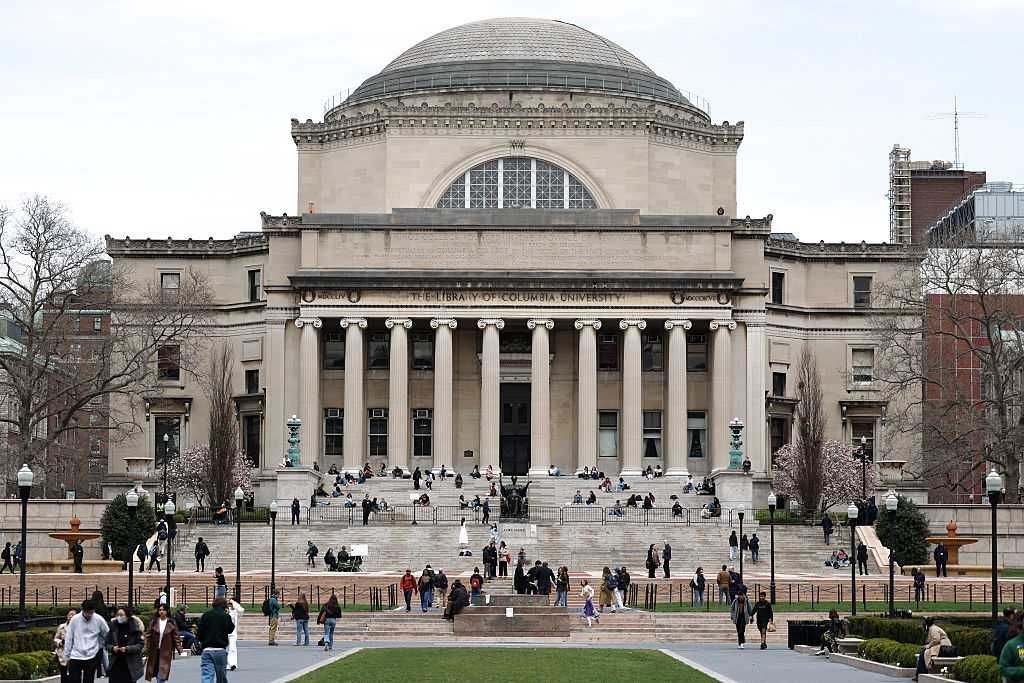
Former Columbia University President Lee C. Bollinger has produced a slender, puzzling book. It glides past the central problems facing campuses — weak leadership, weak accountability, and ideological capture — and lingers instead on nostalgia and the “community of scholars.”
It also prompts a blunt question: Why do university presidents publicly dissemble? Not in the chest-thumping manner of a cable-news partisan, but in the lubricated, bureaucratic manner that says almost everything except what matters most.
Bollinger presents a university with virtually no blemishes — blameless, well-run, noble — and then points outward, toward Trump and the federal government, as the true threat.
Bollinger was recruited by W.W. Norton editor in chief Dan Gerstle to adapt lectures delivered in spring 2025 into a book. He aims to remind readers that the American university occupies a critical place in society. In the abstract, he’s right, and parts of the argument work.
As a constitutional law scholar, he also tries to weave the First Amendment into the university’s institutional identity, suggesting the two are inseparable. That claim needs more force than this book provides. The prose reads like speech material polished for print. The ambition outruns the substance.
But the real center of gravity arrives quickly: Bollinger casts the primary threat to higher education as “outsiders,” especially the federal government and, most of all, Donald Trump. Yes, it’s another Trump-as-villain entry in the culture wars, and likely the reason this book was rushed into print. Whatever Bollinger’s hygienic tone, this is hatchet work in a gentleman’s suit.
Bollinger is no detached man of letters offering serene judgment from above the fray. He remains a prominent operator inside elite academic and political networks. His calm posture functions less as neutrality than as insulation.
The book is divided into three parts: “The University,” “The First Amendment,” and “The Fifth Branch.” If the press is the “fourth branch” of government, Bollinger argues the university deserves branch status too.
I write often about the university’s high mythology — the version parents and alumni carry around because universities actively sell it. Bollinger indulges that mythology. His university is a place of serious minds, noble purpose, and largely blameless governance, with only the occasional “organized anarchy,” the predictable messiness of complex institutions.
He offers this earnest passage:
I challenge anyone to spend a day, a week, or more in any university — sitting in on classes, attending lectures, meeting with students, visiting a laboratory, being part of a seminar — and not come away deeply impressed, indeed invigorated, about the human potential to know and to grasp something of our existence.Many readers will want to believe it. Bollinger counts on that desire.
And here’s where the trouble begins.
RELATED: How America’s universities embraced anti-American ‘blood and soil’
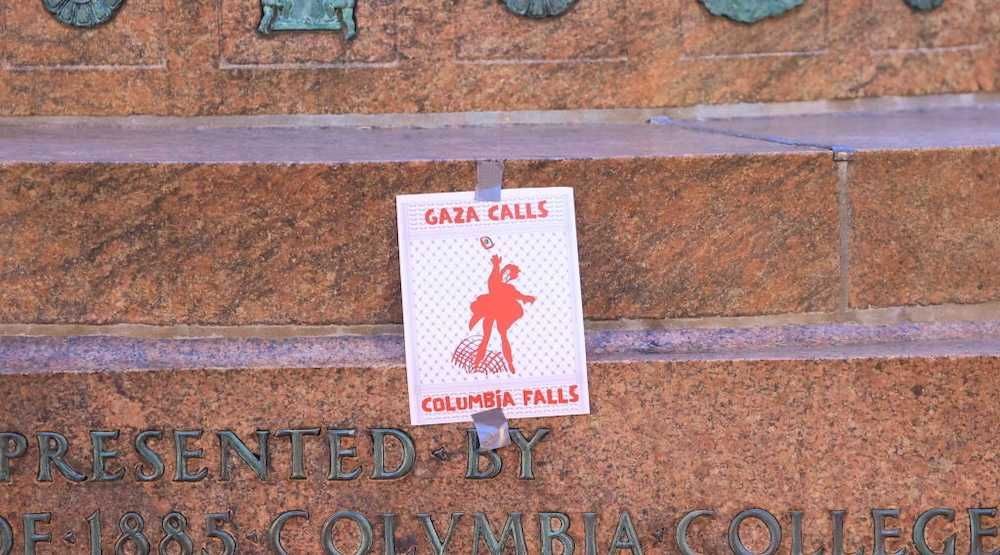 Photo by Selcuk Acar/Anadolu via Getty Images
The book’s best section is its opening chapter, which promises an insider’s look at how universities actually function. Bollinger divides the institution into multiple levels of analysis — individual, university, and system — in a way that will feel familiar to anyone trained in serious political science. The intent looks analytic. The presentation sounds authoritative.
Then he leaves out the single biggest operational reality on most campuses.
Bollinger describes academic affairs — faculty, curriculum, and the traditional governance story — and effectively ignores student affairs, often rebranded as “student success.” That omission is not a minor gap. It’s the whole fight.
Modern universities are not simply faculty-driven institutions with a few administrative appendages. They are sprawling managerial systems in which student affairs bureaucracies routinely outnumber faculty and operate as an ersatz ideological faculty through what they call the co-curriculum: workshops, trainings, mandatory seminars, “wellness” programming, diversity offices, identity centers, residence-life systems, conduct regimes, orientation pipelines, and retention machinery.
This is education by parallel authority.
Student affairs is frequently staffed, trained, and ideologically shaped by external nonprofits such as ACPA, NASPA, NADOHE, and NACADA. These groups do not simply offer best practices. They often function as ideological conduits, pushing “critical pedagogy” and “critical consciousness” as an institutional mission. One of them literally advertises the goal of “boldly transforming higher education.”
That transformation is not a side story. It is the story. It’s how the modern university moved from the “shared governance” myth to a bureaucratic reality where the faculty increasingly serves as a decorative legitimacy layer.
Bollinger never deals with it. Not directly. Not honestly. Not at all.
Contemporary scholarship has already documented how student affairs increasingly designs, delivers, and assesses structured educational experiences parallel to the faculty curriculum. The same bureaucracy often serves as a channel for activism infrastructure that has helped fuel campus chaos since 2020.
Student affairs is wholly under the control of the extremist left. Yet Bollinger presents a university with virtually no blemishes — blameless, well-run, noble — and then points outward, toward Trump and the federal government, as the true threat.
It’s hard not to conclude that the nostalgia is doing work. Bollinger affirms the version of the university that parents and alumni want to believe still exists: the citadel of learning devoted to truth, stewarded by wise leaders, occasionally messy but fundamentally righteous.
RELATED: How to muzzle the three-headed diversity monster
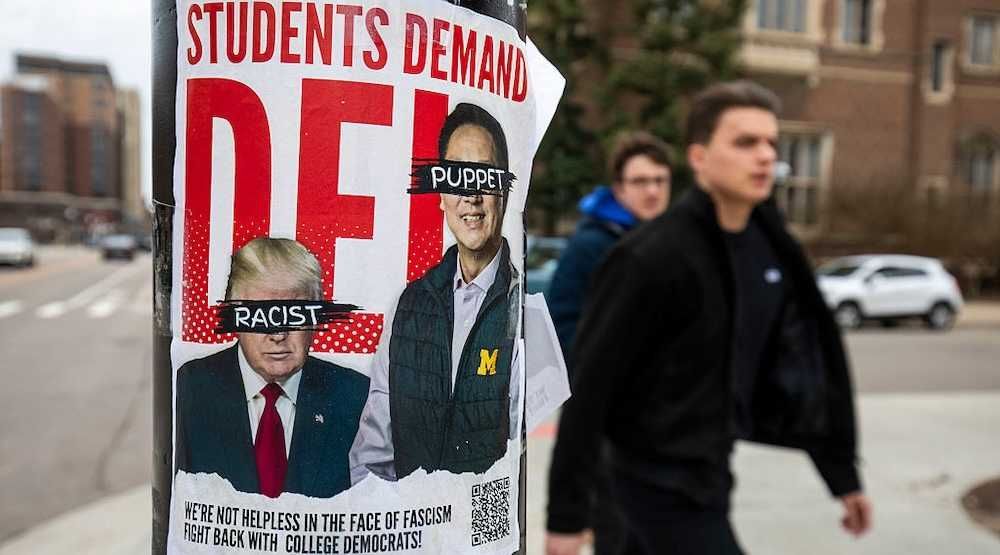 Photo by Bill Pugliano/Getty Images
That image now functions as cover.
It shields what many universities have become: money-making and idea-laundering operations that give lip service to the people paying the bills — parents, students, donors — while empowering internal bureaucracies that answer to their own ideological class.
Bollinger’s personal position makes this posture easier to spot. He belongs to the wealthy mandarin class that runs elite higher education. His Columbia compensation reportedly topped $5 million annually. Columbia’s assets were roughly $23.5 billion at the end of 2022.
He also guards his own record with careful selection.
While he was president of the University of Michigan, the school was involved in two affirmative action cases decided by the Supreme Court in 2003. Bollinger highlights the win (Grutter v. Bollinger) but gives scant attention to the loss (Gratz v. Bollinger). In places, his wording blurs them together in a way that can leave casual readers thinking Michigan prevailed across the board.
It didn’t. In Gratz, Michigan’s admissions policy violated the Equal Protection Clause. That case foreshadowed the eventual collapse of the broader regime in Students for Fair Admissions v. Harvard two decades later.
At Columbia, Bollinger helped lay the groundwork for the institution’s later disorder by expanding and empowering DEI bureaucracies in response to the 2020 “racial reckoning.” Many presidents issued pro forma statements they now quietly regret. Bollinger went further: He built and strengthened the permanent infrastructure.
My view is straightforward: Bollinger represents the ascent of the new mandarins — administrators who guard prerogatives, expand PR machinery, and grow their internal empires against faculty authority, all while presenting themselves as the guardians of scholarly life. He is the living, breathing antithesis of what the university and its presidents should be in the 21st century.
In “University: A Reckoning,” Bollinger wants readers to see a university that largely no longer exists. His lack of candor ensures that readers learn little about how universities actually function — and even less about why so many are failing.









 English (US)