.png)
 2 hours ago
1
2 hours ago
1
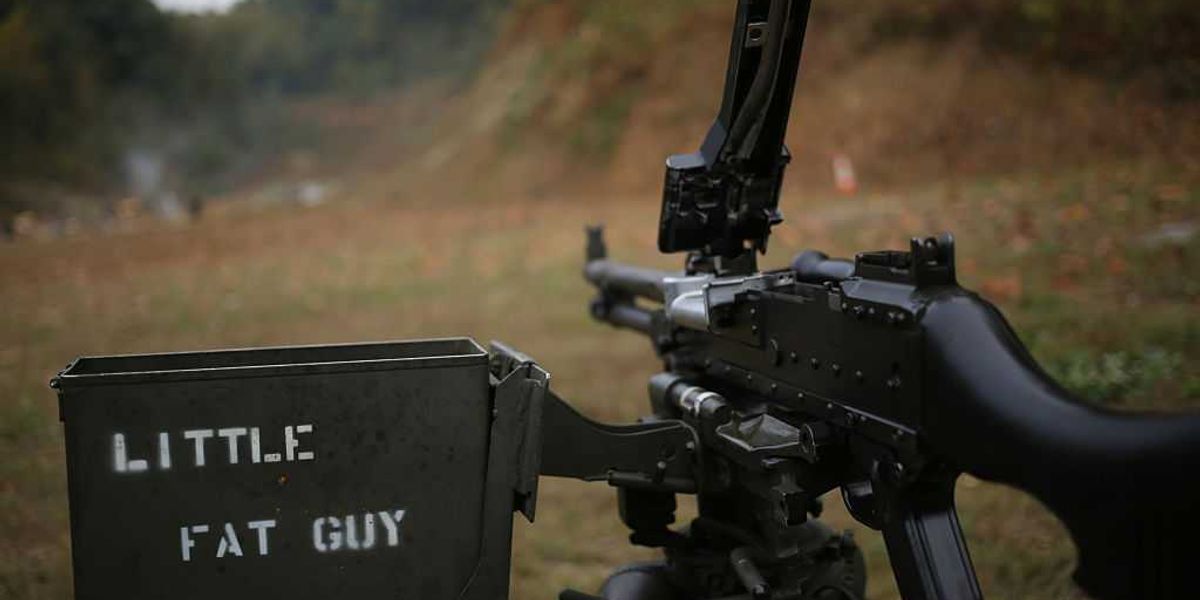
Think back to fourth-grade American history. We learned why the Articles of Confederation failed and why the Constitution replaced them. One major problem was that states struggled to trade with one another and often tried to protect local interests by taxing or restricting goods from other states.
That helps explain why the Constitutional Convention gave Congress the power to regulate interstate commerce in Article I.
The challenge to the machine-gun ban asks more than whether one statute survives. It asks whether the Constitution’s architecture still restrains power at all.
In grade school, the principle sounded straightforward enough. Two centuries of litigation have made it anything but. A basic question still hangs over the Commerce Clause: How much power does it actually give Congress?
Can Congress force you to buy health insurance? Can it stop you from growing wheat in your own garden to bake your own bread? Can it ban you from possessing a firearm?
Not buying a firearm, which plainly involves commerce. Not using one. Just possessing one.
And does the answer change if that firearm happens to be a machine gun?
In 1986, Congress made it illegal “for any person to transfer or possess a machine gun,” with narrow exceptions for military use and for machine guns lawfully possessed before the statute took effect. For everyone else, the ban is absolute.
One might expect Congress to have debated whether the Commerce Clause, or any other constitutional provision, gave legislators the power to ban mere possession of a machine gun. It did not. The only real justification for banning post-1986 machine guns came in a single House floor statement from Rep. William J. Hughes (D-N.J.), the amendment’s sponsor: “I do not know why anyone would object to the banning of machine guns.”
Hughes did not offer a constitutional justification. He simply assumed Congress had the power and never bothered to prove it.
In reality, Congress does not possess a general police power. It cannot create a comprehensive national criminal code simply because it wants to. That authority belongs chiefly to the states. Congress may enact criminal laws only when they rest on one of its few enumerated powers.
That’s the essence of federalism.
RELATED: Want a machine gun? These states might soon make buying one easier
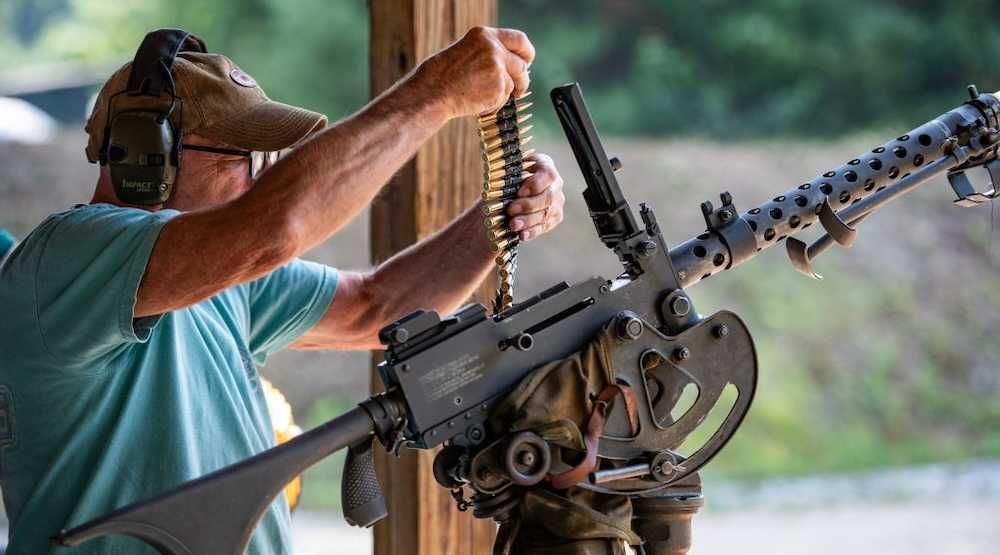 JOSEPH PREZIOSO/AFP/Getty Images
So the real question remains: Does Congress have the power to prohibit mere possession of a machine gun, or does that authority remain with the states and the people?
The U.S. Court of Appeals for the Fifth Circuit has confronted the question before, but it has never answered it.
In 1997, the full court, sitting en banc, split evenly in United States v. Kirk. Sixteen of the 17 judges participated, and the court divided straight down the middle. Half concluded that the machine-gun ban exceeded Congress’ Commerce Clause authority. Half disagreed. Because no majority emerged, the district court’s judgment was affirmed by default, and the written opinions carried no precedential force.
Three months later, the court faced the issue again in United States v. Knutson. This time, the panel included three judges who believed Congress did have the power to ban machine guns. They upheld the law. The full court stayed silent, and Knutson remains binding precedent.
Two months ago, Judge Don Willett raised the issue again in a nonbinding concurrence in United States v. Wilson. Willett expressed serious doubt that Congress has constitutional authority to prohibit mere possession of a firearm. He walked through the Supreme Court’s three recognized categories of Commerce Clause authority: the channels of interstate commerce, the instrumentalities of interstate commerce, and activities that substantially affect interstate commerce. Mere possession of a firearm, he concluded, “fits uneasily within any of these categories.”
Willett’s observation gets to the heart of the problem.
If mere possession counts as interstate commerce, or as something Congress may regulate under the Commerce Clause, then federal power no longer has a meaningful limiting principle. Congress can regulate nearly anything, so long as some lawyer can imagine a downstream economic effect.
That is not constitutional government. It is federal power without a boundary.
Now, nearly three decades after Knutson, the Texas Public Policy Foundation and Temple Gun Club are prepared to press the issue again. Temple Gun Club is made up of law-abiding citizens who want machine-gun ownership made lawful for their members. The organization is not talking about weapons bought on some national market. It is talking about firearms the members would build themselves by converting guns they already lawfully own, firearms that never entered the stream of interstate commerce.
This case is about more than just machine guns. It is about whether the Commerce Clause still has limits. If Congress may ban possession of an item that was never bought, never sold, never exchanged across state lines, and has no substantial effect on interstate commerce, then Congress can regulate virtually every aspect of human life.
RELATED: When good guys carry, killers lose — and the media looks away
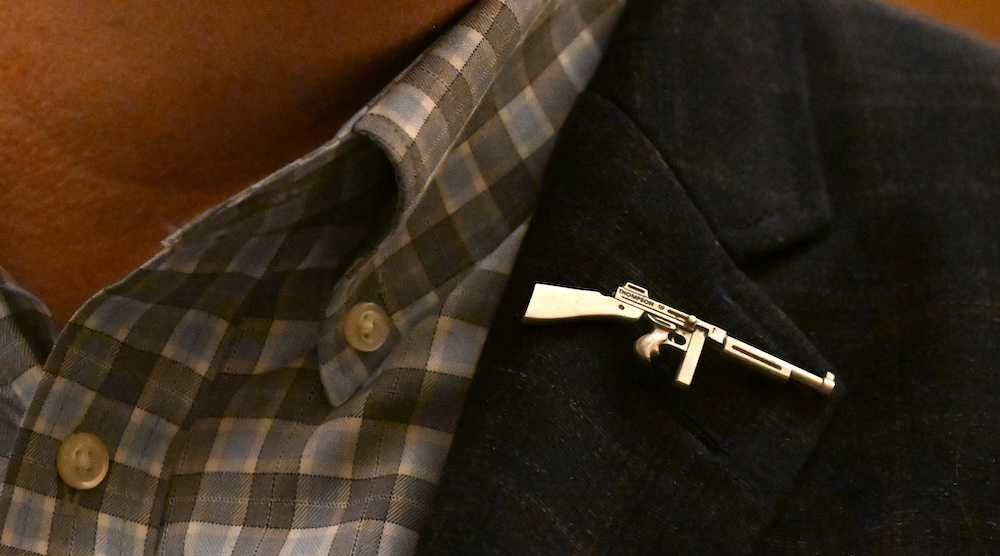 Helen H. Richardson/MediaNews Group/Denver Post/Getty Images
Willett made the point well in Wilson:
Far from viewing this sort of incremental, frog-boiling expansion of federal power as legitimate, the Founding generation saw it as the more insidious threat — a quiet, gradual erosion of liberty rather than a sudden seizure of it.That’s right. The courts should return to first principles. They should revisit the machine-gun ban and ask the question Congress ducked in 1986: Does “regulate commerce” still mean something limited and intelligible, or has the phrase become a blank check for federal control?
The challenge to the machine-gun ban asks more than whether one statute survives. It asks whether the Constitution’s architecture still restrains power at all — or whether the 10th Amendment has been reduced to a historical footnote.








 English (US)