.png)
Expect the unexpected, the saying goes, and that was certainly true in 2025. President Donald Trump was a major source of global and domestic disruption, but the year’s instability was also driven by natural and manmade disasters, political violence and technological progress.
There’s no reason to believe 2026 will be any calmer, what with looming elections, ominous financial portents and increasing climatic instability. That’s why POLITICO Magazine reached out to an array of futurists, scientists, foreign policy analysts and others to ask: What is the unpredictable, unlikely but entirely plausible thing that could happen in 2026 that could completely upend American life?
Some of our experts saw AI as being a force for disruption in 2026, sometimes for good and sometimes for ill. But the economy, the climate and other technologies will also play a role, our contributors said. And if past is precedent, at least some of them will happen, in some form – after all, our previous listings of “Black Swan” scenarios have a track record of being eerily prophetic. So let’s take a look into our experts’ crystal balls for 2026:
‘Flash crashes may become possible with generalist AI agents’
BY DEAN W. BALL
Dean W. Ball is a senior fellow at the Foundation for American Innovation and author of the AI-focused newsletter Hyperdimensional.
The Black Swan event I think about often is not about the AI industry crashing, but a crash of a different sort: a “flash crash.” Today, this term refers to sudden swings in financial markets caused by unforeseen behaviors or bugs in algorithmic trading systems. Often, the crashes can emerge from the interaction of two or more automated trading systems with one another. These older machine learning systems, impactful though they may be, are narrow tools; they lack the general-purpose utility of a frontier language model like ChatGPT. In the near future, events somewhat like flash crashes may become possible with generalist AI agents interacting with each other in unpredictable ways. Instead of being confined to the relatively narrow domain of financial asset trading, though, these emergent events could occur in a vast range of contexts.
In 2026, frontier artificial intelligence models will become more capable. They will be able to work on complex tasks for increasing lengths of time. Their intelligence — as measured by the ability to develop sophisticated plans, engineer software, perform advanced mathematics and science, and the like — will rise. Buoyed by this extra intellect, and by improved methods of training, the models will also have more sophisticated personalities.
Here is the basic threat model: As these systems are deployed in more and more real-world settings, including in commerce, customer service and cyber defense, it is very likely they will interact with one another — often adversarially. We do not know what will happen when hundreds of thousands, then millions, then billions of adversarial interactions between sophisticated AI agents occur daily. But the ingredients are there for something unexpected, unpredictable and strange. The impacts could very well be large.
‘Debt-fueled financial disruptions’
BY MOHAMED A. EL-ERIAN
Mohamed A. El-Erian is the Rene M Kern Professor at Wharton School, chief economic adviser at Allianz and chair of Gramercy Fund Management. He was formerly president of Queens’ College, Cambridge University.
U.S. capital markets are on fire, providing ample funding to everything from massive AI projects to "zombie companies." The resulting surge in asset prices is fueling a “wealth effect” that has contributed to economic growth.
And yet the ongoing turbo-charged credit environment has enabled a significant accumulation of leverage and debt, a loosening of lending standards and weaker due diligence — and could set the stage for debt-fueled financial disruptions. Growing aspects of how these markets operate are starting to feel worrisomely similar to the environment before past financial crises. Even worse, few are guarding against it, and policymakers and markets are not yet pricing it in. This risk, if triggered, would have consequences well beyond the world of finance.
If history repeats itself — and it is a big if — we risk a shock that would not just hurt finance but also undermine economic wellbeing and hit the most vulnerable hardest.
‘Syria descends into a vicious renewal of civil war’
BY RYAN CROCKER
Ryan Crocker was a career Foreign Service Officer who served six times as an American ambassador: Afghanistan, Iraq, Pakistan, Syria, Kuwait and Lebanon.
March 2026. The end of an unusually cold winter in Syria. Hundreds of thousands of refugees and internally displaced Syrians from the devastated suburbs of Damascus have spent months in utter misery: Their homes were destroyed during the conflict. They are without shelter, employment, medical care and schools for their children. Drastic cuts in international assistance have left agencies such as UNHCR and UNICEF unable to meet even basic needs. Many have died. Many more are ill and malnourished. All are in despair. And some are very angry.
One night, that anger explodes into a wave of rioting in the city of Damascus. Largely untouched in the war, the city stood as a mocking symbol of privilege and prosperity to people without hope of either. The U.S., still without an embassy there, is caught off guard.
So is the Syrian government. Unskilled in riot control, security forces respond with lethal force. Within days, the violence has spread and metastasized into sectarian and ethnic conflict as Bedouin tribes renew attacks on Druze communities in the south and Sunnis seek vengeance against Alawis in the west. Kurds in the northeast break off talks with the Damascus government, and deploy forces to contested border areas.
Within weeks, the Israeli military intervenes in support of the Druze while Turkish forces move against the Kurds. Syria descends into a vicious renewal of civil war, this time amplified by a dangerous regional conflict. ISIS and Iran take advantage of the chaos by respectively moving to retake control of areas in the north and reestablish supply lines to Hezbollah.
Syria, which had been a symbol of hope for the Middle East, instead becomes the epicenter of the most destabilizing conflict the region has seen in decades.
‘Society enters a state of psychosocial freefall’
BY ERICA ORANGE
Erica Orange is a partner at The Future Hunters, a leading futurist firm, and the author of AI + The New Human Frontier: Reimagining the Future of Time, Trust + Truth.
The shift in this scenario is from today’s highly polarized but still shared world — where groups interpret events differently — to a fractured reality in which the events themselves cannot be verified, origins cannot be traced, and no authoritative source can prove what is real. Instead of opposing political narratives and conspiracy theories, society enters a state of psychosocial freefall where AI creates a series of parallel realities. It will mark a transition not from disagreement to deeper disagreement, but from disagreement to the collapse of a shared reality altogether.
This leads to the upending of the midterm elections. Ultra-realistic deepfakes flood the infosphere. One week before the election, a deepfake shows one candidate accepting a bribe from a foreign government. Minutes later, another deepfake shows the opposing candidate calling for the abolition of elections. Both clips go viral before fact-checkers can respond. AI instantly generates thousands of supporting “eyewitness accounts,” each with hyper-realistic voices, backstories and social profiles. In the following days, AI-generated “leaked documents” allege voting manipulation, foreign hacks and corrupted ballots. The public no longer mistrusts the government. They mistrust reality.
Democratic institutions prove incapable of responding at digital speed. While verification protocols are debated, AI systems generate thousands of new, contradictory narratives every hour. Trust erodes. Civic responsibility withers. Fragmented truth enclaves harden into antagonistic tribes. Citizens become more apathetic. Institutional authority collapses. The vacuum is quickly filled by fast-moving authoritarian actors and ever-more powerful tech platforms that step in as the new arbiters of “truth.”
‘An appetite to put Russia’s nuclear arsenal to work’
BY ALEC ROSS
Alec Ross is a distinguished professor at the University of Bologna, Italy.
By Jan. 1, Vladimir Putin will already have exceeded the average life expectancy for Russian men by five years. One thing that would shake all the pieces on the world’s 196-country chessboard would be his death, though it is unlikely to come from his being thrown out of a fifth-story window.
What would follow is chaos with a conclusion that nobody could credibly game out with confidence.
We could anticipate figures who have run for and won elections, like former Russian President Dmitry Medvedev, asserting themselves and trying to build popular support. This effort would almost certainly run at cross-currents with the designs of the siloviki, the innermost circle around Putin that is poorly understood and mostly impermeable. Those who have leaked have ended up in Siberia or six feet underground, and this same faction controls Russia’s military and security apparatus.
The outcomes span an unusually wide spectrum. There could be an attempt to dial down Russia’s military activity and dial up its economy as a sort of post-Putin reset. Or things could get even worse, with someone like Nikolai Patrushev — a longtime Putin adviser and a member of the siloviki — taking control, who is also well past Russian male life expectancy and who has not just a willingness but an appetite to put Russia's nuclear arsenal to work.
‘Political violence leading up to the midterms’
BY ANDREW YANG
Andrew Yang is a former Democratic presidential candidate and CEO of Noble Mobile, a new wireless carrier.
The event that could derail 2026 is political violence leading up to the midterms. A candidate gets shot and wounded or killed while on the trail. Some officeholders call for peace or perspective, while others grimly warn that this is necessary to defend the country from tyrants. Threats against candidates on both sides skyrocket in the days immediately afterwards, and several local candidates drop out because they are tired of having their family on the run or under armed guard.
Then an AI video showing a candidate getting murdered in grisly fashion is circulated. It can't be confirmed or denied because the actual person is unavailable, and the video goes viral. The party in power says that certain races can't be safely held or sites can't be protected, prompting a postponement in those districts, which is immediately protested by the other side. Marches begin that are then countered by the National Guard. A haze settles over the midterm as results are tied up in court. During that time, various Republican members of Congress refuse to step down while members on both sides quietly retire.
Or, maybe everything will go smoothly, we'll all agree on the results, and our faith in democracy, truth and a shared objective reality will be restored. Anything is possible.
‘Artificial intelligence is a time machine that is accelerating the robotic future’
BY ARATI PRABHAKAR
Arati Prabhakar served as director of the White House Office of Science and Technology Policy under former President Joe Biden. She was previously director of the National Institute of Standards and Technology, director of the Defense Advanced Research Projects Agency and a partner at U.S. Venture Partners.
With fascination and with fear, humans have long formed emotional connections to the sentience they perceive in their creations. Egyptian priests manipulated statues to convince the populace of a divine intelligence 4500 years ago. Now a century of mechanization has brought us robotic arms in factories, vacuums in homes, and self-driving cars. No product, however, has captured the imagination like the machines that move delightfully and/or spookily like humans.
When I was the director of the Defense Advanced Research Projects Agency (DARPA) a decade ago, we ran a competition at which humanoid robots performed astonishing tasks in our disaster scenario testbed. Yet the blooper reel showed the world’s best robots of 2015 face-planting and collapsing. A lot. Personal assistants and rescue bots seemed decades away.
With new advances, artificial intelligence is a time machine that is accelerating the robotic future. The good news is that the coming generation of robots — embodied AI — will be able to help with search and rescue operations and other dangerous work, and even with housework and elder care. The bad news will be the freakout that comes first. Introducing 3-D droids with human-seeming capabilities into a public still grappling with AI displacing jobs, parasocial relationships with chatbots, and AI slop on social media could trigger anything from anxious dread to significant social upheaval.
When a chatbot was able to text back eerily like a human, many imagined an incipient intelligence. Wait ‘til you see what happens when one droid texts you to say it caught your granddad before he fell on the stairs and another walks into your kitchen and says your daughter didn’t cry today at school dropoff. As you wrinkle your brow, your own personal two-legged robot can mix you a drink, drape a blanket around you, and ask what you think about all this.
‘No water at home and the temperature soaring’
BY AMY ZALMAN
Amy Zalman is a futurist and strategist and a professor at Columbia University's School of International and Public Affairs in New York City.
On the first day of August 2026, eight-year-old Anna dies of dehydration in the American Southwest.
Anna’s family had always had low water pressure and surprise shutoffs in their small house in an unincorporated area on the edge of town, where chronic drought had led to routine shortages and rationing. After Anna’s father lost his job, they couldn’t pay their water bills, and the local utility shut off their water, as utilities in most states are permitted to do. They made do by pooling resources with other families to buy water in bulk when they could — although it was hardly enough when summer temperatures began to mount, some days as high as 115 degrees.
In July, local officials invoke emergency water conservation measures for residents. They also halt bulk water sales, choosing to preserve water for contract with the owners of a recently completed AI data campus that consumes enormous amounts of water to cool its 24-hour-a-day servers. With no water at home and the temperature soaring, Anna and her siblings start to wilt. The nearest store is two miles away by foot, and by the time Anna’s father arrives, nearby residents have already cleared out all of the water and cheap drinks in the heat wave.
When Anna complains that she is dizzy, her mother tries to ignore it. A few hours later, she says her head hurts and lies down on the kitchen floor, listless, her skin drawn. By that evening, her organs begin to fail and she dies.
Two days later, an elderly woman in the neighborhood also dies from dehydration and in the weeks following five more pass away, all from lack of water. Reporters around the world flock in and town officials, caught in the reputational crosshairs of a globally visible, preventable tragedy, seek to close the data center temporarily and return the diverted water to residential use. But on television, the president frames the center as critical to ‘winning the AI race with China,’ invoking emergency powers to block the center’s shutdown.
As the news unfolds, it becomes clear that Anna’s death is not an isolated accident, but a signal of systemic decline at the intersection of inequality, a heating earth and industrial priorities decided elsewhere.
‘Trump will, rightly, take heat for every downside from AI’
BY GARY MARCUS
Gary Marcus, professor emeritus at New York University, is a founder of two AI companies and author of six books, including Taming Silicon Valley.
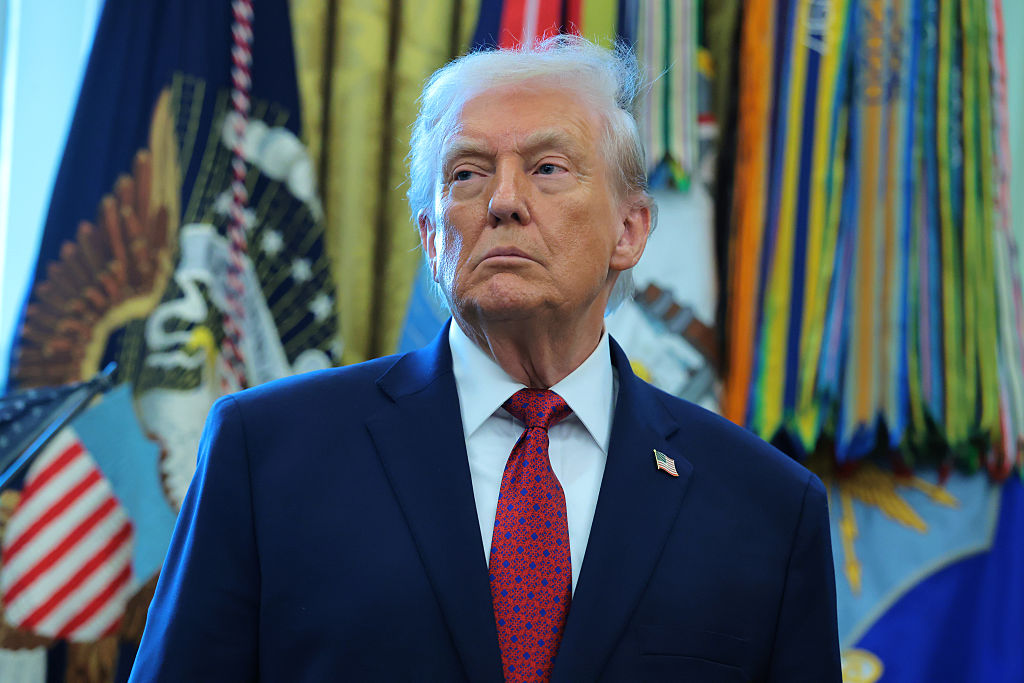
By the end of 2026, President Trump will have begun to distance himself from the aggressively pro-AI industry policies that characterized his AI strategy in 2025. The giant AI infrastructure plays (like Project Stargate) that he championed after his inauguration will look like an unprofitable and underused mistake. So will his utter failure to meaningfully regulate AI, against the will of voters and political leaders both left and right.
As a result, Trump will, rightly, take heat for every downside from AI (from deepfakes to chatbot-induced delusions and suicides to massive AI-induced cyberattacks). Public backlash against data centers, rising energy prices and rapacious AI companies will grow. AI stocks may tank. Generative AI, once Silicon Valley’s golden child, will start to look like a fad, a solution in search of a problem with economics that don’t add up. And as it all starts to fall apart, Trump will bolt for the door. “Coffee chatbot, we hardly knew ye,” Trump will be overheard to say.
‘The political equivalent of the Fujiwhara Effect’
BY JEFF GREENFIELD
Jeff Greenfield is a five-time Emmy-winning network television analyst and author.
2026 might see the political equivalent of the Fujiwhara Effect, which is when two cyclones arrive close enough to each other that they merge into one powerful force. What if the event that upends the midterm is not one event, but a convergence of events that arrive close enough to each other to fundamentally alter the political landscape?
Think of the canaries that have been tweeting up a storm: the effect of tariffs on costs and profitability; the impact of the potential end of health care subsidies; the sharply increased costs of food and housing; the contraction of manufacturing; the stock market bubble; the rise of consumer debt and the decline of consumer confidence; the threat posed by AI to a range of jobs. Now imagine that two or more of the canaries’ scenarios hit at the same time.
When the recovery from the Great Recession of 2008 proved sluggish, voters responded with a massive repudiation of Democrats, from the House of Representatives to state governments across the country. Democrats are still dealing with the impact of that election. If Republicans face the 2026 midterms with not one, but a toxic mix of grim economic news, each individual piece feeding a broader narrative of failure, that combination would prove more daunting than any one "Black Swan" would pose — ultimately tanking their chances in the midterms.
‘Patriotic Innovation Zones… designed for short-term virality and election optics’
BY AMY WEBB
Amy Webb is CEO of Future Today Strategy Group, NYC-based strategic foresight advisory firm.
Early in 2026, a tech mogul with a massive online following posts — half brag, half taunt —“Patriotic Innovation Zones are the FUTURE OF AMERICAN GREATNESS!” tagging President Trump and praising him for “finally unleashing the private sector.” Trump, sensing a viral win and a midterm-friendly slogan, amplifies it instantly on Truth Social and declares it a bold new economic policy. Republican-led states, desperate for jobs and headlines, trip over themselves to create these zones: semi-autonomous corporate territories where companies get tax breaks, regulatory exemptions and de facto control over local governance. It’s sold as a hyper-capitalist moonshot: part factory-town revival, part Silicon Valley fever dream, part culture-war trophy.
By spring, governors brag about “American industry returning home.” Trump returns to the rally stage with talk of “freedom economies” and “patriotic prosperity.” But beneath the spectacle, no one — not the states, not the companies, not Washington — has done any real long-term planning. Patriotic Innovation Zones (PIZ, as they’re now known) weren’t designed for resilience. They were designed for short-term virality and election optics. The companies coming in have done this dance before: sweeping into cities with grand promises, demanding incentives, building sprawling campuses and quietly architecting a future where automation in myriad forms — not human labor — is the real endgame. The zones become ideal sandboxes for robotics, ultra-efficient AI logistics and vertically integrated, worker-minimal operations disguised as job creation.
Within a few years, the promised jobs evaporate. The towns — now deeply dependent on a single corporate overlord — find themselves locked into one-sided agreements that give companies broad powers over zoning, policing, even worker housing. The tax base collapses. Local labor markets implode. And the companies, having extracted data, land and exemptions, move on. The zones turn out to be less like engines of opportunity and more like 21st-century company towns that automate themselves into irrelevance, leaving residents stranded while corporations walk away with the long-term gains. What was pitched as patriotic renewal ends up as a textbook case of political shortsightedness: an entire economic policy born from a meme, rushed into reality and carried out without a single serious question about what happens after the headlines fade.
‘For the first time, climate risk dictates where Americans can afford to live’
BY DARYL FAIRWEATHER
Daryl Fairweather is chief economist at Redfin, a national real estate brokerage.
A catastrophic wildfire season collides with an unusually destructive Atlantic storm, delivering back-to-back billion-dollar disasters. Within weeks, several of the nation’s largest property insurers announce they’re halting new homeowner policies. Smaller carriers follow suit or fail outright. Overnight, vast swaths of the country become effectively uninsurable, while Americans lose faith in the value and security of home insurance broadly.
With lenders unable to originate mortgages without proof of coverage, home sales freeze. Families who expected to move discover that their “dream home” can’t be financed at any price. Existing homeowners see their premiums spike into the thousands — or lose coverage entirely. Local housing markets seize up as climate risk suddenly becomes a hard underwriting limit rather than an abstract future threat. In the hardest-hit regions, home values fall sharply as buyers evaporate.
Congress scrambles to expand the National Flood Insurance Program and create an emergency federal backstop for fire insurance. States debate mandates and subsidies. Investors shift billions out of climate-exposed Sun Belt metros and into the Midwest.
For the first time, climate risk dictates where Americans can afford to live.
‘This is going to be the best and worst year for AI’
BY MATT CALKINS
Matt Calkins is CEO and founder of Appian, an American cloud computing and enterprise software company.
2026 will be the best year for the technology’s practical, real-world capabilities and value while also being the worst year for its technological advancements.
This year, we have been led to believe by this administration that China is the one to beat, which has driven companies’ recent spending spree to develop the technology, despite seeing little return. However, the U.S. and China are playing two completely different roles in this contested global AI race. China has chosen to create open, light, cheap models that are practical and offer a clear financial return for users. Meanwhile the United States is still taking a theoretical one, where we trying to ring the proverbial bell. This should stop. This is the year that it becomes clear that AI should serve a purpose, that investment should follow that purpose, and that value should be measured by the efficiency of those investments. This isn’t a science project anymore. It’s about conveying value to consumers, and theoretical objectives should take a backseat.
This is going to be the best and worst year for AI. It will be the worst in terms of technological advancement. The best AI model in the world will gain less capability over the next 12 months than it has gained in any of the previous years. Yet at the same time, it will be the best year for AI because its practical value will grow more than it has in years. We will see the smallest delta in technological capability and the largest delta in practical value. This paradox is possible because organizations need time to digest and process new advances. What we are hearing now is the echo of the AI boom returning to us finally as real productivity improvements. Every scientific revolution needs time to germinate, and 2026 is when we begin to hear that echo in the form of meaningful economic output.
‘The FDA completely legitimizing wellness industry pseudoscience’
BY ANDREA LOVE
Andrea Love is a biomedical scientist and science communicator.
I think the Black Swan for 2026 is already underway: the FDA completely legitimizing wellness industry pseudoscience. Already, we’ve been seeing the FDA encouraging people to conflate pseudoscience for evidence-based medicine as FDA Commissioner Marty Makary erases the boundary between evidence-based medicine and the wellness industry under the guise of access, innovation and “repairing trust.” He and others are positioning the FDA not as a scientific safety guardrail, but a facilitator of “health choice.” They frame evidence standards as elitist, favoring anecdotal claims to justify unscientific policy changes that will endanger the public.
There are early signals: enthusiasm to relax regulatory requirements for FDA approval; moving to fast-track direct-to-consumer health tests that lack clinical validation; and elevating supplements to quasi-therapeutics rather than unproven and potentially unsafe products immune from oversight thanks to the Dietary Supplement Health and Education Act. If FDA leadership erases the remaining guardrails that exist, expect a rapid expansion of FDA-adjacent products that appear legitimate to the public. People will not be empowered — they will be less healthy.
What makes this a Black Swan is that people will believe they are still following science as these claims come from our federal health agencies. People will make health decisions based on falsehoods rather than validated evidence. Patients will delay or refuse effective care, opting instead for cleverly marketed products that carry a false sense of legitimacy. By the time these harms are apparent at a population level, these policy changes will be normalized — and potentially irreparable.
‘Behold the American Troubles’
BY JONATHAN STEVENSON
Jonathan Stevenson is a senior fellow at the International Institute for Strategic Studies and Managing Editor of Survival. He is the author of “We Wrecked the Place:” Contemplating an End to the Northern Irish Troubles.
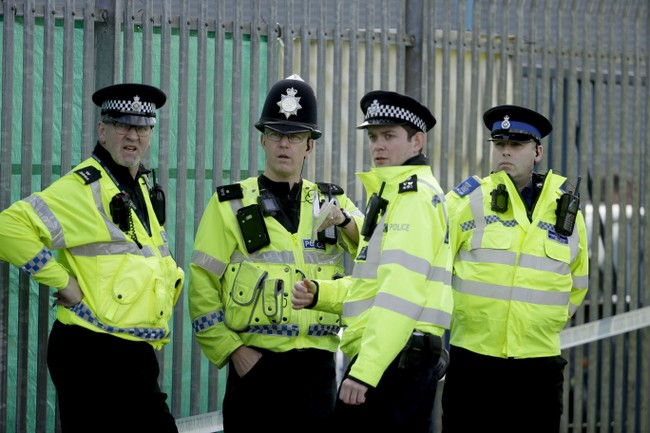
Brits tend to bring up the Northern Irish Troubles in discussions of conflict, and sometimes they overdo it. But Ireland’s Troubles do resonate ominously in contemporary America. With President Donald Trump deploying National Guard and active-duty U.S. troops to heavily Democratic cities, a violent backlash could send America in a similar direction.
In the late 1960s, Catholic civil rights protests in Northern Ireland, a province of the United Kingdom then run by a deeply chauvinistic Protestant majority, prompted London to mobilize British Army troops on the pretext of helping local police pre-empt wider unrest. On Jan. 30, 1972 — “Bloody Sunday” — soldiers trained in combat rather than crowd-control shot 26 unarmed civilians at a protest in Derry, resulting in the deaths of 14.
The episode helped launch a low-intensity conflict that would continue for over 20 years between Catholic insurgents who insisted on Irish reunification and a Protestant community, backed by the Crown, adamant that Northern Ireland remain British. It first verged on civil war, then settled into a kind of ritual murder. The middle class, largely unaffected by violence centered in working-class areas, accepted civil dysfunction as background noise and went about its bougie business. British civil servants were morbidly content with “an acceptable level of violence” as P.J. O’Rourke marveled at “heck’s half-acre.”
By sending troops to blue cities, the Trump administration has likewise militarized political conflict. It is now painfully easy to imagine an incident like Bloody Sunday in America. And there is precedent: At Kent State University in 1970, National Guardsmen dispatched to quell a campus anti-Vietnam War protest killed four students and wounded nine. The incident energized the Weather Underground, a relatively regimented left-wing fringe group, which subsequently threatened to usurp what remained of a dispersed, non-violent dissident movement. No such group exists now, but the left’s comprehensive opposition to Trump’s policies suggests that a kindred event could push the U.S. domestic constitutional order past a tipping point and trigger the formation of one. That would activate existing right-wing, pro-state militias against the group and its perceived supporters. Trump would enjoy a self-perpetuating pretext for unleashing the U.S. military against American citizens on U.S. territory. They would get used to it, as he hopes. Behold the American Troubles.
The original Troubles’ “manageability” is cold comfort. Over 3,500 people in a population of about 1.6 million still died. Extrapolating crudely, an American version would claim about 720,000 dead — more than the Civil War. These would occur in pockets of territory dispersed across the United States’ more than 3.5 million square miles, and over the course of perhaps two decades rather than four years. The diluting, sedative effect of time and space would attenuate the emotional and material impact of the carnage. This would only make it easier for the population — especially given its uniquely deep acclimation to endemic gun violence — to tolerate, and for governments in the Trump administration’s image to sustain.
The country might thus avoid full-blown civil war. There could be elections, but, under the cloud of ongoing political violence, democracy would be essentially performative and politics would ossify. Following Seamus Heaney’s benighting dictum of the Troubles, a generation of fearful Americans would “say nothing.”








 English (US)