.png)
 1 hour ago
4
1 hour ago
4

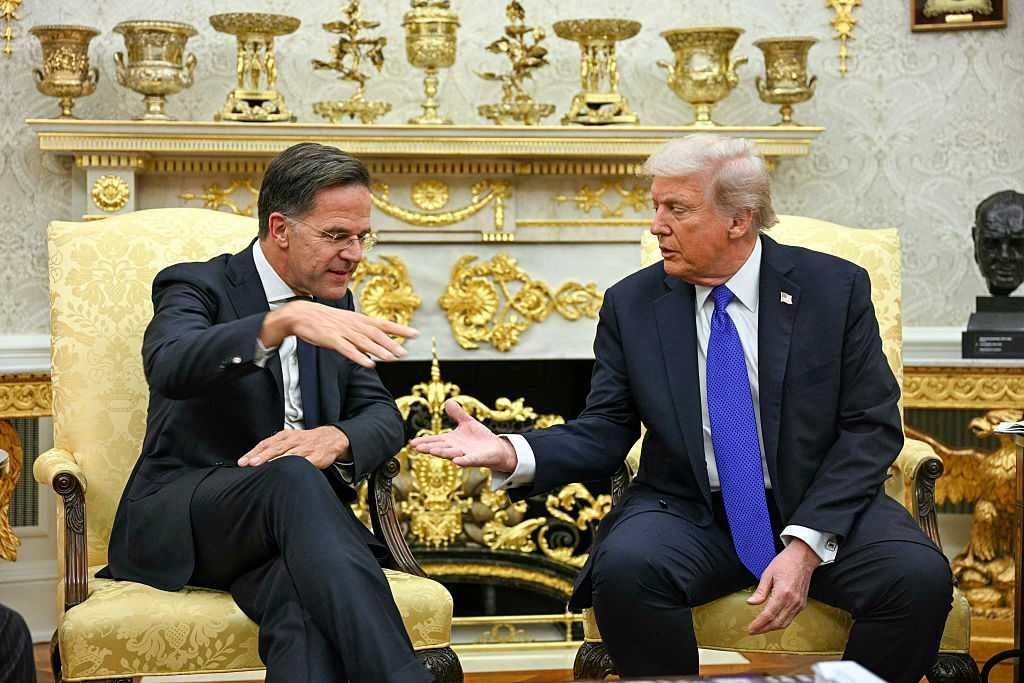
President Donald Trump demanded over the weekend that NATO members, Pacific region allies, and even China help the United States clear the Strait of Hormuz — through which maritime traffic has ground to a halt due to the ongoing threat of Iranian missile and drone strikes — and "make sure that nothing bad happens there."
Trump noted that "this should have always been a team effort, and now it will be."
'Not a simple task.'
The response was less enthusiastic than Trump had apparently hoped, with some nations rebuffing the invitation and others kicking their decisions down the road.
"There are some countries that greatly disappointed me," Trump told reporters during an event at the White House on Monday. "What does surprise me is that they're not eager to help."
Fewer than 24 hours later, Trump unpacked his disappointment on Truth Social, noting that "the United States has been informed by most of our NATO 'Allies' that they don’t want to get involved with our Military Operation against the Terrorist Regime of Iran, in the Middle East, this, despite the fact that almost every Country strongly agreed with what we are doing, and that Iran cannot, in any way, shape, or form, be allowed to have a Nuclear Weapon."
"I am not surprised by their action, however, because I always considered NATO, where we spend Hundreds of Billions of Dollars per year protecting these same Countries, to be a one way street — We will protect them, but they will do nothing for us, in particular, in a time of need," continued the president.
RELATED: Joe Kent resigns from Trump admin, says Israel forced US into Iran conflict
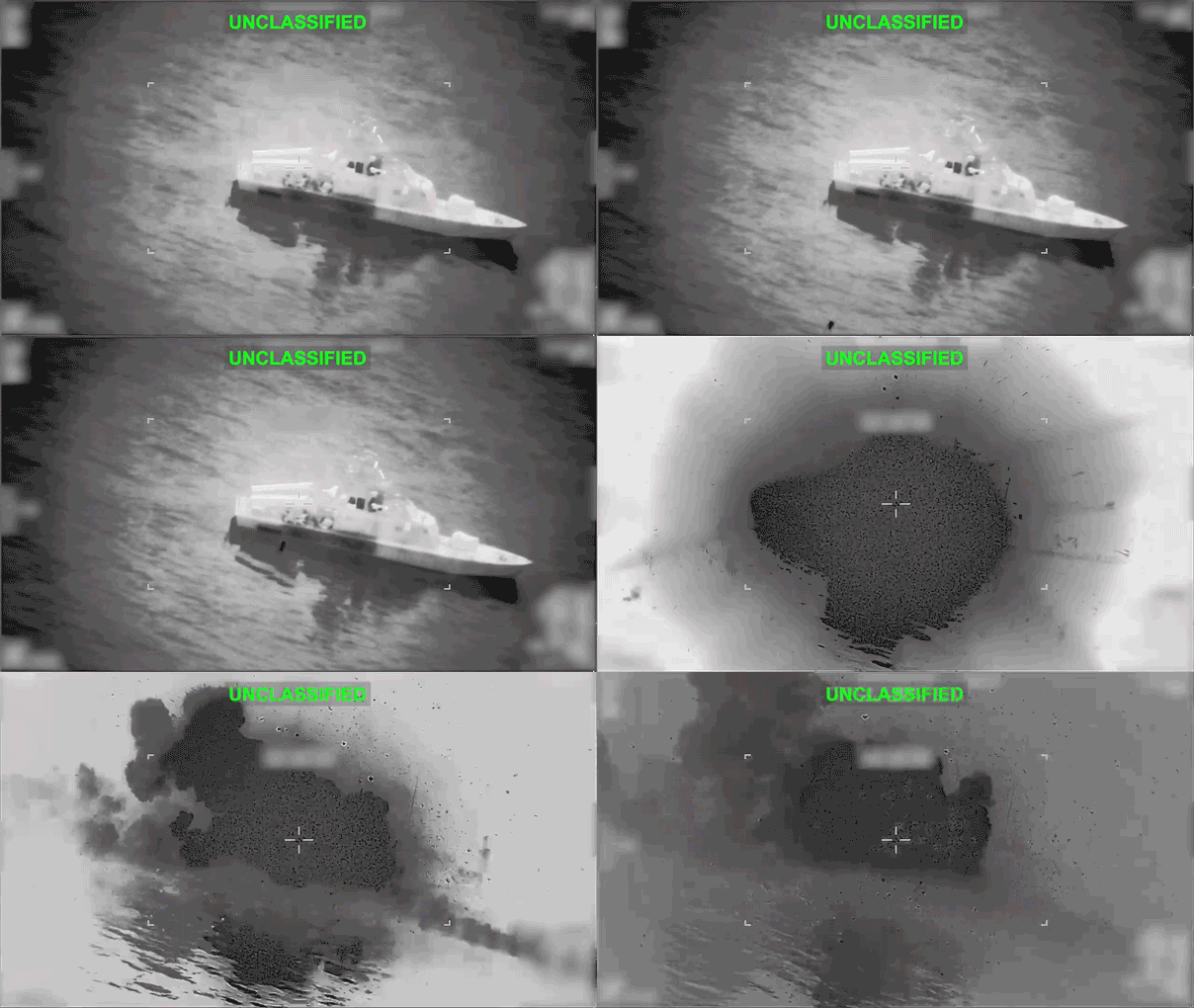
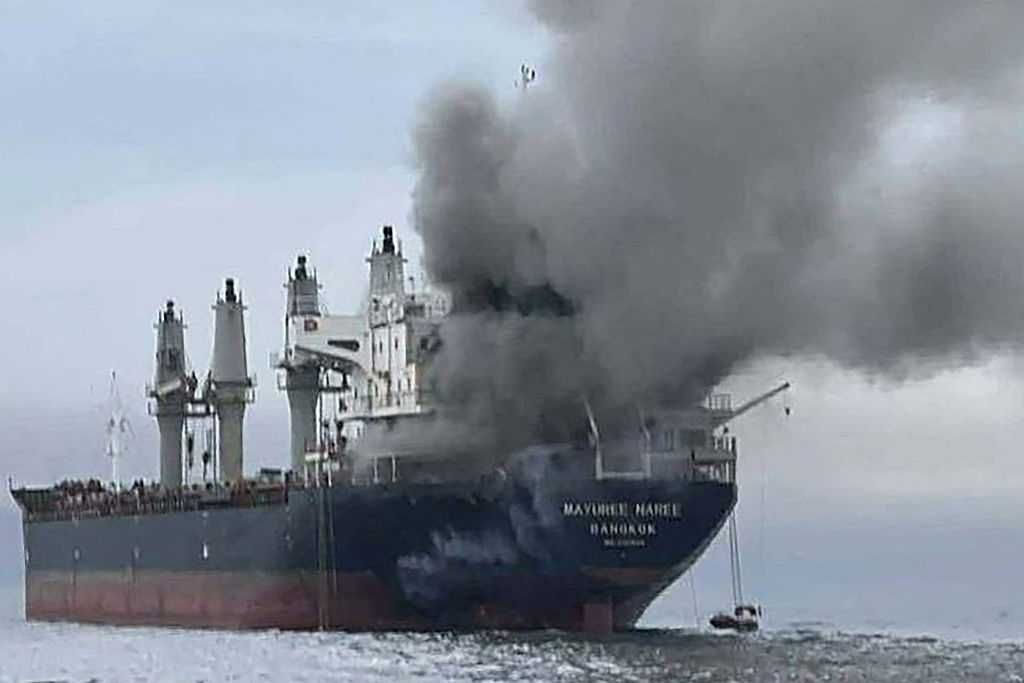 Vessel attacked near the Strait of Hormuz on March 11. Photo by Handout / ROYAL THAI NAVY / AFP via Getty Images.
After noting that Iran's leadership and key defenses "are gone," Trump said, "We no longer 'need,' or desire, the NATO Countries’ assistance — WE NEVER DID! Likewise, Japan, Australia, or South Korea. In fact, speaking as President of the United States of America, by far the Most Powerful Country Anywhere in the World, WE DO NOT NEED THE HELP OF ANYONE!"
'You will lose the ultimate guarantor of our freedom, which is the US nuclear umbrella.'
Trump's latest criticism of NATO comes just weeks after the alliance's secretary general, Mark Rutte, told his European colleagues, "If anyone thinks here again that the European Union, or Europe as a whole, can defend itself without the U.S., keep on dreaming. You can’t. We can’t. We need each other."
Rutte said that without the U.S., European nations would need to each beef up their defense spending to 10% and build out their nuclear capability.
"In that scenario, you will lose the ultimate guarantor of our freedom, which is the U.S. nuclear umbrella. So hey, good luck," added the NATO secretary general.
Despite Rutte's reminder about Europe's reliance on America and Trump's threat on Sunday that NATO would face a "very bad future" if members didn't assist, numerous NATO members and U.S. allies farther afield declined Trump's invitation to commit forces in the Persian Gulf.
Kaja Kallas, vice president of the European Commission and the European Union's foreign policy chief, told reporters on Monday that officials want to maintain their focus on Ukraine and that where Iran is concerned, their "focus is de-escalation and also freedom of navigation."
While acknowledging the impact of the conflict and Iran's ballistic blockade of the Strait of Hormuz, Kallas stressed, "This is not Europe's war — this situation in the region."
Kallas noted further that the EU has Operation Aspides underway in the Red Sea — a military operation aimed at safeguarding merchant and commercial vessels — but that it won't cover the strait as "there was no appetite from the Member states to do that."
Stefan Kornelius, a spokesman for the German government, stated, "The government will not participate in this war," reported Deutsche Welle. "This war has nothing to do with NATO; it is not NATO's war."
German Defense Minister Boris Pistorius echoed this sentiment on Monday, stating, "It is not our war; we did not start it. We want diplomatic solutions and a swift end, but additional warships in the region will likely not contribute to that."
British Prime Minister Keir Starmer said in an address on Monday that "we have to reopen the Strait of Hormuz to ensure stability" but that it "is not a simple task."
Emphasizing that the U.K. will "not be drawn into the wider war," he noted that Britain is working with European allies on a "viable, collective plan that can restore freedom of navigation in the region as quickly as possible."
While reluctant to send warships, the U.K. is reportedly planning to send mine-hunting drones to help reopen the strait.
French President Emmanuel Macron said on Tuesday, "We are not party to the conflict and therefore France will never take part in operations to open or liberate the Strait of Hormuz in the current context," reported Reuters.
'We won't be dragged into any war of choice.'
"We are convinced that once the situation has calmed down — and I deliberately use this term broadly — once the situation has calmed down, that is to say, once the main bombing has ceased, we are ready, along with other nations, to assume responsibility for the escort system," added Macron.
RELATED: 'Die in your rage': Islamist attacks and murder plots are quickly adding up
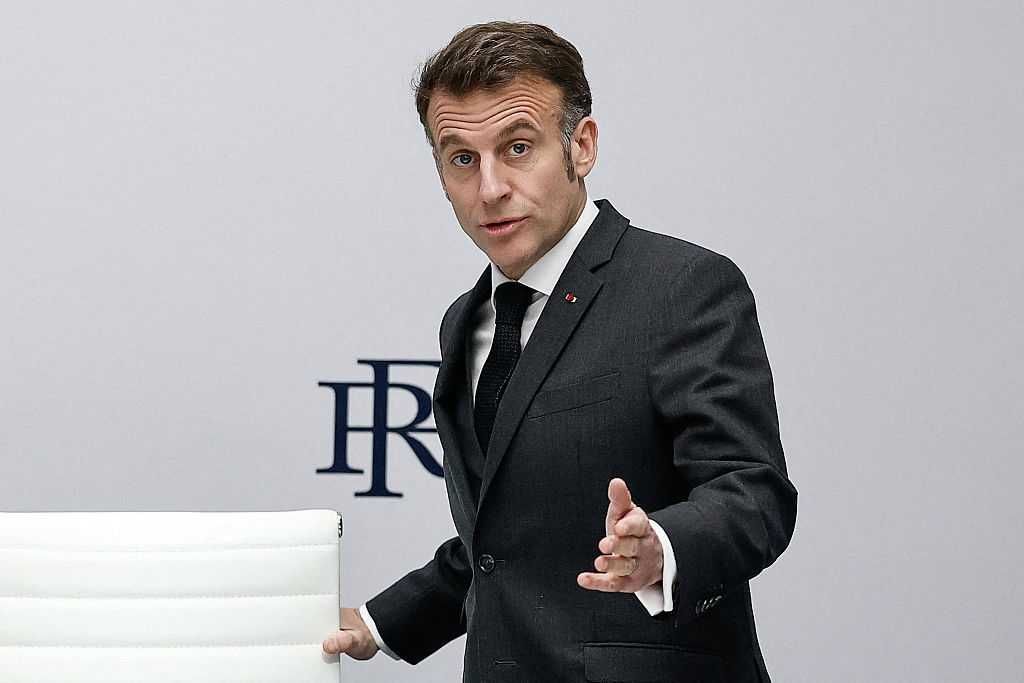 Photo by Benoit Tessier / POOL / AFP via Getty Images
Polish Prime Minister Donald Tusk reportedly indicated that the conflict was none of Warsaw's business, stating his government "does not plan any expedition to Iran, and this does not raise any doubts on the part of our allies."
Finland's Foreign Minister Elina Valtonen told Euronews that "NATO is indeed a defensive alliance, and we won't be dragged into any war of choice."
"We of course have a collective interest — and I should say not only within NATO — but as the world, to have the oil flowing, to de-escalate, and that is certainly something we are calling for," added Valtonen.
Anita Anand, Canada's foreign affairs minister, said that Iran's blockade was unlawful but also backed Prime Minister Mark Carney's claim that the joint U.S.-Israeli strikes appear to violate international law.
Anand said further that there's been no formal discussion among NATO members about Trump's request, stating, "To our knowledge a request has not been made to NATO for the type of assistance that is being requested," reported the Globe and Mail.
Some allies outside of NATO similarly poured cold water on the prospect of a coalition of the willing.
Australian Transport Minister Catherine King, for instance, said her country "won't be sending a ship to the Strait of Hormuz."
Japanese Prime Minister Sanae Takaichi reportedly told lawmakers on Monday that her nation had no plans to send warships to the Persian Gulf.
Like Blaze News? Bypass the censors, sign up for our newsletters, and get stories like this direct to your inbox. Sign up here!







 English (US)