.png)
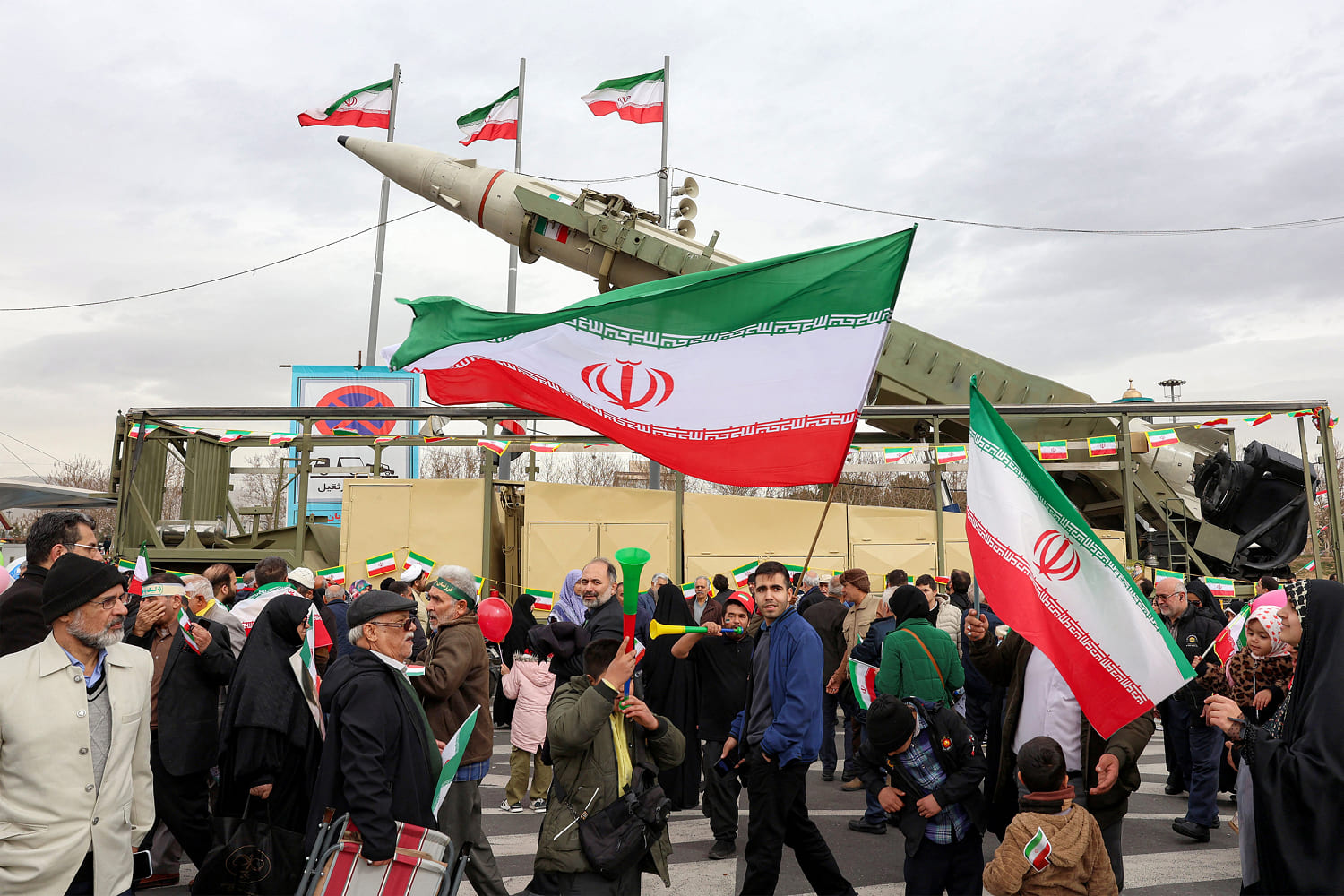
President Donald Trump once won the loyalty of his base by promising no new wars. That promise now rings hollow for many, especially after his decision to strike Iran last week.
Since the attacks began Saturday, six U.S. service members have been killed. Oil prices are rising. Gulf states are fielding Iranian counterattacks. It is a striking escalation by a president who seems increasingly emboldened by a series of successful military attacks since his return to the Oval Office.
As the Middle East tumbles into uncertainty, it’s unclear what the administration's endgame is, who Iran’s next successor could be or even when the war might end. To get a better understanding of how things might unfold, we convened a roundtable of top POLITICO reporters who cover the White House and Trump’s foreign policy — and have been closely following the administration’s moves. The discussion featured defense reporter Paul McLeary, White House reporter Diana Nerozzi, diplomatic correspondent Felicia Schwartz and energy reporter James Bikales.
The group discussed the United States’ diminishing weapons stockpile, responses from ally countries and the political implications of starting yet another war in the Middle East eight months before the midterm elections.
Here’s what they shared.
This conversation has been edited for length and clarity.
Eight months ago, the U.S. struck Iran, and here we are again. What’s different about the administration in 2026 and the recent attacks it is carrying out now?
Paul McLeary: Unlike the first Trump administration, which was filled with people he didn't know or trust, this time around it is stacked with Trump loyalists who have a good understanding of how he operates. They're moving fast on international issues because they know his time is limited by the midterms and are embracing the fact that presidents may be constrained by courts and Congress at home, but can act as they see fit overseas.
Felicia Schwartz: I think they are also very inspired by past successes. At the end of Trump's first term, he killed Islamic Revolutionary Guard Corps leader Qassem Soleimani — something the so-called foreign policy blob and regional allies warned would inflame the Middle East. He got the same feedback about his plans to recognize Jerusalem as Israel's capital and move the embassy, which he did in 2018 without major blowback. Add to that what he and his team see as the success of the Venezuela operation, and you have a very emboldened president who likes to wield power militarily.
Diana Nerozzi: I agree. Trump is facing his last term as president and is feeling inspired by his successful capture of Maduro. The administration sees Iran as the number one sponsor of global terror, and taking out the Iranian government cripples their connections with foreign adversaries like Russia and China. Trump has spoken about his desire to leave a global mark and foreign policy legacy, and regime change in Iran would contribute to that greatly.
James Bikales: On the energy side of things, the administration feels it has a little more leeway to act in ways that could disrupt the global oil market because the U.S. has cemented its place as a net crude exporter in the last few years. That's helped keep oil prices lower and more stable since Trump took office, even with the conflicts in the Middle East and Venezuela. On the other hand, Trump has been laser-focused on keeping gas prices low — and the attack on Iran certainly won't help with that.
On that note, James, how soon are gas prices going to be affected by the conflict? What’s the worst-case scenario, and how would that occur?
Bikales: It really depends on how long this conflict lasts. The main issue driving up oil prices has been the disruptions to shipping through the Strait of Hormuz, where 20 percent of global crude flows pass through every day. We've already seen oil prices jump significantly over the past few days as a result, and it won't be long until that starts showing up for American consumers at the gas pump. Some analysts have predicted that if the conflict lasts more than three or four weeks, we could see triple-digit oil prices — which would be a major shock to the system and have a lot of cascading effects.
Diana, the administration's messaging has been muddled, with officials offering a range of rationales for starting the war now, from nuclear weapons to Iran's crackdown on democracy to payback for the 1979 hostage crisis. Why has the administration's messaging been so haphazard?
Nerozzi: The reason for the apparent mixed messages is the variety of voices who are speaking on the rationale. There is the president, who has been very open to reporters' questions, but with that openness comes a lot of different answers. Then there is Marco Rubio, Pete Hegseth and other administration officials. The reason is all of those combined. But more immediately, the administration argues the attacks were launched because of the refusal of Iran to negotiate honestly about nuclear weapons. Two administration officials went into detail yesterday about how the Iranians were "playing games" in negotiations, were really hiding nuclear material further underground, and were not going to come to the table honestly. That, coupled with the crackdown on protests and Iran's hostile actions towards the U.S. over the past decades, pushed Trump over the edge.
McLeary: The Iran attacks are also another way to undo what Republicans see as the signature disaster of the Obama years — the Joint Comprehensive Plan of Action deal with Iran. Trump has made it a priority to unwind virtually everything that Obama and Biden pushed through during their terms.
Schwartz: I thought it was interesting that the administration chose not to go on the Sunday shows or do the usual things like a live prime-time address to justify the action to the nation. Seemed like they acted first, then worked on the messaging. And it's shifted as Congress, the public and the Republican base have reacted to it. Secretary Rubio, for example, said that the U.S. assessed that its assets in the Middle East would be attacked if Israel were to go ahead, and Israel was planning to go ahead, so it may as well join. But the perception that Israel dragged Trump into war hasn't played well.
Felicia and Diana, do we know who has influenced Trump most on Iran? Is it someone in the administration, like Rubio or Hegseth? Or is it someone outside, like Israeli Prime Minister Benjamin Netanyahu?
Schwartz: Our reporting and that of our colleagues suggest that Netanyahu did have a big influence. Sen. Lindsay Graham, a longtime Iran hawk, has been pressing Trump on this since he returned to office. I think the Venezuela success, that there was a model for something resembling regime change, helped to push him over the line. The U.S. Ambassador to Israel Mike Huckabee was also a strong proponent. On top of that, while there were not many other loud cheerleaders, none of the national security team was lobbying hard against it.
Nerozzi: The administration has been very careful to not reveal who exactly is in Trump's ear on Iran. Trump has a very close relationship with Netanyahu, and the U.S. has been working side-by-side with Israel on the attacks, so the prime minister did play a role. But I believe Trump had his sights set on Iran from the beginning, and the actions of the Iranians in the negotiations and killing protesters made Trump irate enough to pull the trigger.
Who are the top succession candidates in Iran right now? Does the White House have its eye on anyone, especially since Trump has said the people the administration had in mind were killed in the strikes?
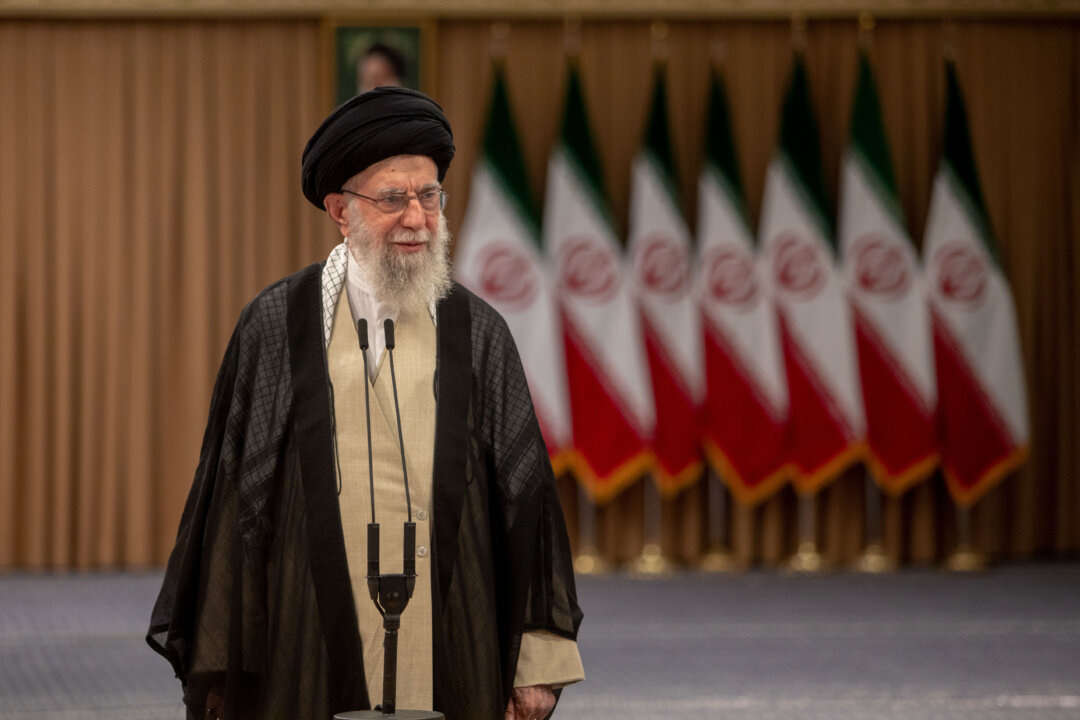
Schwartz: While the situation is still fluid, the son of the now deceased Ayatollah Ali Khamenei has emerged as a frontrunner to replace his father. His son, Mojtaba Khamenei, is known for having close ties to Iran's Revolutionary Guards Corps. Other candidates that have emerged include Alireza Arafi, part of the current transition council named in the elder Khamenei's absence, and Seyed Hassan Khomeini, the grandson of Ayatollah Ruhollah Khomeini, the leader of the 1979 Iranian revolution that established the Islamic Republic.
The administration and Israel are hoping that by targeting Iranian security forces and regime targets, they can create the conditions for a different kind of government to take the place of the current system. But the regime still controls the military and the weapons, so that is very unlikely.
Nerozzi: Trump has refused to say whether the U.S. has anyone in mind as a successor, which leads me to believe they are not in that point of thinking quite yet. He said he is open to Reza Pahlavi in response to a reporter's question. But the general response from the administration has been that the leaders they had in mind have been killed, and that the main focus right now is to take out the Iranian military.
Some Pentagon officials were worried about dwindling weapons stockpiles even before the attack.Paul, at what point could this deplete munitions enough to make the U.S. more vulnerable?
McLeary: The munitions being used are expensive and take months to make, and while the stockpiles are deep, they're not unlimited as Trump and Hegseth have indicated over the past several days. There's little capacity for the defense industry to ramp up production any time soon — workforce issues and thin supply chains make a quick ramp-up almost impossible.
The U.S. can handle a campaign like this for several weeks before it becomes a major issue. The worry is that precision bombs meant to be sold to allies would suffer first, if the Pentagon wanted to redirect them back to its own warehouses. That could cause a major break with key NATO allies who are already looking for alternatives to the U.S. defense industry.
European allies don’t seem sure what to think about this war. Do you think they will oppose it, sit on the sidelines or eventually get behind it, Felicia?
And how are U.S. allies in the Middle East responding? Is there some discomfort among Arab states with being on the same side of a war as Israel?
Schwartz: No one in Europe is sad to see the death of Ayatollah Ali Khamenei, and many governments there share Washington's concerns about Iran's nuclear program, ballistic missiles and support for regional proxies. They would have preferred to see the U.S. deal with this diplomatically, as these governments are generally more cautious than Trump is, and they are closer to Iran than we are and might feel the fallout more quickly.
That being said, once Iran responded so forcefully and began hitting civilian targets throughout the Gulf, where many European citizens live and do business and many countries have military assets, they have generally supported the U.S. campaign.
As for the Middle East, their discomfort isn't about being on the same side as Israel. Many of these countries have had strong intelligence and military relationships with Israel for years, drawn together by the common threat of Iran. Some countries, like the UAE and Bahrain, have formalized and publicized these ties. Their unease is that Iran is targeting their people and infrastructure, and they worry about their own ability to defend themselves in a prolonged war. Unlike Israel, which has sirens and shelters, these countries don't have any warning systems or protections for the public. And they are worried about their own air defense supplies.
Nerozzi: In the Middle East, Iran striking neighboring Arab nations could be an opportunity for the U.S. to form stronger alliances with those who were critical of the strikes on Iran. The Arab nations are being brought into the war via the Iranian counterstrikes, and the Gulf states are finding themselves being directly impacted by Iran.
Bikales: European countries are also very concerned about the impact of the war on energy prices — they remember well the impacts of the price shock after Russia's invasion of Ukraine just a few years ago. We've already seen natural gas prices skyrocket in parts of Europe after Qatar shut down some of its LNG export facilities, so that's just another reason Europe wants this fighting over quickly.
But Trump has said the military campaign against Iran could last four to five weeks, even longer. Does the U.S. have an endgame? If so, what is it?
Nerozzi: Trump gave the four-to-five-week deadline. Today, Pete Hegseth said, "We are just getting started." There is no stated endgame 100 percent, but Hegseth said the U.S. and Israel are targeting Iranian military generals and are “finding, fixing and finishing the missiles and defense industrial base of the Iranian military." At the end of the day, the U.S. has been firm that they don't want to see Iran acquire a nuclear weapon, so the end may come when they feel satisfied enough with the destruction of the Iranian military and their enriched uranium.
McLeary: Defense officials have so far outlined tactical successes and goals like taking out the Iranian Navy and ballistic missile sites and nuclear facilities, but we haven't heard anything about the "day after" if the Iranian regime is to collapse. Destroying the Iranian ability to strike outside its borders is a goal, but without a larger strategic vision of what they want Iran to look like going forward, those goals don't necessarily solve the larger issues of having a hostile regime in power in Tehran.
Schwartz: When Trump first announced the campaign, he talked about regime change. That's now more of a nice-to-have. As the administration has refined its message, officials have described Iran's ballistic and other advanced missiles as a shield that it is building up rapidly and would eventually prevent the U.S. from doing anything about its nuclear program. So they want to eliminate Iran's missile program, destroy its navy so it can't harass American and other vessels at sea and end their support for proxies. But in terms of what should Iran look like next year, what role should it play in the region and other long-term strategic objectives, those are unclear. And while the regime is at its weakest point, it continues to have a monopoly on weapons and violence. That will be hard for the U.S. to destroy from the air.
On Diana's point about enriched uranium, that is another one they have not really spelled out how they will address. They did what they could militarily to target Iran's nuclear program last June. All of Iran's enriched uranium is buried under rubble. I think on that point, they want to pressure Iran to do what it hasn't so far accepted: commit to zero enrichment and ship all of its remaining enriched material out of the country.
Bikales: We've reported that the Trump administration went into the conflict with little plan to deal with the ensuing oil price spike. Essentially, they hoped the conflict would be over quickly, and prices would fall back naturally. In the last couple of days, they've had to scramble to start putting together a plan to calm the markets.
In some ways, that gives Iran an opening. Tehran knows that President Trump is very focused on lowering prices at the pump, especially ahead of the midterms, so it could use oil prices as leverage to force his hand in potentially ending the war.
James, speaking of oil, Iran has said it has closed the Strait of Hormuz. Is that possible? And what are the implications of making it challenging to travel through? Is there a workaround?
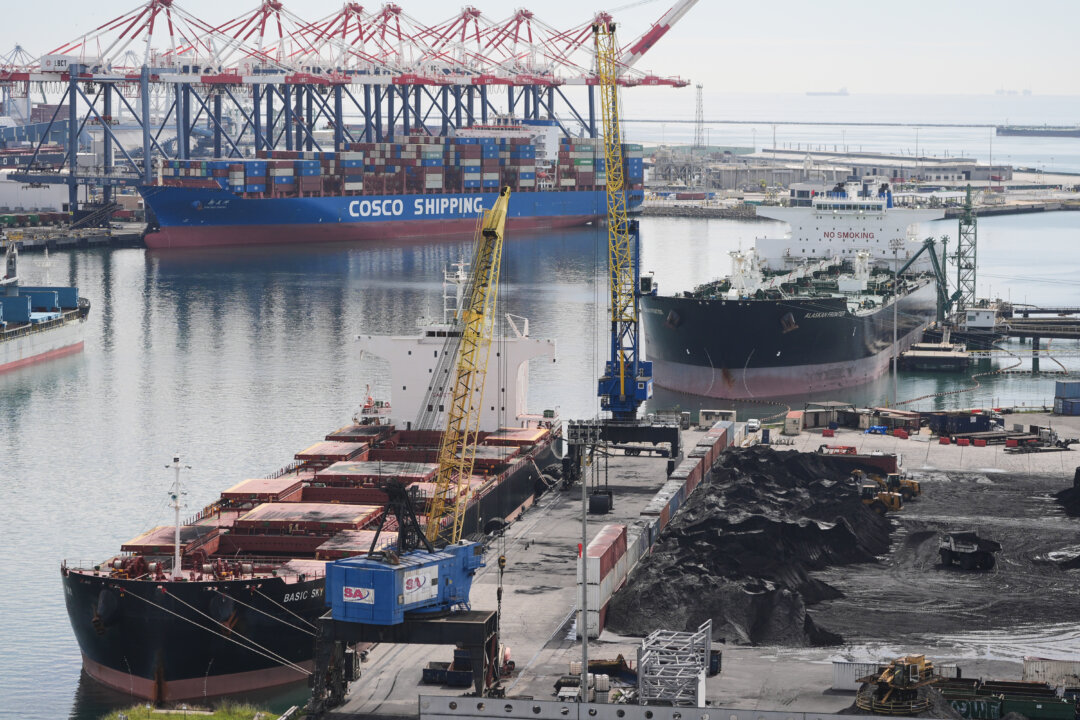
Bikales: The short answer is no. Iran has fairly limited naval capabilities, especially after the initial wave of U.S. strikes, so it hasn't mined or physically closed the strait in any way. That being said, it has warned ships not to try to transit it, and it has fired on some tankers, which has led insurance companies to cancel coverage and hike rates, essentially bringing traffic through the strait to a halt.
The Trump administration announced a plan Tuesday to offer naval escorts and government risk insurance to those tankers, and we will be watching in the coming days whether that gets shipping moving again.
One important thing to note: Iran itself exports much of the crude it produces through the Strait of Hormuz, so shutting it down could hurt its own economy — as well as that of its primary customer, China.
Schwartz: I am very curious to see how the market will react to the government provision of insurance for ships, and whether it will make a real dent, given the environment.
Bikales: It's certainly a creative strategy from a U.S. perspective, but even with insurance, I'm not sure I would want my ship trying to transit the Strait of Hormuz right now if I were a ship owner.
McLeary: Iran does possess the capability to mine the Strait or use drones to harass ships passing through it. If they launched a drone swarm at an American warship, it would be difficult for the ship's air defenses to knock multiple drones down at once. So the situation remains incredibly dangerous and uncertain.
Paul, the White House has pushed back on the language around this military operation. Is the U.S. in a war? And how does this military campaign in Iran affect Trump’s avowed goal of focusing more on the Western Hemisphere, like Venezuela and Cuba?
Schwartz: Time to cue the meme, it's only a war if it's from the war region of France.
McLeary: The war question is much like the Department of Defense rebranding itself as the Department of War! Call it what you want, but shooting at another country is an act of war, full stop.
As far as the Western Hemisphere goes, the USS Gerland R. Ford carrier strike group — which was pulled from the Mediterranean in October to head to the Caribbean — is back in the Mediterranean, along with its destroyer escort ships.
One can argue that those ships were never needed to intercept speedboats, but one can also argue that moving the ships away from the Caribbean undercuts the recently released National Defense Strategy and National Security Strategy, which gave scant attention to the Middle East in favor of the Western Hemisphere and a homeland security focus. In the end, strategy papers are just that — pieces of paper — once a president casts his gaze elsewhere.
Schwartz: There are 50,000 American troops in the Middle East right now, and six have died so far. And Trump has told us to expect more of that. I think the average person sees this as a war, whatever the administration wants to call it.
This all means a lot is at stake for the GOP right now: Trump’s approval ratings are poor, the attacks are fairly unpopular and midterms are coming. How do you think this will play out politically for Republicans? Democrats?
Nerozzi: Polls are showing that the majority of Americans disapprove of the strikes, but a large majority of Republicans, around 75 percent, are in support. The GOP is going into the midterms with a disadvantage due to being the incumbent. The outcome of the war in the next few months may sway public opinion to be more in favor of the war, but it could also push voters away, especially if things go south. Trump will have to deliver internationally and domestically for Republicans to surge ahead and keep both the Senate and House.
Schwartz: Voters rarely vote primarily on foreign policy, but drawn-out wars or the rising prices from them contribute heavily to the vibes leading into the election and how people feel about the direction of the country. If Trump can keep this to a few weeks and the fallout minimal, maybe it will be a blip that won't carry through to the midterms. It could also present Democrats with an opportunity to curry favor with voters if gas prices climb further upward and inflation gets worse as a result.
McLeary: War is always unpredictable. Americans tend to rally around the flag in times of conflict, even if we haven't seen that happen yet in the case of Iran. Part of the reason is that the White House simply hasn't bothered to make the case to the American people. That said, think back to George W. Bush winning re-election in 2004 when Iraq was going terribly and dozens of troops were being killed by roadside bombs every month while fighting — yes — Iranian-backed Iraqi militias. A lot will depend on how quickly Trump can get out of the fight. I don't sense a lot of patience for a long war launched by a president who campaigned on "no new wars."
Bikales: President Trump has made energy affordability a key piece of his message heading into the midterms — in fact, just a few hours ahead of the strikes, he was in Corpus Christi, Texas, touting record U.S. oil production and lower prices at the pump.
Democrats see an opening on that issue now with Iran, and they've already launched attacks that Trump is more focused on foreign wars than keeping energy prices down. So far, Republicans have largely dismissed those concerns, saying that prices will fall back naturally. But even if global crude prices fall, gas prices tend to be slower to recover — and we're only eight months from the midterms.





 English (US)