.png)
 3 hours ago
4
3 hours ago
4

Hollywood is a factory of fakery. Social media accounts run by publicists. Apologies written by lawyers. Whole personalities assembled by committee.
In Hollywood, sincerity is often the most convincing special effect of all.
'My behavior’s dirty, ugly, disgusting, so I gotta eat it.'
Which is why Shia LaBeouf has always felt like an anomaly.
Storm before the calm
LaBeouf is many things: talented, erratic, often self-destructive. His life reads less like a biography than a weather report — storms, brief calm, then another system moving in. He wears his heart on his sleeve, his wounds on his face, and his worst moments out in public.
In an industry built on careful concealment, he seems incapable of it. Most actors learn early to construct a polite distance between who they are and what the world sees. LaBeouf apparently never built that wall.
So when trouble comes — and with him it usually does — everyone gets a front-row seat.
And that’s what makes the story unmistakably Christian. The prodigal son does not return home polished and rehabilitated. He comes back hungry, broken, and not entirely sure how he got there.
Sitting in the wreckage
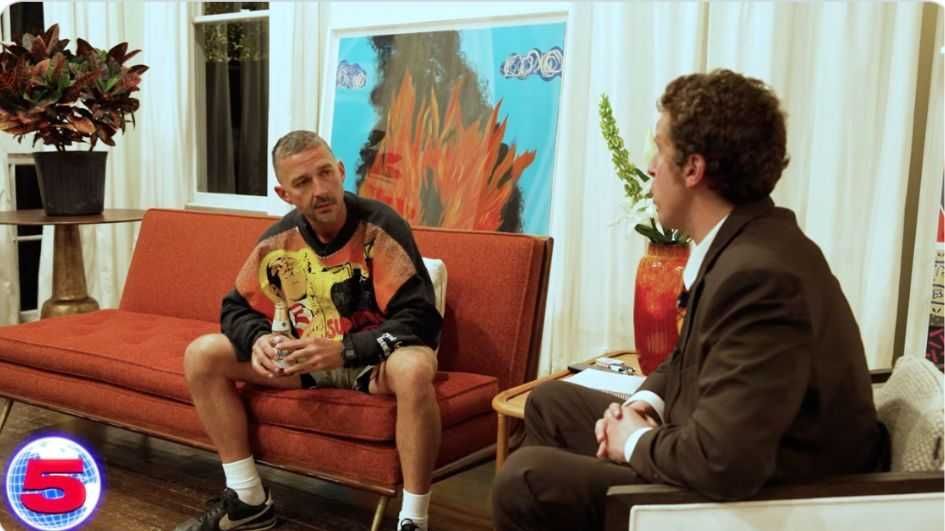
For LaBeouf, arrest is not a new experience. The latest came last month during Mardi Gras in New Orleans: a misdemeanor battery charge after he allegedly struck multiple people in a drunken altercation. He surrendered voluntarily, spent time in Orleans Parish Prison, and days later appeared on camera telling journalist Andrew Callaghan of Channel 5 News: “My behavior’s dirty, ugly, disgusting, so I gotta eat it.”
No spin. No intermediary. Just a man sitting in the wreckage and describing it plainly.
It would be easy to write him off as another Hollywood cautionary tale. But Christian charity means resisting the reflex to write someone off — especially when someone’s collapse has a visible beginning.
Shia LaBeouf didn’t arrive at dysfunction by accident.
Childhood's end
He grew up in Echo Park, Los Angeles, in conditions most of us would struggle to imagine. His father, a Vietnam veteran and heroin addict, cycled in and out of rehab while young Shia attended AA meetings beside him.
At 10 years old, he overheard his mother being raped. His father, lost in a flashback, once pointed a gun at him.
What looks like a difficult childhood is, in truth, something closer to a disaster.
Fame arrived far too soon. By his early teens he was earning $8,000 a week on Disney’s "Even Stevens" — more money than his struggling family had ever seen, handed to a boy still too young to drive.
He told the story to Callaghan almost casually, as if describing someone else’s life: adult money, adult industry, adult temptations, and no adult judgment.
Hollywood didn’t ease LaBeouf into the spotlight. It vacuumed him into it. Once inside, there was no version of that world equipped to deal with a traumatized child carrying a fat paycheck and no psychological scaffolding. That he grew up volatile and self-destructive shouldn’t surprise anyone.
None of this excuses bad behavior. Accountability is still accountability. But understanding where destruction begins does not weaken judgment. It makes compassion possible.
Immersion in the Spirit
In 2022, LaBeouf was cast as Padre Pio, the Italian friar known for the stigmata and for his fierce spiritual intensity. He prepared the way serious actors do — research, immersion, method.
What he did not expect was the role swallowing him whole.
“It stops being prep of a movie,” he told Bishop Robert Barron in an interview ahead of the film's premiere, “and starts being something that feels beyond all that.”
At one point he was living in a seminary parking lot, he says. He studied the Gospels. He spent time around Capuchin friars whose lives revolved around prayer, confession, and the slow disciplines of faith.
He was confirmed in the Catholic Church on New Year’s Eve 2024 at Old Mission Santa Inés, sponsored by a Capuchin friar. He attends Mass regularly. He prays the rosary. He venerates the Eucharist. He quotes G.K. Chesterton on the way mysticism keeps a man sane.
He is, in other words, exactly the kind of convert the Gospel of Luke had in mind.
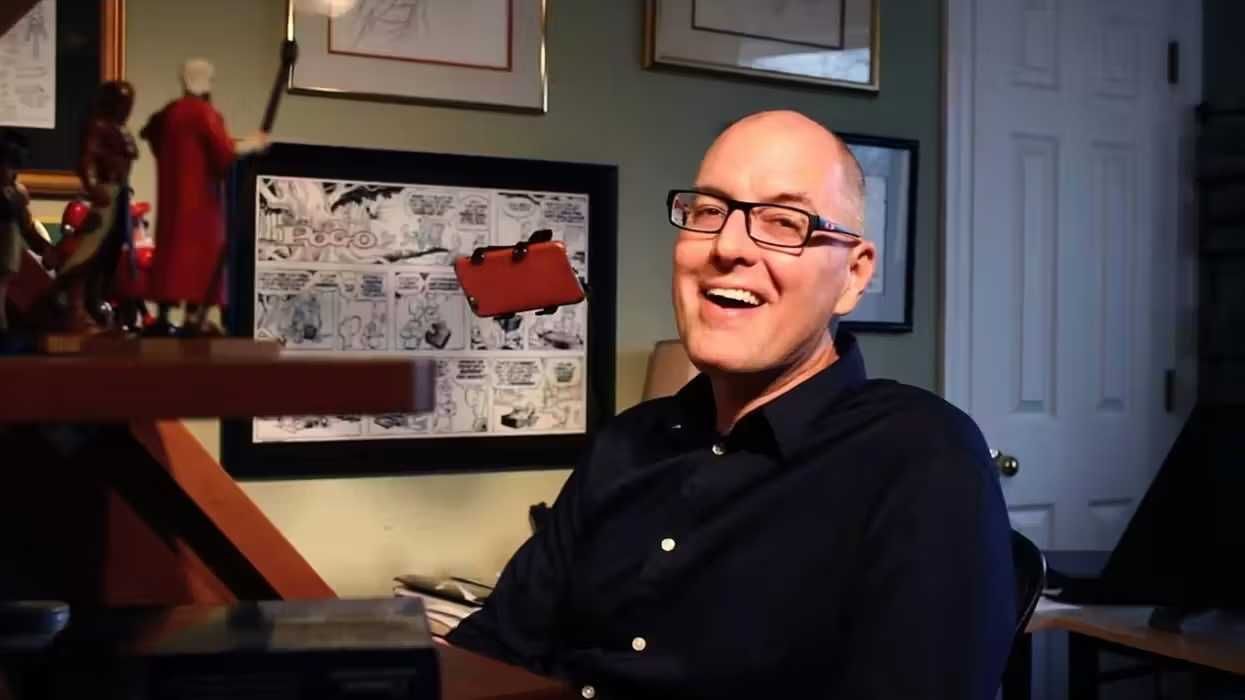
RELATED: Animator Tom Bancroft: From 'The Lion King' to the King of Kings
 tombancroftstudio.com
Hitting the wall
The prodigal son did not arrive home rehabilitated. He arrived desperate — and was met, before he could finish speaking, by a father already running to meet him.
LaBeouf is still mid-journey. He’s divorced, co-parenting with his ex-wife, carrying the weight of serious allegations, trying to put a life back together.
The Callaghan interview shows a man wrestling with himself in real time. Not performing repentance, but attempting the slow, humiliating work of it.
He talks about suicidal lows. About addiction cycles. About the moment he believes grace finally broke through: “You got to hit your head into the wall hard enough where you just go, ‘F**k it.’"
Crude language. Sound theology.
Christian redemption isn’t tidy. It unfolds through relapses, humiliations, and moments of clarity that usually arrive after the damage is done.
What LaBeouf offers isn’t a polished testimony.
It’s something rarer — a man still caught in the fall even as he reaches for redemption.








 English (US)