.png)
MADRID — When Europe’s leaders hold their periodic gatherings in Brussels, Pedro Sánchez isn’t often at the center of media attention.
As a rule, when Spain’s 54-year-old prime minister strides down the red carpet below the giant glass oval structure in which the EU’s heads of government meet, only Spanish reporters surge forward to shout out questions about domestic affairs. Correspondents from other countries tend to focus on their own leaders, or chase after French President Emmanuel Macron, German Chancellor Friedrich Merz or Italian premier Giorgia Meloni — the heavyweights most consider to truly “run” the EU.
But at recent summits, Sánchez has been met by unusually swollen packs of journalists elbowing one another while waving microphones, eager to hear what he has to say.
Why the sudden surge of interest?
It's not because his government is doing well at home. The prime minister’s fragile coalition has been abandoned by its parliamentary partners and is incapable of passing legislation. Moreover, a succession of corruption scandals involving members of Sánchez’s inner circle are undermining his administration.
Instead, the attention on Spain’s prime minister is driven by the fact that the head of a country better known for its beaches and nightlife has lately become the unlikely face of Europe’s opposition to the war in Iran and, more broadly, to U.S. President Donald Trump.
When the U.S. and Israel began their attack on Iran in late February, Spain’s prime minister stood out as the sole EU leader to openly condemn the military operation. In contrast to figures like Macron and Merz, who opted for a cautious, hedged reaction to the conflict, Sánchez’s denunciation of the “illegitimate” aggression was unequivocally blunt.

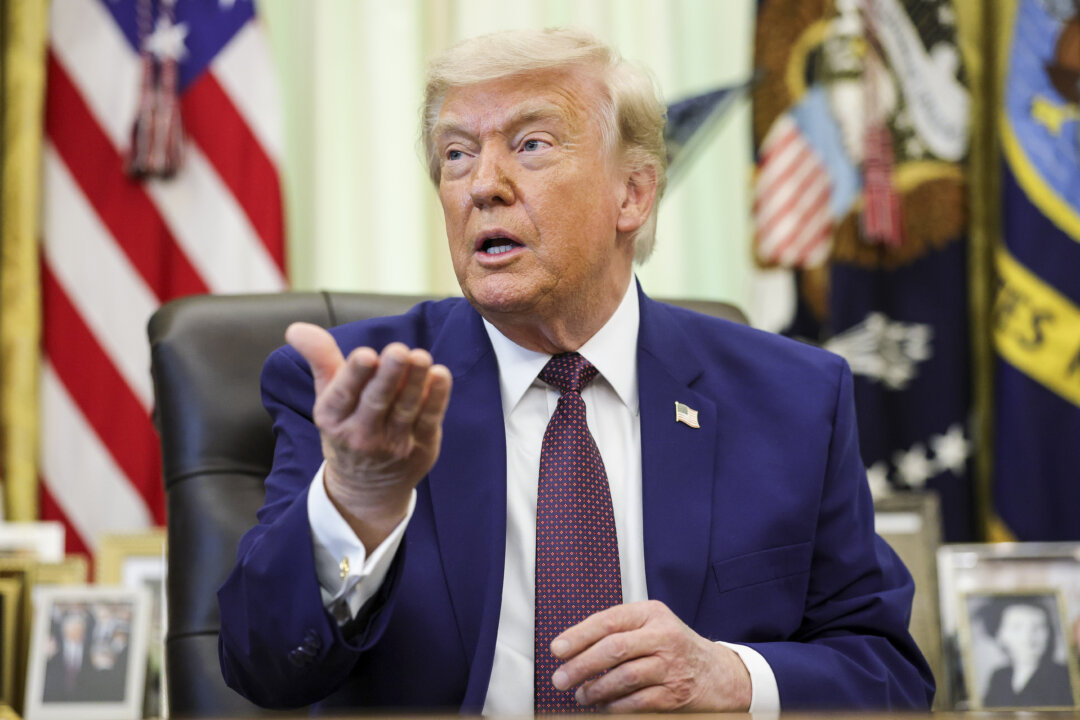
So was Washington’s reaction to the Spaniard’s criticism. Sánchez’s decision to bar U.S. warplanes from using jointly operated bases and the country’s airspace infuriated Trump. Calling Spain “terrible” and “unfriendly,” the president threatened to cut off all trade relations with Madrid, and later suggested the country should be booted from NATO.
By singling out Sánchez, the White House inadvertently helped turn Spain’s isolated opposition to the war into a position embraced by nearly all of Europe. In response to the threats, EU leaders scrambled to express support for their colleague in Madrid — and, emboldened, joined him in condemning the attacks on Iran.
In the span of just a few months, Spain’s prime minister went from being an outlier in Europe to the EU’s moral leader.
“Spain was never alone,” said Spanish Foreign Minister José Manuel Albares, a longtime Sánchez ally, in an interview. “We were simply first, leading so that others could follow behind.”
The White House did not respond to a request for comment.
Sánchez's newfound prominence on the international stage is all the more striking because it comes at a moment of profound vulnerability at home. Although Spain’s leader has not been implicated in the scandals that hound his government, political opponents have endeavored to link him to the criminal cases.
“Pedro Sánchez is synonymous with corruption,” said Senator Alicia García, spokesperson for the center-right People’s Party, during a recent session of the Spanish Senate.
Yet respect and admiration for the prime minister continues to grow in the rest of Europe. That’s because his opposition to Trump reflects the majority view on the continent that the U.S. president poses a major threat to the bloc.
Overall, Europe’s leaders have been reluctant to clash with Trump. The U.S. is one of the EU’s largest trading partners, and maintaining stable ties is considered essential for countries like Germany. Additionally, despite Trump’s efforts to undermine NATO, European defense continues to not only be U.S.-led, but U.S.-centered.
But Sánchez is an exception to that status quo.
Spain’s limited trade relations with the U.S. means the country is shielded from Trump’s tariff threats, and it is also geographically distant from potential military threats. The country is even comparatively immune from Iran-related energy shocks, thanks to a renewable energy boom spearheaded by Sánchez that has earned plaudits from the rest of Europe.
The prime minister’s allies argue his consistently defiant stance toward Trump is driven less by pragmatism than conviction. At a moment when multilateralism and the postwar global order are seen as outdated concepts, the center-left moderate is described as a true believer, willing to defy the most powerful country in the world in defense of those ideals.
“He’s always been committed to the respect for human rights, the dignity of all people,” said Albares. “It’s just what he truly believes in.”
Sánchez — who declined to be interviewed for this article but allowed members of his administration to participate — has urged his European counterparts to follow Spain’s example. During POLITICO’s European Pulse Forum in Barcelona last April, he called for Europe to “rearm itself morally, so that it can contribute to stable and peaceful development throughout the world.”
“Europe’s citizens don’t want their leaders to look the other way, to be self-absorbed,” he said. “They want them to get involved in finding the solutions to the global challenges facing humanity.”
The moral stance underpinning the Spanish prime minister’s opposition to Trump can, paradoxically, be traced back to a link forged in the U.S. president’s hometown.
Shortly after graduating with a degree in economics and business administration in Madrid in 1995, Sánchez moved to New York City to work at a consultancy. While there, Carlos Westendorp, the late Spanish ambassador to the United Nations — whose wife was an acquaintance of Sánchez’s parents, two solidly middle class civil servants — began inviting him over for meals.
The inquisitive 24-year-old won the former foreign minister over by peppering him with questions about international affairs and eventually became a mentee of sorts. After Westendorp was named High Representative for Bosnia in 1997, he reached out to Sánchez — who by then was wrapping up a stint as an assistant in the European Parliament in Brussels — and offered him a spot on his team.
The Spaniard arrived in a city “in which every building was pockmarked by bullets” fired during nearly four years of siege. Journalist Victoria García, at the time the U.N. mission’s spokesperson, recalled the women on the staff fawning over the handsome, 6-foot-3-inch Sánchez.
“But he was more than just a pretty face, [he was] a hell of a hard worker,” she said in an interview. “That country had been reduced to rubble and we were charged with redesigning it from scratch, coming up with a constitution, a criminal system, even the flag and national anthem.”
Sánchez, who had just earned his masters degree in economics from the Free University of Brussels, was brought on board as an economic adviser and tasked with laying out Bosnia’s future financial system in a series of complex position papers. In an early sign that he could be headstrong when defending matters he believed in, García said Sánchez clashed with a high-ranking American representative who offhandedly dismissed his policy proposals.
“He was just a kid, but he’d push back hard,” she recalled. “He wouldn’t hold back.”
As U.N. peacekeepers attempted to keep violence between Croats, Serbs and Muslims from flaring up again, Sánchez travelled across Bosnia with Westendorp, attending meetings with regional leaders. According to García, it was impossible for anyone on the team to not emerge from their time in Bosnia “with a newfound understanding of the importance of multilateralism and the rule of law, and a profound respect for the work done by organizations like the U.N.”
In his 2019 memoir, Manual de Resistencia — which translates to “Resistance Manual” — Sánchez said his experience in Sarajevo “inoculated him from the ravages of nationalism and identity politics.”
“I saw unscrupulous politicians who don’t consider the consequences of their hate speech — not the social, political, or economic ones,” he wrote. “Or rather, it’s not that they don’t consider them, it’s that they feed the worst in their people, because they thrive on that confrontation.”

The prime minister recalled sleepless nights during which “U.S. jetfighters and bombers flew over the city, en route to Serbia and Kosovo,” where Washington was attempting to stop ethnic cleansing. In his book, Sánchez praised then-U.S. President Bill Clinton’s “brave decision” to bomb Yugoslavia — a measure “few of his countrymen supported.”
“I saw a man deeply involved, who truly committed himself, his presidency, and his country to ending a deadly war,” wrote Sánchez in 2019. Lamenting America’s withdrawal from multilateralism under Trump, he noted the isolationist Republican president was “no Clinton.”
Despite his deep admiration for the U.N.’s work, García said Sánchez was always clear-eyed about wanting a future in Spanish politics. When Westendorp would travel back to Spain to attend Socialist Party conferences, the young Spaniard would push to accompany him so as to make contacts within the political organization.
“Sánchez believed in what we were doing in Bosnia,” she said. “But even then it was obvious that he was a political animal with aspirations that were bigger than Sarajevo.”
The lessons Sánchez drew from Bosnia would remain largely invisible for years. But they would eventually become central to how he viewed conflicts abroad, the role of international institutions and the obligations of democratic governments in moments of crisis.
Sánchez’s political convictions would soon collide with the realities of political survival.
When his time on Westendorp’s staff concluded in 1999, the Spaniard returned to Madrid, entering local politics as a member of the Socialist Party. He remained a backbench figure for over a decade, but in 2014 he launched an unexpectedly successful dark horse bid to become party leader.
Albares, then a career diplomat, recalled first meeting Sánchez at that time and being entranced by the young and dynamic Socialist leader — the first frontline Spanish politician to speak English fluently and regularly read the international press. The future foreign minister was so taken by Sánchez that he eventually took a leave of absence from the diplomatic service to become his adviser on global affairs.
“I made that decision because I was impressed by his defense of the same principles he continues to uphold today,” said Albares. “He had, and continues to have, a clear vision of the European project and its values, earnest concern about climate change, the defense of gender equality, a profound respect for the United Nations and multilateralism, and of the idea that the dignity and human rights of every human being must always be respected.”
At a time when populist forces were steadily gaining traction among voters, Albares thought Sánchez was just the man to lead Spain. But the Socialists’ old guard was unconvinced by their new leader, who questioned the decentralized party structure that gave disproportionate power to its regional leaders.
Sánchez had taken the reins of the center-left party amid a crippling economic crisis that hastened the collapse of Spain’s bipartisan political system, and new far-left and economic-liberal political groups ate away at the Socialists’ traditional voting base. Seizing on a series of electoral setbacks, the old guard painted Sánchez as an overwhelmed novice and forced him to step down in Oct. 2016.
For many politicians, that would have been the end. But for Sánchez, it was the beginning of an unlikely comeback. In a move that has since become Spanish political lore, he embarked on a grassroots campaign to win back support, traveling across the country in his Peugeot, meeting party members face-to-face and rebuilding his base from the ground up.

Accompanying him were several figures that have since become major liabilities for Sánchez. Among them were José Luis Ábalos, who would eventually be appointed transport and public works minister — but today is imprisoned on corruption charges — and Santos Cerdán, who would become one of the most powerful figures in the Socialist Party before being implicated in a kickback scandal.
Sánchez’s odyssey coincided with Trump’s surprise defeat of former Secretary of State Hillary Clinton in the 2016 presidential election and the first months of his administration. Albares, who remained loyal to the ousted Socialist leader, said they followed the developments with fascination and discussed the impact of Trump’s measures on the rest of the world.
“The conversations were not, and to this day are not, about what the U.S. president does, but rather about the context in which those actions place Spain,” he said. “They were always about how we stay true to our principles, how we meet our objectives within that context.”
Albares said Sánchez remained an indefatigable, cheerful figure on the cross-country tour. “Even at the lowest moments, he has this enthusiasm rooted in an unwavering belief in his project,” he said. “And I think Spaniards perceived and rewarded that determination.”
The retail politicking paid off. When elections were held to select the Socialist Party’s new leader in May 2017, Sánchez handily defeated his rivals and was restored to the post from which he was ousted seven months before.
During his second turn in his party’s top spot, Sánchez took pains to not repeat the mistakes that had led to his downfall. Moving swiftly to reshape the party in his own image, he sidelined internal opponents and transformed the Socialists into the hyper-centralized, leader-driven organization that it is today.
His next move was even more brazen. Capitalizing on a series of devastating corruption scandals, in 2018 Sánchez orchestrated a no-confidence vote to topple then-Prime Minister Mariano Rajoy — a maneuver unprecedented in modern Spanish politics. The bid succeeded, swiftly transforming the once ousted opposition leader into Spain’s head of government.
At a summit of global mayors in Madrid last April, municipal leaders from around the world cheered after Sánchez gave a speech in defense of open cities that embrace migrants and diversity.
“He’s a rockstar, he’s exactly what the world needs: a progressive who isn’t afraid of Trump,” said an American municipal official who I agreed not to name because of his concerns that federal funding for his city could be jeopardized by a perceived criticism of the U.S. president.
Sánchez’s popularity and perceived strength on the global stage contrasts with his divisive reputation and a weak domestic political position — one that isn’t solely motivated by the corruption scandals involving members of his inner circle.
While the prime minister has managed to remain in power for the past eight years, he has always led fragile minority governments that required the support of smaller parties to get legislation through Spain’s fractured parliament. The Socialist leader often says he operates by “making virtue of necessity” — in other words, by adapting his positions to align with strategic partners.
But that pragmatism has not gone down well among Spaniards. Prior to Sánchez, they had never experienced a coalition government at the national level or the flexibility required to make them work.
One of Sánchez’s most controversial measures remains his 2023 move to amnesty separatist politicians who led an independence movement in the Spanish region of Catalonia. The decision — a complete reversal of his longstanding opposition to the clemency measure — was key to winning the support of the Catalan parties he needed to remain prime minister, but it alienated voters, many of whom have yet to forgive him for the U-turn.
According to the latest monthly survey conducted by Spain’s state-run Center for Sociological Research while Sánchez ranks as the country’s highest-rated political leader, 63 percent of Spaniards say they trust him “little, or not at all.”
Meanwhile, the separatist politicians with whom Sánchez made the amnesty deal have since abandoned the prime minister, which is why his minority government currently lacks the backing required to pass laws, much less a fresh budget.
And then there are the scandals.
Sánchez came to power in 2018 promising clean government, but over the past years many of his closest allies — among them his cross-country campaign companions, Ábalos and Cerdán — have been prosecuted for alleged corruption.
That situation worsened last month, after Spain’s National Court indicted former Prime Minister José Luis Rodríguez Zapatero — whom Sánchez had previously described as “an example to follow and a source of inspiration” — for money laundering, influence peddling and other criminal offenses. Just days later, agents of the Civil Guard’s elite Central Operative Unit raided the ruling party’s headquarters in an unrelated investigation into an elaborate scheme to discredit Sánchez’s critics.
These latest developments appear to mark a breaking point for the prime minister’s parliamentary allies. Regional groups like the Basque Nationalist Party, which Sánchez depends on to pass legislation, seem increasingly wary of being associated with the ruling party’s scandals and are now calling for early elections.
But leaving office is ultimately up to the prime minister. Spain’s opposition is too split to force him from power, and Sánchez has vowed to serve out the legislative term, which is due to end in August 2027.
The current deadlock could make Sánchez lean even harder into international affairs, said Pablo Simón, a political scientist at Madrid’s Carlos III University. “The parliamentary paralysis impedes him from doing anything at home, but abroad he can make the most of personal political positions that happen to be quite aligned with that of most Spaniards.”
The strategy has worked well for Sánchez in the past.
Following Hamas’ Oct. 7, 2023 attacks, in which some 1,200 people were killed in Israel, Spain’s prime minister made headlines by speaking out against the military operations in Gaza, describing them as “genocide.” The stance led Israeli Foreign Minister Gideon Sa’ar to label him “a disgrace to Spain,” but boosted Sánchez’s standing domestically.

Opposition to Trump’s policies have similarly benefitted Sánchez. Spaniards overwhelmingly backed the prime minister when he rebuffed the U.S. president’s push to increase NATO’s defense spending targets and refused to ramp up Madrid’s military expenditures. However, it’s Sánchez’s stance against the war in Iran that really resonated with Spaniards, who are among the Europeans most opposed to the operation.
In recent POLITICO polling, 56 percent of Spanish respondents said they strongly disapprove of the offensive, and 43 percent said Madrid should publicly oppose the military operation and push for an end to the conflict. And a majority of Spanish respondents — 51 percent — also said Washington poses a “threat” to Europe, the largest proportion of the six EU countries polled.
It’s unclear if the latest controversies will undo the domestic gains Sánchez has made on the back of global politics. But polling conducted before the most recent corruption cases were reported suggests that if elections were held today, Sánchez’s scandal-ridden Socialist Party would still win the greatest share of the vote.
“By taking on Trump, he’s managed to make Spaniards talk far less about domestic squabbles and corruption, and focus on international politics,” said Simón. “Trump’s nature is to fill the space and constantly draw attention to himself, and that makes the act of opposing him a constantly relevant action — and Sánchez’s decision to oppose him an undeniable success.”
Sánchez and Trump may be ideologically opposed, but they share one notable trait: Both molded established political parties around themselves after surviving political defeats that might have ended others’ careers.
Diego Rubio, a 39-year-old Oxford-educated scholar who has served as the Spanish prime minister’s chief of staff since 2024, described Sánchez as a born fighter.
“He’s a self-made man who only ended up in this position by overcoming the status quo within his own party,” he said. “He isn’t like other prime ministers that were named by the party to be their candidate — he had to fight to remain in his own party.”
“Given that spirit has worked out pretty well for him, why would he do anything differently now?” he asked.
Rubio said progressive politicians on both sides of the Atlantic had avoided direct confrontations with rising populist leaders, failing to challenge their talking points.
“Over here we had the advantage of seeing Hillary [Clinton] and others fail, of seeing that saying things like ‘Trump is a liar’ isn’t enough to stop these people,” he said. “You have to fight. Left-wing leaders are elected to fight — inequality, injustice, the big guys that make our society worse.”
According to Rubio, the fundamental difference between Spain’s prime minister and the U.S. president is that while neither backs down from a fight, “Sánchez never insults, never attacks people’s families.”
Since coming to power in 2018, the prime minister’s outspoken defense of progressive ideas have made him an outlier in an EU that has drifted to the right.
Out of the bloc’s 27 heads of government, Sánchez is one of the only three center-left prime ministers currently in power. The other two are Maltese leader Robert Abela, and Denmark’s Mette Frederiksen, who has faced Trump’s wrath over her refusal to give in to his annexationist designs on Greenland.
Arguably, Sánchez’s clash with Trump has made him less isolated within the bloc.
At last March’s summit of EU leaders in Brussels, heads of government from all political backgrounds sided with the Spaniard and adopted meeting conclusions rebuking Trump and Israeli Prime Minister Benjamin Netanyahu’s attacks on Iran. Coalescing around Sánchez, they pointedly called for “full respect of international law by all parties, including the principles of the United Nations Charter and international humanitarian law.”
Still, the perception of being a lone progressive surrounded by an increasingly right-wing world could benefit Sánchez domestically ahead of Spain’s next general election.
When voters last went to the polls, in the summer of 2023, the Socialist leader stoked fears of a coalition government made up of the center-right People’s Party and the far-right Vox group. That scenario spooked electors into giving left-wing groups better than expected results, and Sánchez a path to remain in power.
This time around, he could repeat the strategy by focusing voters’ attention on France, where the far-right National Rally party is projected to sweep next spring’s elections. Many expect Sánchez to urge Spaniards to keep him in government by warning Madrid could go the way of Paris.

Political analyst Simón said betting domestic election results on international developments was an unorthodox move. “Developments in Syria rarely shape electoral outcomes in [the Spanish region of] Soria,” he quipped.
But, he added, Sánchez is wise to continue making waves on the global stage. “Casting himself as the defender of multilateralism is working out for him personally, both in the outside world, and by consolidating him internally as the country’s leading political progressive.”
The political scientist said the prime minister’s fight with Trump had also raised the country’s profile across the globe, and reinforced its position as a player within Europe.
“Let’s be honest,” Simón said. “This is working out for Spain, too.”
It’s unclear if Sánchez’s domestic troubles will eventually catch up with him, and his parliamentary position remains precarious. But for now, Spain’s prime minister has turned a moment of political vulnerability into an opportunity for himself, his country — and perhaps the EU as a whole.
Sánchez, once a peripheral figure in continental affairs, has become one of Europe's most closely watched leaders. And as the jostling reporters at EU summits make clear, the world is now paying attention.





 English (US)