.png)
 1 hour ago
1
1 hour ago
1

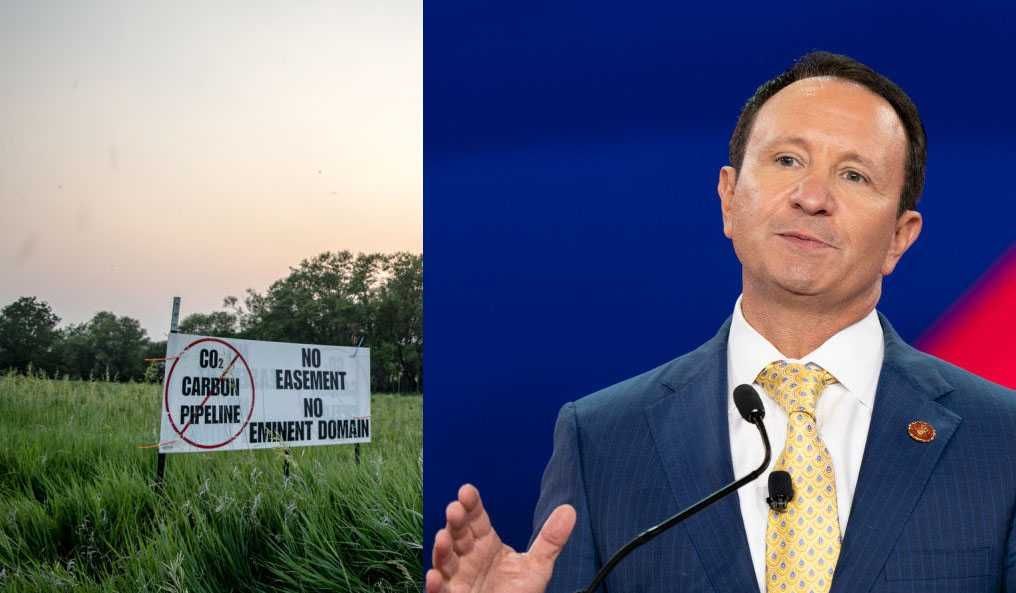
Louisiana has become a flash point in the battle over carbon capture and storage technology.
As its name suggests, CCS entails the capture, transportation, and storage of carbon dioxide produced by industrial activity or power generation.
'CO2 capture and storage will provide additional revenue sources.'
Long employed as a means of enhancing oil recovery, this technology has been embraced in various sectors as a way of simultaneously trapping greenhouse emissions and pacifying climate alarmists who regard carbon dioxide as an existential threat.
Just as liberals can be found on both sides of the issue, conservatives too are divided over whether to encourage CCS in Louisiana, one of only six American states approved to regulate all underground wells.
Republican supporters of the technology have touted it as a job-creating, industry-preserving means of fostering energy security, boosting the state's global competitiveness, and attracting business to Louisiana — claims echoed by ExxonMobil in its Feb. 16 announcement of expanded CCS operations in the state.
Some of the most outspoken opponents of CCS in the Bayou State are, however, MAGA-minded politicos and residents unwilling to accept the potential fallout of what they regard as a threat to private property rights and an act of surrender amid a decades-long climate alarmist campaign against American energy.
In defense
Gov. Jeff Landry (R), among the lawmakers who have encouraged CCS in the state, noted in an Oct. 15 executive order barring consideration of new applications for carbon dioxide injection projects — an order purportedly aimed at enabling the Louisiana Department of Conservation and Energy to catch up on previously received petitions — that:
- Louisiana's industrial infrastructure "positions the State as a national leader in CO2 capture and storage, capable of seamlessly integrating CO2 capture in existing processes, enhancing America's energy competitiveness globally";
- "CO2 capture and storage will extend Louisiana’s presence in energy by creating 17,000 potential new jobs, investing seventy-six billion dollars in potential capital for communities throughout Louisiana from announced projects alone, and driving economic growth on a scale unimaginable for Louisiana"; and
- "CO2 capture and storage will provide additional revenue sources for local governments, has the potential to create a more diversified economy for Louisiana, and continue to serve as a catalyst for multiple industries, while sustaining and enhancing existing industries."
According to Louisiana's economic development agency, $23 billion in CCS-related capital investments in the state has been announced to date and 4,500 jobs are projected to result from CCS-related projects.
RELATED: Out of order: Courts shouldn’t rule based on ‘trust us’ science
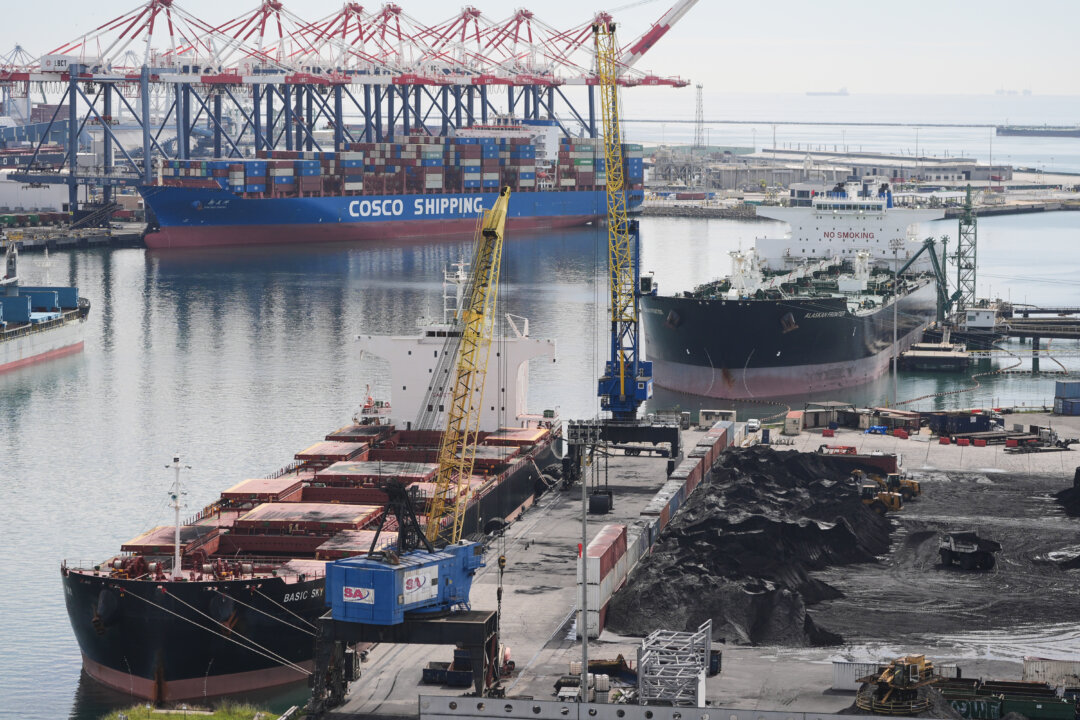
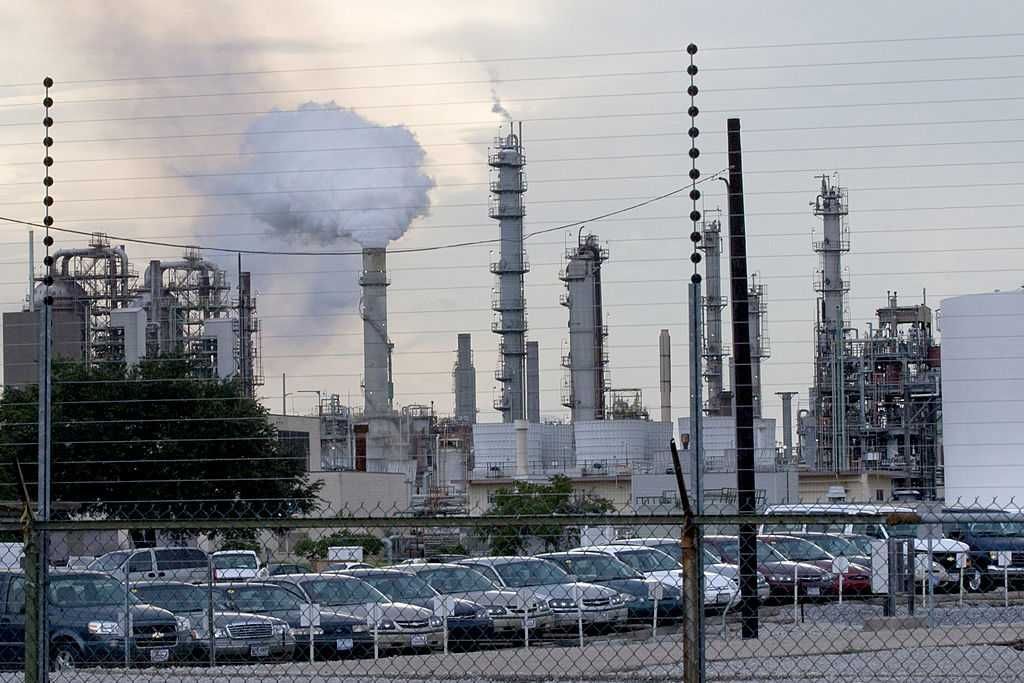 Photo by F. Carter Smith/Bloomberg via Getty Images
Cameron Henry, the president of the Louisiana Senate who has expressed concern about recent legislation that would empower local communities to reject CCS projects, has similarly pitched carbon capture as the way toward greater prosperity.
'Another industrial experiment with serious risks.'
"It is something that is required for industry coming to Louisiana. Louisiana has to come to grips with that and find a happy medium to it," Henry said.
Liberal aversion
CCS has historically enjoyed a great deal of support from the American left.
The Biden administration, for instance, committed billions of taxpayer dollars to advance CCS initiatives, while the Democratic Party endorsed increasing taxes on fossil fuel power generation where the technology is employed.
While supported by powerful elements of the left and identified by the United Nations as a way of helping to limit so-called "global warming," some leftists who would apparently prefer to see the fossil fuel industry further humbled and America dependent on unreliable energy sources have exhausted a great deal of time and resources fighting the technology's implementation.
Antagonistic groups in the Bayou State, which reportedly leads the nation for proposed CCS projects, appear to have drawn funding from out-of-state liberal organizations such as the Rockefeller Family Fund, the Bloomberg Family Foundation, and a climate fund started by billionaire Jeff Bezos.
'The only people that want it are the ones who are trying to abscond with these federal tax credits.'
Form 990 tax returns indicate that Healthy Gulf, one of the New Orleans-based activist organizations that has criticized and campaigned against CCS initiatives in Louisiana, has received a fortune in recent years from the Rockefeller Family Fund and at least $1 million from the Bloomberg Family Foundation Inc.
Healthy Gulf has in turn dumped grant money into other Louisiana-based anti-CCS outfits including the Lake Maurepas Preservation Society, which campaigned against Air Products' proposed injection of trapped emissions a mile underneath the eponymous lake.
Healthy Gulf is hardly the only outfit opposing Louisiana CCS initiatives that has received money from out-of-state liberal groups.
Rise St. James touts itself as "a faith-based grassroots organization championing environmental justice and opposing the expansion of petrochemical industries in St. James Parish, Louisiana."
The group has characterized CCS as "another industrial experiment with serious risks" and advocated against it — not just in Lake Maurepas but across the whole of Louisiana.
This supposedly "grassroots organization" notes on its website that it is financially backed by the Earth Island Institute, a mammoth international organization based in Berkeley, California.
The Earth Island Institute, which has itself received funds from various climate alarmist groups such as the leftist Tides Foundation, has pushed anti-CCS literature, warning about possible leaks and a potential "pipeline-building frenzy" in the event that the technology becomes more common.
The Deep South Center for Environmental Justice, a New Orleans-based nonprofit, even appeared to imply that CCS initiatives are racist, claiming that the technology is "one of the biggest threats to communities of color being harmed by the polluting industries that exacerbate our climate crisis and by the regulatory agencies that are supposed to be protecting them."
The DSCEJ also joined Healthy Gulf and the Alliance for Affordable Energy in an unsuccessful legal challenge to the Environmental Protection Agency's decision to grant Louisiana primary enforcement authority over a class of underground carbon storage wells.
As with the other groups, the DSCEJ has received funds from deep-pocketed, out-of-state liberal organizations.
The Bezos Earth Fund — described as a "$10 billion commitment from Jeff Bezos to fight climate change" — reportedly gave the New Orleans-based activist group $4 million in September 2021. From 2020 to 2023, the DSCEJ received over $700,000 from the San Francisco-based Tides Center and Tides Foundation.
Healthy Gulf, Rise St. James, and the DSCEJ did not respond to a request for comment from Blaze News.
Conservative backlash
While some of those who oppose CCS appear to be liberals, both inside and outside Louisiana, there is substantial resistance among local conservatives — including Republican lawmakers.
State Rep. Chuck Owen (R), one of the more vocal critics of carbon sequestration initiatives, told Blaze News, "People who live in the country where they're trying to dump this stuff do not want it."
"I polled this twice. This is an 85% 'no' issue in my district," said Owen, whose district includes the cities of Anacoco, DeRidder, Leesville, and Rosepine. "The only people that want it are the ones who are trying to abscond with these federal tax credits, knowing that it's not going to do any good."
Owen emphasized that much of the resistance is about property rights — about Louisianans' aversion to having "private companies coming in and taking their land for money."
A group called Save My Louisiana, comprising mostly residents and elected officials in Owen's neck of the woods, filed a lawsuit in November over state laws enabling the expropriation of private property for pipelines transporting carbon dioxide.
The lawsuit, which was supported by Louisiana Treasurer John Fleming (R), alleges that laws permitting the use of eminent domain for CCS are unconstitutional and that such statutes turn Louisiana "into a national waste dump site."
"No one's against oil and gas. We want oil and gas to succeed here. But how do you equate the burial of carbon waste with energy?" Owen said.
Daniel Turner, founder of the American energy advocacy group Power the Future, told Blaze News, "The entire thing is just absolute bulls**t. The process, the money, the subsidies, the metrics, the goals, the technology — the entire thing is a farce."
"Once we start playing this game that carbon dioxide is bad and needs to be captured, you are playing the left's game," added Turner.
When asked about the burgeoning industry promise of generating thousands of jobs in Louisiana, Turner said, "We're going to create fake jobs for a fake problem and then wonder why we are further in debt."
The disagreement over the value of CCS appears to be coming to a head in Baton Rouge, where lawmakers have advanced numerous bills aimed at hamstringing CCS initiatives.
"These bills are not anti-industry," state Rep. Mike Johnson (R) said in January after filing a trio of bills targeting CCS. "They are pro-property rights, pro-local government, and pro-Louisiana families. Economic development should be built on voluntary agreements — not forced land seizures — and local communities deserve a seat at the table."
Landry's office did not respond to a request for comment.
Like Blaze News? Bypass the censors, sign up for our newsletters, and get stories like this direct to your inbox. Sign up here!








 English (US)