.png)
 1 hour ago
3
1 hour ago
3
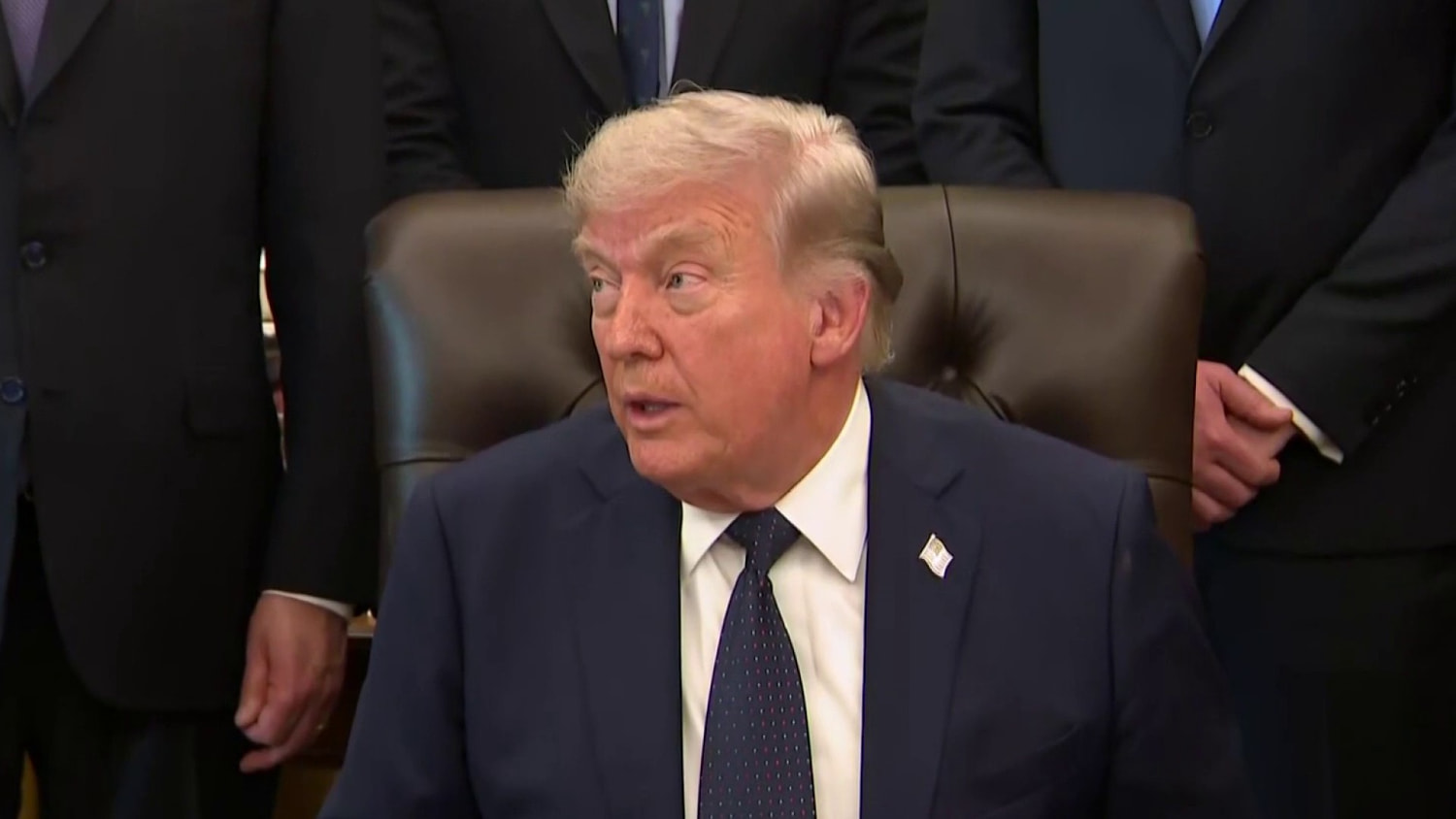
In the wake of the latest alarming incident concerning the safety of our chief executive that has shaken the nation, President Donald J. Trump has a key opportunity to exercise a clear constitutional authority that has gone too long ignored.
Article II, Section 3 of the U.S. Constitution grants the president the power to convene both houses of Congress “on extraordinary Occasions.” That power exists for moments precisely like this one, when national security demands immediate action and legislative inertia threatens public safety.
As I have previously recommended, President Trump should have immediately convened both houses and kept them in session until they completely funded the Department of Homeland Security (DHS).
The president did not take that immediate step in that initial flurry of events on Saturday night. However, it is not too late.
The Senate’s stonewalling continues unabated while the security of the nation remains at risk. President Trump should accordingly invoke this power now to force Congress to act.
This is not a radical suggestion; it’s a return to first principles. The Framers deliberately modeled the president’s convening authority on the historic prerogative of English monarchs to summon Parliament during crises.
Perhaps the first and most vivid precedent comes from 1295, when King Edward I faced grave military threats from France, Scotland, and Wales. National security and fiscal necessity compelled him to summon what became known as the (then-unicameral) Model Parliament to secure the funding and legislative support required to defend the realm.
As Edward wrote in his writ of summons: “[I]nasmuch as a most righteous law of the emperors ordains that what touches all should be approved by all, so it evidently appears that common dangers should be met by remedies agreed upon in common.”
Our own Constitution embeds this same logic. The Senate needs to act now for our homeland’s common good.
In many instances in 2025-26, the Senate has operated in a state of suspended animation—holding pro forma sessions that allow lawmakers to claim they are “in session” while doing nothing of substance and yet blocking the president’s use of his clear Recess Appointments Clause power, which I have also advised the president to invoke.
At all times, Congress (in particular the Senate) should be either in session to perform urgently needed work for the nation or it should be in recess where the president can pick up the slack by making recess appointments so that he can push his energetic executive branch forward. At the moment, however, the Senate often operates in a limbo zone where it does no work and yet denies the president the power to use recess appointments. The conjunction of those two things makes no sense.
This is not governance; it is evasion. President Trump needs something dramatic to change the dynamic in the Senate, where a relative handful of holdouts have blocked full funding for the Department of Homeland Security.
The recent security lapse left the president, his wife, and his Cabinet exposed. The Secret Service, charged with protecting the Nation’s highest officials, cannot operate effectively in an underfunded Department.
By forcing Congress into real session, the president can break the logjam and compel lawmakers to confront their responsibilities.
Critics would inevitably raise a familiar objection: the current impasse involves border and immigration funding, not Secret Service appropriations. This is a distinction without a difference. Money is often fungible inside agencies.
DHS is a single Cabinet-level department encompassing Customs and Border Protection, Immigration and Customs Enforcement, the Secret Service, and more.
Appropriations bills frequently allocate funds at the departmental level, leaving internal reallocations to agency leadership under statutory guidelines. A dollar denied for border security is a dollar that cannot be redirected to protective operations when emergencies arise—and vice versa.
Full funding for the entire Department eliminates these shell games and ensures that no mission—whether securing the border or safeguarding the president—suffers because of artificial congressional silos.
The stakes could not be higher. America watched in horror as a would-be assassin barreled past lax security. What if he had been wearing a suicide-bomb vest and had gotten into the banquet itself? The Secret Service’s own after-action reviews have repeatedly highlighted serious problems at the Secret Service. Yet Congress has treated these warnings as optional.
Pro forma sessions allow Senators to return home for fundraisers and ribbon-cuttings while the executive branch is left to improvise protection with inadequate resources.
President Trump’s convening power offers him and us a constitutional circuit breaker. He can still keep both chambers in Washington until a clean, comprehensive DHS funding bill reaches his desk—no poison pills, no partial measures, no excuses.
Some will wring their hands about “separation of powers.” But the Constitution itself rejects the notion that the president must sit idly by while legislators hide behind procedural tricks.
The same document that vests legislative power in Congress also equips the executive with tools to overcome legislative paralysis in emergencies. And it is the Senate’s aggrandizement of power to try to block recess appointments while not even being in session that is the true violation of the separation of powers.
The Framers understood that extraordinary occasions—wars, economic collapses, security crises—require decisive leadership. They did not intend for the president to be a mere spectator when the nation’s safety is on the line.
Nor is this merely about one agency. Full DHS funding is essential to border security, counterterrorism, cybersecurity, and disaster response. Partial funding bills that pit one mission against another only empower those who prefer open borders and lax enforcement.
If he demanded funding for all of DHS without exception, President Trump could signal that American sovereignty and the physical safety of our leaders are nonnegotiable.
The American people are exhausted by dysfunction. They elected President Trump to restore order, secure the border, and protect the Nation. They did not elect him to preside over endless procedural theater while threats multiply.
Even though the ideal moment to act was Saturday night, invoking Article II, Section 3 now would still demonstrate the very leadership the moment requires. He can still tell a grateful nation that the era of congressional evasion is over.
Finally, beyond immediate funding, lasting security requires structural change at the White House itself.
The White House ballroom must be built in order to avoid security incidents in the future. Modern protective operations demand expanded, purpose-built facilities that allow the Secret Service to control access, screen visitors, and manage events without compromising the historic residence.
A single federal judge should not be allowed to try to block such efforts, especially when the objection rests on nothing more substantive than one woman who purports to have her architectural feelings hurt by the new ballroom’s aesthetics. Boo hoo. National security cannot be held hostage to subjective aesthetic complaints or to the whims of a single jurist, let alone both.
The executive branch must be free to modernize White House infrastructure when the safety of the president and his family is at stake.
History will judge whether President Trump seizes this constitutional tool while it can still have maximum impact. The precedent of English kings confronting national emergencies by summoning Parliament reminds us that Anglo-Saxon executives have always possessed the power—and the duty—to act when legislatures falter.
When King Edward I summoned what became known as the Model Parliament in 1295 amid serious military threats from France, Scotland, and Wales, Parliament granted the funding and support needed to defend the realm. This decisive action proved that English monarchs have long recognized the necessity of convening the legislature when the realm faced existential threats.
Today’s threat is no less real: determined enemies both within and without, coupled with a Congress seemingly content to sit on its hands.
We publish a variety of perspectives. Nothing written here is to be construed as representing the views of The Daily Signal.








 English (US)