.png)
 1 hour ago
11
1 hour ago
11

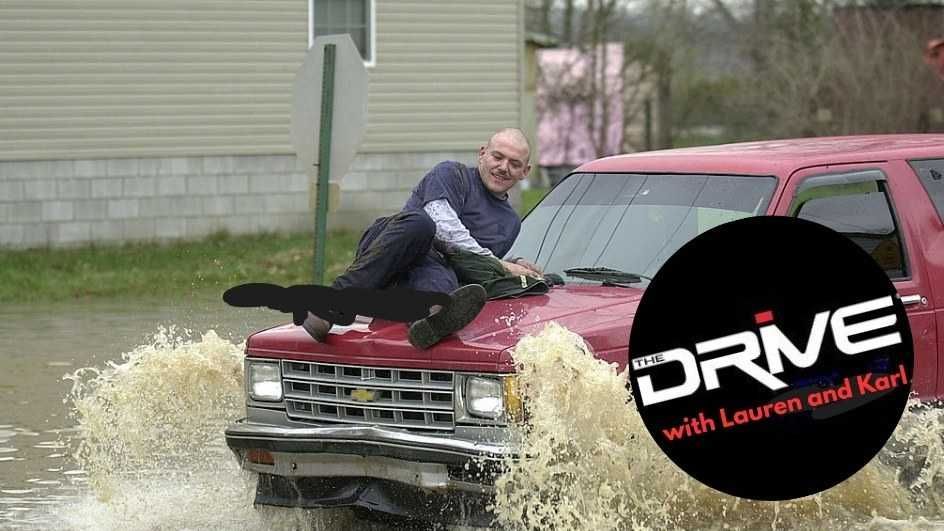
More and more car dealers are breaking what was once an industry taboo: selling salvage-title vehicles — cars insurance companies have already written off as total losses.
That change, which Karl Brauer and I discuss on the latest episode of "The Drive with Lauren and Karl," reflects a simple reality: Affordable used cars are getting harder to find.
Alan compares flood damage to a long-term electrical disease inside a vehicle.
Used-car prices remain elevated, and inventory is still tight. Dealers looking for lower-cost vehicles to put on their lots are exploring options they once avoided — including vehicles that insurers have already declared totaled.
Lower prices may sound appealing to buyers struggling with high car costs. But the real question is whether those savings are worth the risk.
To unpack that risk, we brought in our friend automotive broadcaster Alan Taylor, who hosted "The Drive" for years before handing the microphone to Karl and me. Alan used to own a salvage yard before his broadcasting career, giving him firsthand experience buying, repairing, and reselling damaged vehicles.
During the episode, we were ribbing Alan about his new Liquid Carbon Series Mustang GTD, but the conversation quickly turned serious when the topic shifted to salvage vehicles — a business he knows firsthand from years running a wrecking yard.
Why salvage cars are entering the retail market
The driving force is affordability.
When used vehicles become expensive, buyers start searching for cheaper alternatives. Salvage-title vehicles often sell for significantly less than comparable clean-title cars.
For dealers, that means inventory that can be priced lower. For buyers, it can look like an opportunity.
But the lower price exists for a reason.
A salvage title means the vehicle was declared a total loss by an insurance company. That can happen after a crash, flood damage, theft recovery, or another major incident. Once a title is branded salvage, that designation stays with the vehicle permanently.
The problem for buyers is simple: The title tells you something serious happened — but it does not always explain how serious the damage actually was.
RELATED: Affordable cars still exist — but Americans can't buy them
 Bloomberg/Getty Images
The biggest danger: Flood cars
During the conversation, Karl and Alan both warned that some salvage vehicles carry risks that never truly go away.
Flood-damaged cars are the most notorious example.
Water can infiltrate wiring harnesses, electronic modules, sensors, and interior components. A vehicle might appear normal after repairs, but corrosion inside the electrical system can trigger problems months or years later.
Alan compares flood damage to a long-term electrical disease inside a vehicle — something that may not show up immediately but can slowly spread through the car’s electronics over time.
Those failures can be expensive. Replacing electronic modules, wiring harnesses, or sensor systems in modern vehicles can easily cost thousands of dollars, quickly erasing whatever savings a buyer thought they gained by choosing a salvage car.
A vehicle may pass a test drive today but develop costly electrical problems months later.
Modern cars make salvage repairs riskier
Those risks are greater today than they were decades ago.
Modern vehicles rely on dozens of electronic control units, sensors, and processors to operate everything from safety systems to driver-assistance technology. When those systems are damaged, repairs become far more complicated.
According to Alan, "Anything after 2019 has got so many processors, sensors, and wires" he can sum up the repair process in one word: "Nightmare."
Older vehicles were largely mechanical. Modern vehicles are heavily electronic, and electrical damage can affect systems throughout the car.
That complexity makes hidden problems far more likely.
Not every salvage car is a disaster
At the same time, not every salvage vehicle should be automatically dismissed.
Sometimes a car receives a salvage title for reasons that do not involve catastrophic damage. Theft-recovery vehicles are one example. If an insurer pays the owner after a stolen vehicle disappears, the title can still be branded salvage even if the car is later recovered with relatively minor damage.
Alan saw this firsthand at his salvage yard.
“I used to sell 100 cars a month," he says. "But I would sell them damaged to people, and then I had a body shop, and we'd fix it at the building next door.”
Those buyers understood exactly what they were purchasing and often ended up with affordable transportation after repairs.
Alan notes that the key difference between a good salvage purchase and a bad one is simple: knowing exactly what damage occurred and how the repairs were done.
Most retail buyers, however, do not have that level of visibility.
Knowing the damage matters
Karl offers a good example from his own garage.
One of his cars carries a salvage title, but he knows exactly how the damage occurred:
“I got T-boned in a parking lot.”
Because he witnessed the accident and understands the repair history, evaluating the risk is far easier.
Most used-car buyers do not have that advantage.
That uncertainty is what makes salvage vehicles risky purchases.
How buyers can protect themselves
For consumers considering a salvage-title vehicle, research is essential.
Before buying, experts recommend:
- Running a vehicle history report
- Searching the VIN online for accident photos
- Having the car inspected by a trusted mechanic
- Confirming what repairs were performed and by whom
Without that information, the buyer is relying largely on trust.
And with modern vehicles packed with electronics, hidden damage can quickly turn a cheap purchase into an expensive repair bill.
The bottom line for drivers
Salvage-title vehicles exist in a gray area.
Some are repaired correctly and provide affordable transportation. Others hide structural or electrical damage that will lead to long-term reliability problems.
The lower price reflects that uncertainty.
For buyers who understand the risks and investigate the vehicle’s history carefully, a salvage car can occasionally make sense. But for most consumers shopping for dependable daily transportation, a clean-title vehicle with a documented history remains the safer choice.
To sum it up, the rule is simple: If you don’t know exactly why a car has a salvage title, you probably shouldn’t buy it.
Listen to the full episode of “The Drive with Lauren and Karl” (featuring Alan Taylor) below:












 English (US)