.png)
Dr. Angel Foster’s phone was inundated.
It was late in the afternoon on May 1, and the 5th Circuit Court of Appeals had just blocked a Biden-era policy allowing patients to obtain mifepristone, a drug used in medication-induced abortions, online and through the mail. It was the biggest rollback of access to abortion since the fall of Roe vs. Wade, and it hit patients in red and blue states alike.
Confused and frightened patients living in states with abortion restrictions called and texted Foster, a physician based in Massachusetts, with panicked questions: Could they still order drugs to end their pregnancies? Would they be prosecuted if they took medication that had already landed in their mailboxes?
Foster’s team scrambled to reassure them, based on guidance from the state attorney general, that the court had only halted mail delivery of the pills — not their consumption. Patients were free to take drugs already in their possession. And no matter what the court decided, Foster and her colleagues stressed, abortion pills would continue to be available in some form.
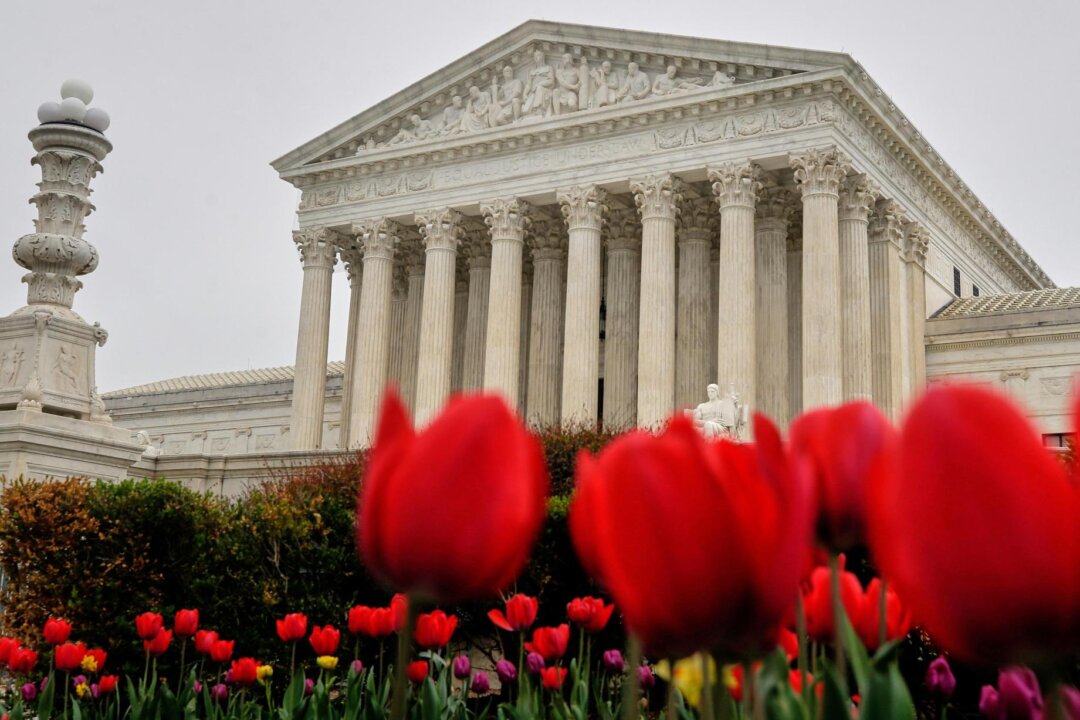
The Supreme Court intervened the following Monday, restoring mifepristone access while the justices considered a case brought by Louisiana, which claimed that federal rules allowing telehealth prescription and mail delivery of the drug violated its sovereignty by helping its residents circumvent the state’s abortion ban. Yesterday, the court extended that order, ensuring providers can keep sending mifepristone by mail for now as lower courts work through the merits of Louisiana’s lawsuit against the FDA.
While the case could eventually come back to the justices and result in the restrictions Louisiana demanded, the temporary reprieve was the outcome Foster had hoped for. But even if the high court had tipped the other way, she wouldn’t have stopped providing abortions by mail.
Instead, she would have deployed a plan she and fellow activists had spent years preparing — a plan they tested out during the 36-hour window when the 5th Circuit’s prohibition stood. Rather than sending patients the typical bundle of mifepristone and misoprostol, two drugs that are about 98 percent effective at terminating a first-trimester pregnancy when taken together, she started sending a higher dose of just the second drug.
Misoprostol is widely used on its own in other countries to end pregnancies, and studies have found it is broadly safe and effective. But it has a slightly higher failure rate than the two pills taken together, as well as more severe and longer-lasting side effects, including diarrhea, nausea, chills, fever and cramping. While there are state and federal efforts to target misoprostol as well, it would be much more difficult to stop patients from obtaining it since the drug is also used for many medical purposes unrelated to abortion, like treating ulcers or stopping hemorrhages.
“Medication abortion is still available by mail to patients in all 50 states,” Foster told POLITICO Magazine before the Supreme Court made its decision. Even an eventual a ruling for Louisiana, she added, wouldn't stop the practice, but it would make abortions via mail “less comfortable.”
“It’s not about whether or not people are going to have abortions. They are,” Foster said. “It’s just punishing the people who are having abortions.”
The loophole through which Foster continued treating patients is just one of a myriad of strategies the abortion rights movement has developed to get around their anti-abortion opponents’ equally sprawling efforts to block patients’ access to the procedure. This arms race continues to escalate as the post-Roe landscape shifts in response to court rulings, legislation and ballot initiatives, yet the total number of abortions has gone up year after year. Conservatives’ initial elation after the fall of Roe has since soured as it became increasingly clear that actually stopping people from having abortions would be difficult — if not impossible.
“We’re in a Whac-a-Mole situation,” said Mary Ziegler, a historian and law professor at the University of California, Davis School of Law who focuses on reproductive health. “People are finding a new way to access abortion, then anti-abortion groups are organizing to block that strategy, then people are organizing to circumvent that strategy.”
Despite their latest loss in court, abortion opponents have many other efforts underway to cut off access to mifepristone — including other legal challenges brought by Florida, Idaho, Kansas, Missouri and Texas — and even a push, which Trump’s EPA Administrator disavowed in a hearing this week, to declare the drug a threat to the U.S. water supply.
“The allowance of mail-order abortions undermines the Dobbs decision and inflicts sovereign injury upon pro-life states,” said Gavin Oxley, a spokesperson for the group American United for Life. “Our organization definitely is pursuing every avenue we can to stop them.”
‘There’s Always a Fallback’
Last week, as they awaited word from the high court about the fate of telehealth abortions, anti-abortion activists secured a closed-door meeting with Justice Department officials. There, they pushed the agency to revive a long dormant policy that could cut off virtually all access to both mifepristone and misoprostol — an 1800s-era anti-vice law known as the Comstock Act that bars mail delivery of any medication or instrument used to terminate a pregnancy. Conservatives have seized on the law, which Trump disavowed on the 2024 campaign trail, as a silver bullet that could ban both at-home medication abortions and those performed at a doctor’s office, since every procedure requires the use of something delivered by mail.
“The simple act of issuing a memo can save hundreds of thousands of babies’ lives overnight,” said Kristan Hawkins, the president of Students for Life of America, outside the Justice Department ahead of her meeting. “We do not need a new bill in Congress. We just need the Trump administration and its Department of Justice to enforce the rule of law.”
Hawkins emerged from the meeting optimistic and told her followers the agency was already actively discussing whether and how to use the century-old rule to cut off access to abortion nationwide.
Natalie Baldassarre, a spokesperson for the Justice Department, said in a statement that Students for Life “misunderstood what was communicated by our attorneys in this meeting” about discussions around the Comstock Act, though the agency “remains committed to advancing President Trump’s pro-life agenda.”
Even if the agency rebuffs their efforts and declines to issue a memo declaring the rules in force, conservatives have other irons in the Comstock fire. Elected officials and movement leaders opposed to abortion, for instance, are also prodding federal judges to bring Comstock back to life, including in briefs submitted to the Supreme Court as it weighs Louisiana’s fight with the FDA.
And while the law would be just as hard to enforce today as it was more than 150 years ago — as opening all Americans’ mail would be both logistically impossible and a massive invasion of privacy — the government could repeat Comstock’s original enforcement strategy of prosecuting a few high-profile cases in the hopes of scaring off everybody else.
“Selective enforcement can have a pretty powerful impact,” Ziegler said. “Confusion alone does a lot of work.”
Such a restoration of Comstock could stymie groups like Foster’s from continuing to mail pills across state lines, even if they operate in one of the 20 states with “shield laws” protecting doctors who provide abortions from prosecution by other states. But shield-law doctors like Foster are only one platoon in the abortion rights movement’s army, and misoprostol-only abortions are just one weapon in their post-Roe arsenal.
Other groups in the U.S. and overseas have been quietly working outside the law or in legal gray areas since Roe was overturned to deliver pills to patients in states with bans who want to self-manage their abortions — with or without a doctor’s prescription. They have long vowed to continue their work regardless of where courts ultimately land on whether and how patients can access the drug.
“We are not going to stop, no matter what happens,” said Rebecca Gomperts, the Netherlands-based founder of the group Aid Access, which has sent pills to more than 200,000 U.S. patients since the 2022 Dobbs decision. While the group currently relies on doctors like Foster working in shield-law states to prescribe and mail the pills, they have a contingency plan to send them from abroad should Comstock or a similar law take effect.
“There’s always a fallback possibility to provide from India,” she said, a country where pharmaceutical companies mass-produce cheap generic versions of the drug and where pharmacies sell it online without a prescription.
Additionally, thanks to efforts by Aid Access, Foster’s Massachusetts Medication Abortion Access Project (MAP) and other groups around the country and world, thousands of American women already have a stock of abortion pills on hand just in case they experience an unwanted pregnancy in the years to come and find their ability to order them cut off by state or federal law.
This practice of ordering pills for future use — known as “advance provision” — has surged in popularity despite warnings from the Biden administration’s FDA that it is potentially dangerous. Every new threat to access has only fueled patients’ interest in stocking up for an uncertain future, Foster said, leading to a wave of orders.
“It happened after the [2024] presidential election results. It happened after the [2025] inauguration. And it happened after [the 5th Circuit ruling],” she said. It is, according to Foster, a prime example of “how resilient the abortion rights movement is.”





 English (US)