.png)
 2 hours ago
7
2 hours ago
7


Washington finally did something that actually helps drivers at the pump — but only halfway.
The Environmental Protection Agency issued a temporary waiver allowing broader sales of E15 gasoline and suspending summer-blend fuel requirements.
The contradiction is hard to ignore: Rules designed to manage emissions are now being suspended to manage affordability.
The move is meant to offset rising gas prices tied to global instability, including tensions involving Iran — but it also exposes our own role in keeping gas prices high.
Summertime blues
For years, drivers have been paying more at the pump because of a patchwork of seasonal fuel mandates that make gasoline more expensive to produce and harder to distribute. Every spring, refiners switch to “summer blend” gasoline, designed to reduce evaporative emissions in warmer weather.
That switch isn’t free — it tightens supply, raises refining costs, and, like clockwork, pushes prices higher just as summer driving season begins.
Now, with prices climbing again, the same government that created the problem is stepping in with a temporary waiver to ease it. This has been happening for decades.
The 20-day waiver, which begins May 1, allows broader sales of E15 — gasoline with 15% ethanol — bypassing restrictions that normally block it in the summer months. The goal is simple: Increase supply, give consumers more flexibility, and bring prices down.
Even modest estimates suggest savings of a few cents per gallon, with some projections reaching as high as 40 cents in certain markets. That raises an obvious question: If removing these restrictions lowers prices now, why are they in place at all?
Fuelish games
Summer blends are tied to EPA regulations around fuel volatility — specifically Reid Vapor Pressure — intended to reduce smog during hotter months. The goal sounds reasonable, but the real-world trade-offs are harder to ignore.
Today’s engines run cleaner than ever, yet the fuel system has become more fragmented. Different regions require different blends, limiting how gasoline can be transported and sold. When supply tightens, that lack of flexibility drives prices higher.
Instead of a national fuel market that can respond efficiently, we have a regulatory maze that raises costs before fuel even reaches your tank. Then, when global disruptions hit — whether it’s instability in the Middle East or supply shocks — the system becomes strained faster than it should.
So regulators waive the rules again.
This has become routine: temporary fixes replacing long-term solutions, while drivers pay the price in the meantime.
End the blend
Industry groups like the Renewable Fuels Association and the American Petroleum Institute support expanding E15 access, and they’re right to push for consistency — but even that debate misses the larger issue.
The real solution is simpler: Eliminate seasonal blend mandates altogether.
If removing the summer blend lowers prices during a crisis, it will lower prices when there isn’t one. It would streamline production, stabilize supply, and eliminate one of the most predictable annual price spikes — because fewer constraints mean more efficiency, and more efficiency means lower costs.
RELATED: Why gas prices won’t be dropping — and how you can minimize the pain
 Mario Tama/Getty Images
Pain at the pump
There’s also another lever Washington could pull: the federal gas tax.
Suspending or reducing it — even temporarily — would provide immediate, visible relief at the pump. It’s direct, measurable, and doesn’t depend on regulatory work-arounds.
States are unlikely to follow. Fuel taxes are a major source of revenue, and few are willing to give that up, which puts the pressure squarely on the federal government.
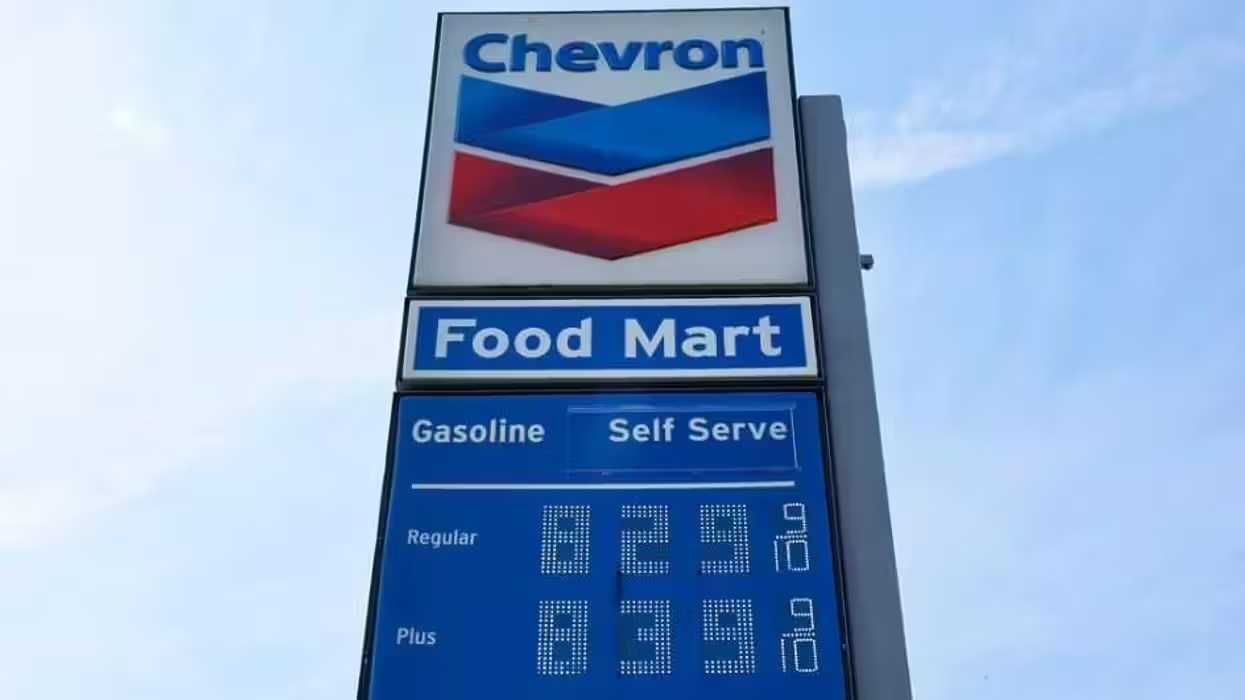
What makes this moment different is that drivers are seeing the impact in real time. Prices have surged quickly, pushing toward $4 per gallon nationally — a direct hit to household budgets, small businesses, and anyone who depends on transportation to make a living.
And yet instead of fixing the underlying problem, Washington keeps relying on temporary waivers.
The contradiction is hard to ignore: Rules designed to manage emissions are now being suspended to manage affordability. That alone should prompt a serious reassessment of whether the system is working — not just environmentally, but economically.
Right now, it isn’t.
Drivers don’t need another short-term fix that expires in a few weeks. They need a stable fuel market that doesn’t artificially drive up prices every summer.
Permanent relief
Eliminating seasonal fuel blends would be a strong start. Expanding access to E15 year-round would help. Reducing federal gas taxes would provide immediate relief.
None of these ideas are radical.
What’s radical is continuing to defend a system that clearly isn’t working for consumers.
The EPA has already shown that loosening these rules lowers costs. The question is whether Washington is willing to make that relief permanent — or if drivers will once again be stuck waiting for the next “emergency” to get a break.
Because drivers are tired of the same problem getting a temporary fix every time prices spike.













 English (US)