.png)
The Republican battle to become Texas’ next attorney general has turned into a MAGA purity test, with major implications for the future of the GOP after President Donald Trump leaves office.
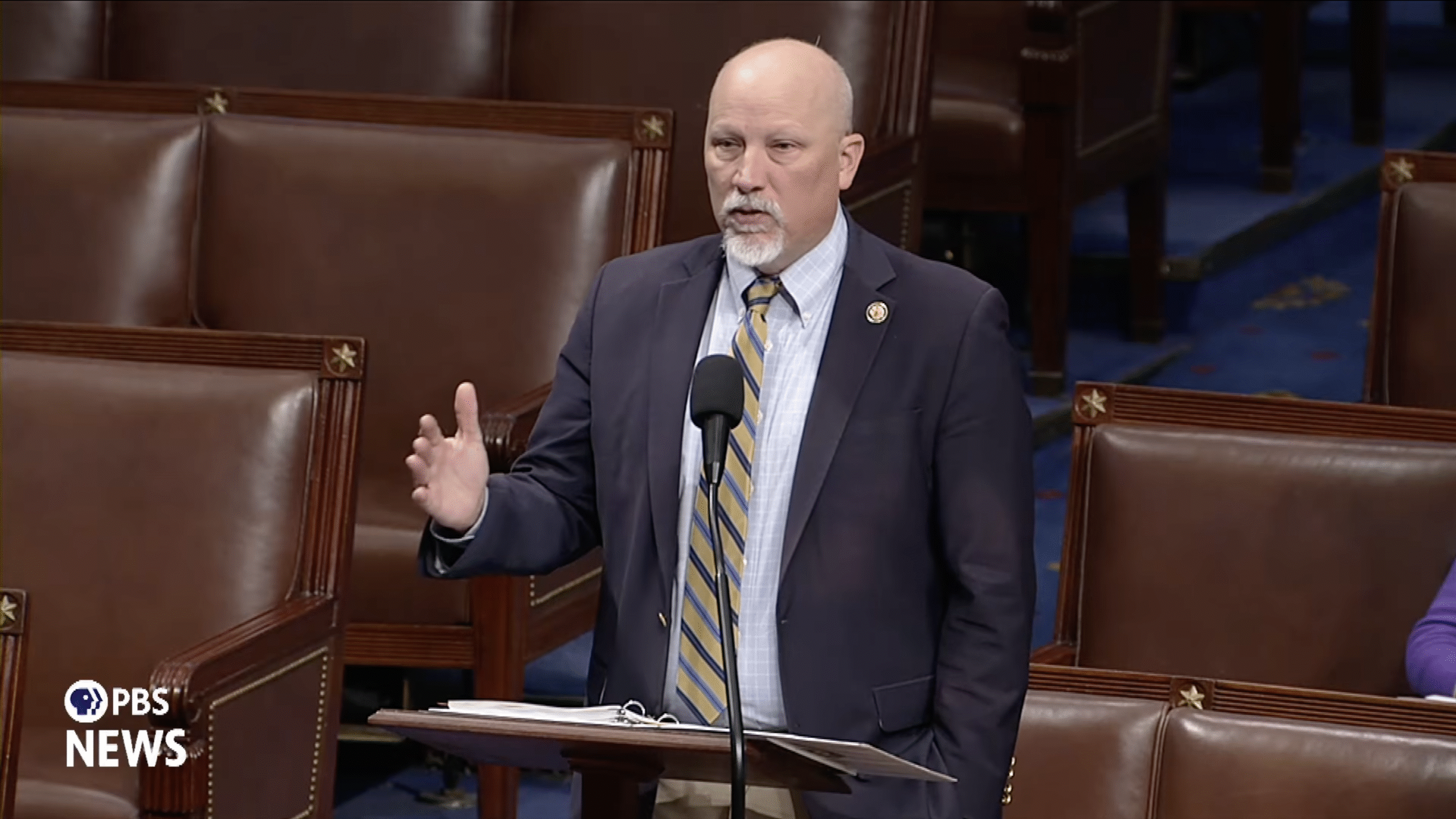
Rep. Chip Roy, a well known Freedom Caucus rabble-rouser and hardline fiscal conservative who has occasionally broken with Trump, is fighting to stay the front-runner for a job that has long been used to aggressively push the conservative agenda and served as a jumping-off point for higher office — like current Attorney General Ken Paxton, who’s running for Senate.
The next Texas attorney general will help shape the future of the Republican party post-Trump, playing a key role leading the conservative legal movement. But if Roy is going to get there, he’ll first have to get by State Sen. Mayes Middleton and former DOJ attorney Aaron Reitz, who have both carved paths as aggressive foot soldiers for the MAGA movement. The race also includes state Sen. Joan Huffman, who is making a more measured pitch for the job.
Roy has a lead in the polls, and all three candidates are trying to keep him from earning more than 50 percent of the vote in the March primary to force a runoff in May.
Their main line of attack: Roy’s past dustups with Trump shows he is inadequately conservative in order to represent Texas in court. Roy, in response, has argued that his reputation as an obstructionist in Congress, deep experience in Washington and independent streak within the party demonstrates he’s well equipped to serve as Texas’ top lawyer.
The candidates’ eagerness to prove their MAGA credentials were on display in the first few moments of a debate Tuesday night. Middleton bragged that Trump once called him a “MAGA champion.” Reitz said Trump regards him as a “true MAGA attorney.” Huffman said she “led the fight with President Trump on border security” in the state legislature. Roy said he has worked alongside Trump to designate cartels as terrorist organizations.
But Roy’s rivals have repeatedly hammered him for being at odds with Trump and the GOP in the past. The congressman was the first to call for Paxton to resign after he faced charges of bribery and abuse of office in 2020. He bucked Trump to certify the 2020 election and said the president demonstrated “clearly impeachable conduct” on Jan. 6. Roy backed Florida Gov. Ron DeSantis for president in 2024, making him one of just a handful of House Republicans who opposed Trump during that year’s primaries.
And, his refusal to fall in line with GOP leadership in the House — even holding up numerous funding bills — has occasionally infuriated Trump. In late 2024, as Roy led the charge against Trump’s demand that the House raise the debt ceiling without restrictions on future spending, Trump blasted him as “just another ambitious guy, with no talent” and invited primary challengers against him. Roy was a late holdout on Trump’s signature legislative achievement, the One Big Beautiful Bill Act, though he eventually voted for it.
“This is somebody who has a deep disdain for the MAGA movement … and he's only now singing a different tune now that it's campaign season,” Reitz said of Roy in an interview, while touting his own experience working in the Trump Justice Department’s Office of Legal Policy, a position he held for several months. Reitz has received Paxton’s coveted endorsement and posted strong fundraising numbers.
Trump has not yet weighed in on who he prefers to take the mantle from Paxton, but his potential endorsement looms over the field. A recent poll shows Roy in the lead, with 33 percent of likely Republican voters, followed by Middleton, with 23 percent. Huffman and Reitz trail at 13 percent and 6 percent, respectively. A quarter of voters are undecided.
Among Texas Republican voters, “the attorney general position is kind of viewed as the police officer of the state,” said Jen French, chair of the Travis County GOP. “Voters like somebody who's going to get in there and what they perceive as ‘fight, fight, fight.’”
All four GOP candidates are closely aligned on policy, vowing to follow strict interpretations of the Texas and U.S. Constitutions, but Middleton and Reitz have made more bombastic declarations about how they would enforce the law. The differences between the set are mostly stylistic, as they try one to one-up each other on red meat issues like stopping the alleged spread of Sharia law in Texas and halting the flow of abortion pills into the state.
Middleton has nicknamed himself “MAGA Mayes,” a slogan he’s put on hats his campaign gives away. He’s also leaned into culture war issues that rally the base like banning trans student athletes from competition and allowing the Ten Commandments in schools. The oil and gas businessman from Galveston has largely self-funded his campaign, putting more than $11 million toward the effort.
Roy, who also leads in fundraising, has been endorsed by well-known conservatives like Sen. Ted Cruz (R-Texas), who Roy once worked for as his chief of staff, as well as fellow Freedom Caucus Reps. Lauren Boebert of Colorado and Andy Biggs of Arizona. Roy reported $4.2 million in the bank in January, fueled by a $2 million transfer from his congressional campaign account.
Huffman, one of the longest-serving state senators, highlights her experience prosecuting felony crimes as an assistant district attorney and state district judge in Harris County. In an interview, she said she would treat the job of attorney general as “chief law enforcement officer for Texans,” and work closely with local law enforcement.
Whoever emerges from the GOP primary will be the heavy favorite in the general election in the Republican-leaning state. On the Democratic side, the race includes State Sen. Nathan Johnson and former Galveston mayor Joe Jaworski, who is making his second shot at the nomination. Jaworski, in an interview, said voters are tired of “a rabid ultra MAGA representation of what government is. It’s all about punishing the vulnerable.”
The job has long allowed its holder a leading role in the national culture wars — and a springboard to higher office. Republican Gov. Greg Abbott was attorney general before he ran for governor and barraged the Obama administration with lawsuits that made national headlines: He famously quipped in 2013 that his day-to-day was, “I go into the office, I sue the federal government and I go home.” Before he had the job, it was filled by now-Sen. John Cornyn (R-Texas), the man Paxton is currently running against.
Paxton spent a decade steering the office into the center of the culture wars, pursuing actions in the name of preserving religious liberty and spearheading multistate lawsuits filed by Republican attorneys general against the federal government. The AG role has since become the top destination for young conservative legal talents, a number of whom have gone on to become judges appointed by Trump.
It is a “choice position,” said Mark Jones, a political science professor at Rice University.
“There’s this whole playing field within the legal system where the states can have a powerful impact on national policy in a wide range of areas,” he said. “And no state has more successfully – or at least more aggressively – used the power of the courts to try to further a conservative policy agenda than the state of Texas.”









 English (US)