.png)
 1 hour ago
5
1 hour ago
5

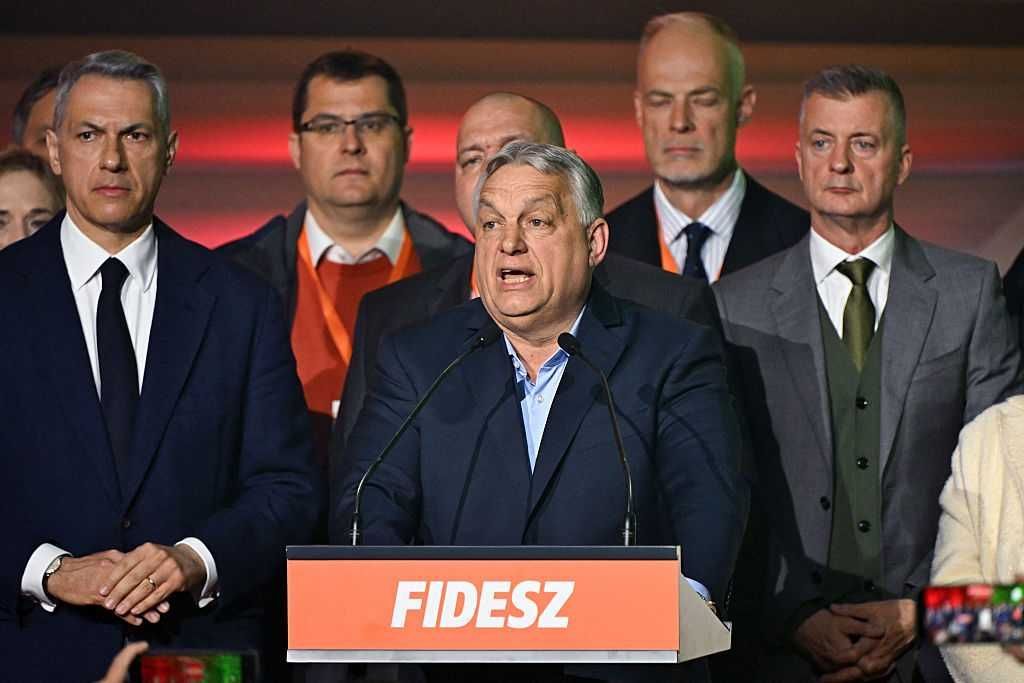
When Viktor Orbán lost the Hungarian parliamentary election last month, most of the coverage told a familiar story: Liberal democracy had defeated nationalist authoritarianism. Left had beaten right. Those headlines, while partly true, left out an important point that has implications well beyond Hungary.
What actually drove ordinary Hungarian voters to the polls wasn't ideology. It was economic stagnation, rising inflation, and falling living standards.
Traditional right and left parties may be north or south, regardless of the partisan language we brand them with.
Widely classified as far right, Orbán had governed in a strongly interventionist manner: nationalizing industries, rewarding allies, punishing competitors. He did not lose because Hungary turned left. He lost because his brand of right-wing economic intervention had made people poorer, and they noticed.
That distinction points to a flaw in the political vocabulary we have been using for two centuries.
The left-right spectrum was born in the French National Assembly, where supporters of the king sat to the right of the presiding officer and revolutionaries to the left. Somehow we are still using it, as if the geometry of an 18th-century parliament contains all the wisdom we need for the 21st-century world.
It doesn't. And on some level, most of us already know it.
Instead, the political compass now looks more like an actual compass, with north, west, east, and south poles. The traditional right-left debate is between east and west. But there is an additional north-south debate that relates to political parties' support of competition, open trade, and property rights (north), or support of statism, industrial policy, and government intervention (south).
This north-south debate is every bit as important, and it illustrates how traditional right and left parties may be north or south, regardless of the partisan language we brand them with.
Here is the error of the traditional axis: It puts so much energy into the horizontal argument, left versus right, progressive versus conservative, that we have largely stopped asking the vertical question: not who should wield state power, but how much state power should exist at all.
The Heritage Foundation's Index of Economic Freedom, which has measured market conditions across 184 countries for 30 years, finds that economies it classifies as “free” average around $112,000 in per capita GDP, while those it classifies as “repressed” average roughly $10,000. A tenfold gap, consistent across decades.
The Index has its critics. Jeffrey Sachs has argued that it measures current wealth better than it predicts growth. Even so, the broad pattern it documents is not seriously disputed. More economic freedom tends, over time, to correlate with more prosperity.
If you accept even a modest version of that premise, the compass begins to replace the old map entirely.
Due north, on this map, represents genuine economic freedom: voluntary exchange and limited coercion. Due south is the statist trap, whether administered by socialists or nationalists. What unites them is not ideology, but the same drive to expand state control over economic life, with the same results.
The distinction that matters is not the flag you wave getting there, but how far south you end up.
The horizontal axis doesn't disappear; it shifts from economics to culture. Both left and right have northern and southern variants. Market-oriented progressives sit in the northeast; market-oriented conservatives in the northwest. The southern quadrants — interventionist left and interventionist right — share more with each other than either would care to admit.
RELATED: Universal basic income is a dangerous delusion
 Blaze Media Illustration
The northeast quadrant is where the most instructive examples sit. Paul Keating in Australia and Roger Douglas in New Zealand were leaders on the left who pursued serious market liberalization. They were not ideological converts but pragmatists who concluded that the social programs they cared about required a productive economy to fund them.
Critics will note that both Keating and Douglas presided over substantial social spending alongside their market reforms, but this misses the point. Keating and Douglas understood something their ideological allies did not: that a government that destroys the market in pursuit of social goals will eventually have neither.
Orbán's Hungary sat in the southwest quadrant: culturally conservative, economically interventionist. It was as state-directed in practice as many of the left-wing governments it claimed to oppose. The southwest quadrant has no ideology. It has only consequences.
None of this means markets are perfect. But the relevant comparison is never between a flawed market and a perfect government. It is between a flawed market and a flawed government.
In that comparison, the historical record is not close. What this compass insists on is that voters stop evaluating politicians purely on cultural grounds and start demanding an account of the vertical axis too.
Hungarian voters, faced with the concrete consequences of statism, made an economic judgment. They didn't need an ideology. They needed cheaper groceries and a functioning future for their kids. It is a practical, unsentimental instinct. Focused on results, not rhetoric.
The left-right debate will continue. It probably should. But the question that matters comes first: not which side you are on, but how far north you are willing to go.













 English (US)