.png)
CHARLESTON, S.C. — Kamala Harris’s book about her abbreviated presidential campaign is entitled 107 Days. Harris has now been selling her memoir for far longer — 166 days to be exact.
She has not been on tour all that time. Yet as the former vice president touched down at recent stops in Madison and Oakland, and as winter turns to spring, it seems clear that her travels are both a way for her to sell more books and buy more time.
Harris plainly wants to keep open the option of running for president again in 2028.
Somebody finished with Democratic politics wouldn’t have responded to camera when President Donald Trump attacked Iran; wouldn’t have returned the favor for one of her 2020 campaign co-chairs by wading into the Texas Senate primary to support Rep. Jasmine Crockett; and she wouldn’t have recently brought one of her top aides from the 2024 race, Brian Fallon, back to her circle in a more formalized fashion, as she recently did, according to Democrats familiar with the move.
And somebody not eyeing her party's coalition wouldn't ensure that many of her book talk moderators are Black, and the businesses she stops in along the tour, cameras rolling, are Black and or woman-owned.
Those who talk to her regularly say she’s truly undecided — at least as far as they can tell. Harris isn’t even engaged in conversations right now about a 2028 bid, I’m told by those close to her. The prolonged book tour has been easy to justify on the merits — she fills almost every venue in which she speaks. And it puts off the day when she has to consider travel, an agenda and policy proposals for the eventual political entity she could stand up.
Harris is said to be interested in AI and the future of work — she even briefly discussed partnering with a university to focus on those questions, I’m told — but for now, she’s mostly talking about her own work past.
And it’s there where many Democrats would prefer to keep her.
Conversations here with a range of moderate Democrats at a conference put on by the centrist group Third Way last week revealed Harris to be a political non-entity. She’s leading in seemingly every early survey, but few elected officials, strategists or activists volunteered her name when discussing 2028. And when I’d bring her up, Democrats either said they doubted she’d run or that she would struggle if she did.
“We tried it, it didn’t work, next person up,” said Ed Sutton, a Charleston-area state senator, succinctly and cold-bloodedly encapsulating the view of many in the party who’d prefer a fresh face.
I can’t say it was surprising.
Democrats almost always leave their presidential losers behind, while Republicans often reward those who lost in previous primaries or general elections. When I pointed to an exception in this trajectory — Democrats reviving Hillary Clinton in 2016, eight years after her primary defeat to Barack Obama — Sutton jumped in to say: “And it burned us.”
Brad Hutto, a longtime South Carolina state senator, said he assumes Harris won’t run again and said flatly of his party: “I think we’re going to be reluctant to pick somebody who didn’t win last time.”
Those like Hutto who’ve been around the party for a while know that Joe Biden’s 2020 victory was an exception — a race defined by the incumbent and a global pandemic — and Democrats prevail when they nominate somebody new to the national political scene. It’s what links their other non-incumbent victories this half-century: in 1976, 1992 and 2008.
It was the 1992 race, when Bill Clinton ran as a party modernizer, that Cleveland Mayor Justin Bibb cited favorably to me.
Bibb said he didn’t want somebody from Washington, preferred the model of a governor or at least a proven executive and cited a number of them by name while calling for an “open and competitive primary.”
A name he didn’t mention was his party’s last nominee.
But when I did, Bibb said Harris is “the frontrunner if she gets in” and recalled her “jam-packed” book crowd in Cleveland.
It’s here where I should note that white Democrats I spoke to tended to be more openly dismissive of Harris, while Black Democrats, such as Bibb, were gentler and more respectful.
How much of that is being polite, and smart politics for those eyeing their own future, quickly became clear, though.
Would Harris running be your preference, I asked Bibb.
“My preference would be somebody who can fucking win,” he said.
And can she?
“Let the voters decide,” he said, an artful dodger already at the age of 35.
Steve Benjamin, who was the first Black mayor of Columbia, S.C. before becoming a senior Biden White House aide, was similarly cautious.
“The race is wide open,” Benjamin told me. When I asked specifically about Harris, he said she’d be “strong and formidable” before quickly adding that between today and the primary, “we’re in a culture now where it’s whiplash, so if someone else can capture imagination, hearts and souls, they have a shot.”
Jon Cowan, who leads Third Way and opened the conference with a speech warning against returning to “Biden’ism,” was not so restrained.
As with so many in his party’s professional class, Cowan is skeptical that Harris will ultimately run.
I asked why he didn’t mention her name in his indictment of the last Democratic president.
“If I thought there was an 80 percent chance she was going to run, I would’ve said her name,” Cowan told me. “I just don’t see it right now.”
He added that the person leading every (yes, very early) poll isn’t what he’s worried about.
Then he slightly amended that to sketch out what he called his “nightmare scenario”: Harris “runs, she takes a bunch of the Black vote away from the would-be moderate nominee, and somebody like AOC consolidates her [left-wing] vote and Harris screws us.”
But Cowan said he doesn’t stay awake at night fretting about such an outcome because he doesn’t think she’ll run and “very bluntly, if she does run, the last primary [in 2020] was a disaster.”
Which brings up another bit of Harris conventional wisdom, which is widely-held if not always voiced out loud: Parachuting into a 107-day campaign with no primary competition was a blessing, not a burden.Which is to say that a full-fledged primary campaign in 2028 wouldn’t end well for her.
There’s no hostility toward Harris in the party ranks. It’s Biden, and his refusal to accept that he was too old to serve a second term, that rankles so many.
Democratic voters, especially women, are thrilled to see Harris in person, grab a selfie with her and have her sign their book.
Yet, and this is important, the question is whether sympathy translates to support for 2028.
Lisa Owens Izzo is the sort of activist that campaigns depend on. She was an enthusiastic Biden supporter in 2020, even volunteering to drive his staff around the state in a rented van.
Now she’s curious about Kentucky Gov. Andy Beshear and California Gov. Gavin Newsom.
She winced when I brought up Harris, as though I was recalling a personal tragedy.
“I just don’t think there’s, I don’t know, I just feel so — I was shocked when Hillary didn’t win, and then Kamala took over,” Owens Izzo recalled, cycling through painful memories. “I don’t know if the country is ready for a female president, and she’s so qualified.”
Bottom line, she said: “Start over, start over — just my opinion.”
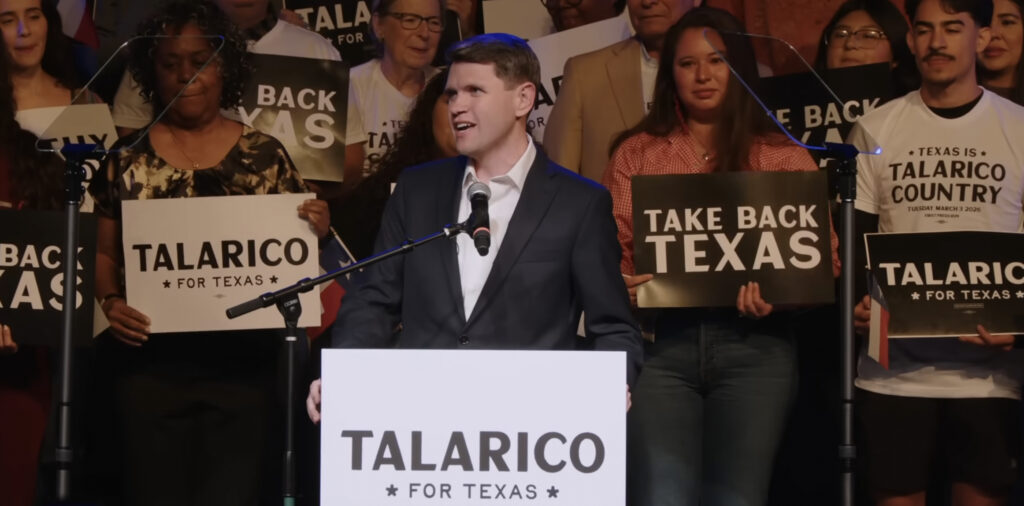
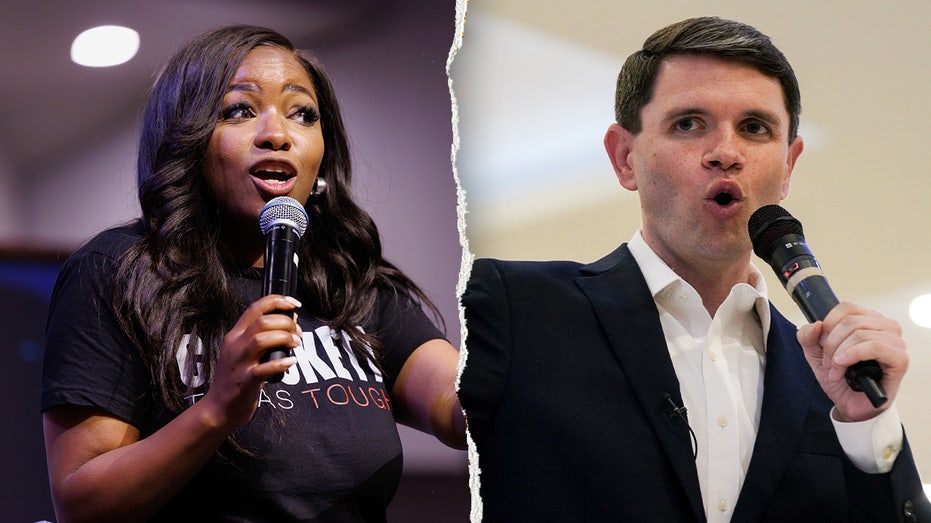
Harris defenders emphasize that she backed Crockett, who was soundly defeated by James Talarico in last week’s primary, out of loyalty. Yet the episode illustrated why so many Democrats find Harris to be so politically maladroit.
The former vice president intervened with a Friday robo-call endorsement, early enough before the conclusion of the Tuesday race to ensure she had capital on the line. However, it was too late and too insignificant a contribution to materially impact the race. Much of the early vote had already been banked by that point, and a robo-call is far less significant than an ad airing across Texas or an in-person appearance.
Even more damaging, Harris has offered so few endorsements and done so little generally in races since 2024 that it was hard to bury her Crockett endorsement. She didn’t campaign in either of last year’s blue-state gubernatorial contests, both of which featured female Democratic nominees. And since declaring last summer that she wouldn’t run for governor of her own state, Harris has shown scant interest in the race. To get to the point, she’s done nothing to head off what could be a Democratic disaster if the party’s sprawling and fractured field ensures two Republicans emerge from the state’s all-party vote in June to make the general election.
People who know her well and are no longer in touch say it’s not complicated: Harris hasn’t done the work to reclaim the party’s nomination and won’t because it involves the sort of politicking and schmoozing she’s never enjoyed.
It’s easy to see a scenario in which Harris, after the midterms, finally considers a campaign, picks up the phone to call party leaders and is met with the same response I received in Charleston when I forced her name into the conversation: friendly, not at all antagonistic and not at all encouraging.
The good news for somebody who’s only 61, though, is that there may be another political act for her even if she’s never president. She could borrow the model of the last single-term Democratic vice president, who was, like her, a former senator. Walter Mondale, as with nearly every Democratic presidential loser, was cast aside by his party after his 1984 defeat. But when a Democrat captured the presidency again, he was rewarded with an ambassadorship to Japan, an ally that expects high-level envoys from Washington.
Forget the Supreme Court speculation, Madam Vice President, take Tokyo!


 English (US)